


The Dalai Lama’s recent Taiwan visit was comforting to its typhoon-ravaged people. But it infuriated China. An official spokesman in Beijing commented: “Under the pretext of religion, he has all along been engaged in separatist activities,” adding: “Obviously, this is not for the sake of disaster relief. It’s an attempt to sabotage the hard-earned good situation in cross-strait relations.”
Considering that President Ma Ying-jeou (馬英九) has been bending over backward to please China, he made some hard political calculations when allowing the Dalai Lama’s visit.
Ma was losing political ground to the Democratic Progressive Party from the torrent of criticism in the country over his administration’s tardy response to the devastating tragedy of Typhoon Morakot.
And knowing how close the Ma administration is to China, it must have explained to Beijing its need to contain political damage that might worsen if the Dalai Lama was refused the opportunity to visit Taiwan in his role of imparting spiritual solace. Beijing might not have found it satisfactory but the thought of another DPP comeback at some point must be sobering.
Morakot killed more than 700 people, destroyed property and dislocated communities.
In the midst of all this destruction, the government seemed unsure how best to respond, as if the gravity of the situation had not sunk in.
On such occasions, when Nature’s wrath strikes and the government is woefully incompetent and inadequate, people’s minds turn to spiritual nourishment. The local leaders were more responsive to their people’s need for some sort of spiritual comfort at a time of tremendous grief, which led them to invite the Dalai Lama to serve that need.
Whether or not they were politically motivated is not the issue here. The issue is that they spotted the dire need for spiritual solace and decided that the Dalai Lama was the one to fit that role. And he played that role with great aplomb and sincerity, judging from the people’s enthusiasm at his meetings.
Indeed, China too, in its present state of obsessive greed and consequent moral-spiritual void, could use the Dalai Lama in such a role for the good of its people. China’s ruling oligarchy, however, has so demonized him that they refuse to see any role for him. For them he is a separatist, a political monk and a traitor, at worst.
And what has he done to deserve these epithets? Simply seek autonomy for Tibet as part of China, which translates into an autonomous Tibet being able to deal with its regional affairs, while the central government in Beijing controls its defense, foreign dealings and currency.
With such sovereign control over Tibet, is it possible to imagine that it would pose a threat to China’s territorial integrity? In a country of 1.3 billion people, an autonomous Tibet’s population of about 6 million will be a tiny minority.
If Beijing can be paranoid on this score, then there is something seriously wrong about the polity and psychology of such a state.
Indeed, judging by the Dalai Lama’s public pronouncements, he comes out as a very pragmatic man. For instance, he is always hosing down the hotheads in the Tibetan Youth Congress who advocate independence for Tibet.
The Dalai Lama has reportedly said: “But I always ask them: How are you going to attain independence? Where are you going to get the weapons? How are you going to pay for them? How are you going to send them into Tibet? They have no answer.”
This is certainly not a guy who has some delusion of grandeur about Tibet’s capacity to become independent through an armed struggle with China.
He acknowledges China’s great power role. They already have the “manpower, military power [and] monetary power.” But, he says, “Moral power, moral authority is lacking.”
In other words, China would need some moral and spiritual foundation to underpin its heedless and relentless pursuit of greed. Because, in its absence, it will lose its social and cultural cohesion and bring on itself the social chaos that its leadership professes to fear so much.
And for this, China can certainly use the Dalai’s Lama’s moral authority.
Pico Iyer, who has studied the Dalai Lama over the decades, says: “the Dalai Lama has always been adept at pointing out, logically, how Tibet’s interests and China’s converge — bringing geopolitics and Buddhist principles together.”
China, therefore, should tap his spiritual and moral authority and make him a partner in its moral regeneration. This, however, would require them to stop demonizing him as some sort of evil phenomenon.
An autonomous Tibet might give some substance to China’s otherwise phony claim of ethnic and cultural diversity.
Beijing should stop waiting for the Dalai Lama to die and replace him with their own compliant nominee. Indeed, in his death, he might become a more potent symbol of retrieving Tibet’s identity, with not inconsiderable public support internationally.
At 73, the Dalai Lama is still going strong. If Beijing can get over its pathological hatred of him, he might be able to play a useful role in broadening and humanizing China’s image. And with his considerable spiritual following in Taiwan, he might even be able to play a useful bridging role with China.
The point is that Beijing’s paranoid leadership needs to relax and let Taiwan breathe freely.
Even with a broadly shared culture, people can still decide to live as separate nations. Take the case of Australia and New Zealand. They have the best of relations as separate countries with a shared cultural heritage.
Why can’t China feel more confident with an independent Taiwan, with both countries deepening their shared cultural, trade and other activities?
Granting autonomy to Tibet might be the first step to make China feel more at ease.
Sushil Seth is a writer based in Australia.
Minister of Labor Hung Sun-han (洪申翰) on April 9 said that the first group of Indian workers could arrive as early as this year as part of a memorandum of understanding (MOU) between the Taipei Economic and Cultural Center in India and the India Taipei Association. Signed in February 2024, the MOU stipulates that Taipei would decide the number of migrant workers and which industries would employ them, while New Delhi would manage recruitment and training. Employment would be governed by the laws of both countries. Months after its signing, the two sides agreed that 1,000 migrant workers from India would
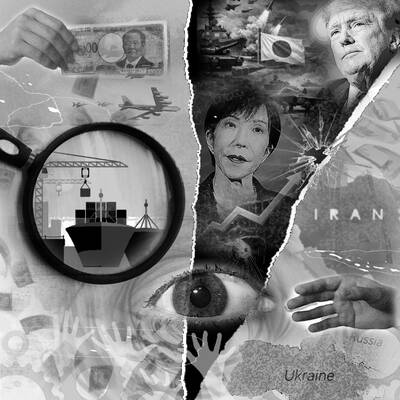
Japan’s imminent easing of arms export rules has sparked strong interest from Warsaw to Manila, Reuters reporting found, as US President Donald Trump wavers on security commitments to allies, and the wars in Iran and Ukraine strain US weapons supplies. Japanese Prime Minister Sanae Takaichi’s ruling party approved the changes this week as she tries to invigorate the pacifist country’s military industrial base. Her government would formally adopt the new rules as soon as this month, three Japanese government officials told Reuters. Despite largely isolating itself from global arms markets since World War II, Japan spends enough on its own
On March 31, the South Korean Ministry of Foreign Affairs released declassified diplomatic records from 1995 that drew wide domestic media attention. One revelation stood out: North Korea had once raised the possibility of diplomatic relations with Taiwan. In a meeting with visiting Chinese officials in May 1995, as then-Chinese president Jiang Zemin (江澤民) prepared for a visit to South Korea, North Korean officials objected to Beijing’s growing ties with Seoul and raised Taiwan directly. According to the newly released records, North Korean officials asked why Pyongyang should refrain from developing relations with Taiwan while China and South Korea were expanding high-level
When 17,000 troops from the US, the Philippines, Australia, Japan, Canada, France and New Zealand spread across the Philippine archipelago for the Balikatan military exercise, running from tomorrow through May 8, the official language would be about interoperability, readiness and regional peace. However, the strategic subtext is becoming harder to ignore: The exercises are increasingly about the military geography around Taiwan. Balikatan has always carried political weight. This year, however, the exercise looks different in ways that matter not only to Manila and Washington, but also to Taipei. What began in 2023 as a shift toward a more serious deterrence posture


 RSS
RSS