


The new Cabinet is only a few days old and already the competence of the premier is under scrutiny over his brief, but bizarre, trip to Hong Kong. Ostensibly a fact-finding trip on landslide prevention technology, it turns out that Wu Den-yih (吳敦義) spent a good proportion of his time meeting Chinese powerbrokers in the Special Administrative Region — and, believe it or not, taking time out to accompany his son on a spot of fortune telling.
Fittingly, none of this augurs well. Whatever initial period of grace existed for the new premier has expired with this sloppily executed slice of cross-strait diplomacy. With Democratic Progressive Party (DPP) legislators howling over reports by the Apple Daily in Hong Kong and Taiwan on Wu’s unannounced itinerary, President Ma Ying-jeou (馬英九) must be wondering what he has to do to find a politically astute person to run the Executive Yuan.
Ma has previously “delegated responsibility” — let’s be euphemistic — to the Cabinet on sensitive domestic issues based on what he perceives to be a constitutional separation of powers.
It would be intriguing, therefore, if Wu was serving as Ma’s emissary. From Ma’s and China’s perspective, what does Wu have that Ma’s other negotiators and party colleagues lack?
As Ma prepares to take over the Chinese Nationalist Party (KMT) chairmanship next month, party and legislative tensions over how things are being run are in check — just. Even the discordant voices that exist on the pan-blue side of politics — KMT Legislator Lo Shu-lei (羅淑蕾) is a good example — remain largely supportive of the president.
This may not last much longer. Typhoon Morakot, the Deaflympics, the World Games in Kaohsiung, the swine flu outbreak and the trial of former president Chen Shui-bian (陳水扁) and his co-accused have helped to obscure this government’s struggle to make an impression in the more mundane aspects of day-to-day policy development and implementation.
There is, indeed, much about the way that this country is being run that is crying out for critique and overhaul. However, when a government is on the back foot, as this one is, more provocative reforms tend to be traded for the comfort of vulnerable legislators.
With the Ma administration, there is a significant deviation from this pattern. Cross-strait detente demands ongoing negotiations that please China, regardless of what anyone thinks back home. To continue along this road, it is essential that Ma’s Cabinet deliver results across all portfolios to ensure that DPP accusations of domestic neglect are neutralized.
Perhaps this is what Ma was getting at yesterday when he asked that civil servants bear the rights of ordinary people in mind. If the government cannot attract public support on issues as fundamental as basic policy, parity, respectful treatment and due process, then what hope will trade-offs with China have?
Ma’s problem — and it has always been his problem — is that his pretty language has rarely been backed by action when it comes to reforming the behavior of people under his command. His challenge now is not to reform the lowest ranking people on the civil servant scale, but to make something competent out of the people at the very top.
Minister of Labor Hung Sun-han (洪申翰) on April 9 said that the first group of Indian workers could arrive as early as this year as part of a memorandum of understanding (MOU) between the Taipei Economic and Cultural Center in India and the India Taipei Association. Signed in February 2024, the MOU stipulates that Taipei would decide the number of migrant workers and which industries would employ them, while New Delhi would manage recruitment and training. Employment would be governed by the laws of both countries. Months after its signing, the two sides agreed that 1,000 migrant workers from India would
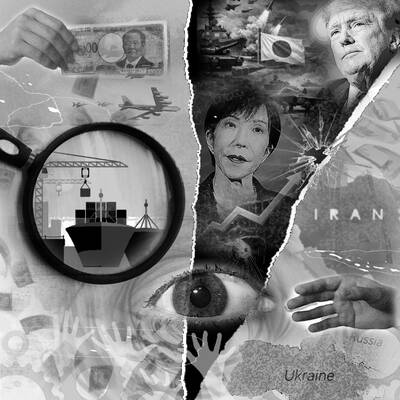
Japan’s imminent easing of arms export rules has sparked strong interest from Warsaw to Manila, Reuters reporting found, as US President Donald Trump wavers on security commitments to allies, and the wars in Iran and Ukraine strain US weapons supplies. Japanese Prime Minister Sanae Takaichi’s ruling party approved the changes this week as she tries to invigorate the pacifist country’s military industrial base. Her government would formally adopt the new rules as soon as this month, three Japanese government officials told Reuters. Despite largely isolating itself from global arms markets since World War II, Japan spends enough on its own
On March 31, the South Korean Ministry of Foreign Affairs released declassified diplomatic records from 1995 that drew wide domestic media attention. One revelation stood out: North Korea had once raised the possibility of diplomatic relations with Taiwan. In a meeting with visiting Chinese officials in May 1995, as then-Chinese president Jiang Zemin (江澤民) prepared for a visit to South Korea, North Korean officials objected to Beijing’s growing ties with Seoul and raised Taiwan directly. According to the newly released records, North Korean officials asked why Pyongyang should refrain from developing relations with Taiwan while China and South Korea were expanding high-level
When 17,000 troops from the US, the Philippines, Australia, Japan, Canada, France and New Zealand spread across the Philippine archipelago for the Balikatan military exercise, running from tomorrow through May 8, the official language would be about interoperability, readiness and regional peace. However, the strategic subtext is becoming harder to ignore: The exercises are increasingly about the military geography around Taiwan. Balikatan has always carried political weight. This year, however, the exercise looks different in ways that matter not only to Manila and Washington, but also to Taipei. What began in 2023 as a shift toward a more serious deterrence posture


 RSS
RSS