


Elections stolen in Iran, disputed in Afghanistan and caricatured in Gabon: Recent ballots in these and many other countries do not so much mark the global advance of democracy as demonstrate the absence of the rule of law.
Of course, elections that lead to illiberal outcomes, and even to despotism, are not a new phenomenon. Adolf Hitler, after all, came to power in Germany in 1933 through a free, fair and competitive election. Moreover, problematic elections constitute a specific challenge for the West, which is simultaneously the bearer of a universal democratic message and the culprit of an imperialist past that undermines that message’s persuasiveness and utility.
In a noted essay in 2004, for example, the Indian-born author Fareed Zakaria described the danger of what he called “illiberal democracy.” For Zakaria, the US had to support a moderate leader like General Pervez Musharraf in Pakistan, despite the fact that he had not come to power through an election. By contrast, Zakaria argued, Venezuela’s populist president, Hugo Chavez, who was legitimately elected, should be opposed.
In our globalized world, the potential divorce between elections and democracy has assumed a new dimension. With instantaneous communication and access to information, the less legitimate a regime, the greater will be the temptation for it to manipulate, if not fabricate, the results of elections. The “trendy” way is to manufacture a significant but not too massive victory. Today’s despots view near-unanimous Soviet-style electoral “victories” as vulgar and old-fashioned.
But another new aspect of this phenomenon are opposition forces that are willing to attempt to negate such machinations by the party in power. Confronted with this dual process of illegitimacy, the West often finds itself condemned to sit between two chairs, and to face criticism whatever the outcome. Those in power, as in Iran, accuse Western governments of supporting the opposition, and those in opposition accuse the West of supporting the government, as has happened to France in the case of Gabon.
So what lessons should we draw from the inevitably messy nature of electoral processes in countries where there is either no middle class or only a rudimentary one, and where a democratic culture is at best in its infancy?
The time has come for the West to reassess its policies in a fundamental way. It cannot switch from “activism” at one moment to abstention the next. A refusal to act, after all, is also a political choice.
Of course, the temptations of isolationism are great, and will increase in the months and years ahead. But the West has neither the moral right nor a strategic possibility of withdrawing into an “ivory tower,” something which in most cases does not exist. It is impossible to say to Afghanistan, for example: “You have deeply disappointed us, so, from now on, you must clean up your own mess.” In Afghanistan, Gabon, Iran, Pakistan and elsewhere, fundamental Western interests — though very different depending on the case — are at stake.
In Afghanistan, the danger is that a terrorist haven could be reconstituted. The risk in Iran is an ever more hostile regime armed with nuclear weapons. In Gabon, the priority for France is to transcend neo-colonialism without losing its important links to the oil-rich African nation.
But, in pursuit of these difficult objectives, the West must get both its ambitions and its methods right. Democracy is a legitimate objective, but it is a long-term one. In the medium term, the absence of the rule of law constitutes the most serious problem for the countries in question.
French television, for example, recently aired a terrifying report on Haiti, where a local judge, without bothering to hide his actions, was protecting a narcotics dealer from the country’s own French-trained anti-drug force. Corruption eats away at a society from within, destroying citizens’ trust in a future based on a shared sense of common good.
It is the West’s acceptance of corruption — either open or tacit — that makes it an accomplice to too many nefarious regimes, and makes its espousal of democratic principles appear either hypocritical or contradictory. On the other hand, setting the rule-of-law standard too high will also misfire. A Singapore-style incorruptible one-party state bent on modernizing society is probably a far too ambitious goal for most non-democratic regimes.
The distance that separates the West from countries that rely on sham elections is not only geographic, religious or cultural; it is chronological. Their “time” is not, has never been, or is no longer the same as that of the West. How can they be understood without being judged, or helped without humiliating paternalism or, still worse, without an unacceptable “collateral damage,” as in Afghanistan?
The West’s status in tomorrow’s world will largely depend upon how it answers this question. It cannot afford to ignore the issue any longer.
Dominique Moisi is a visiting professor of government at Harvard University.
COPYRIGHT: PROJECT SYNDICATE
Minister of Labor Hung Sun-han (洪申翰) on April 9 said that the first group of Indian workers could arrive as early as this year as part of a memorandum of understanding (MOU) between the Taipei Economic and Cultural Center in India and the India Taipei Association. Signed in February 2024, the MOU stipulates that Taipei would decide the number of migrant workers and which industries would employ them, while New Delhi would manage recruitment and training. Employment would be governed by the laws of both countries. Months after its signing, the two sides agreed that 1,000 migrant workers from India would
In recent weeks, Taiwan has witnessed a surge of public anxiety over the possible introduction of Indian migrant workers. What began as a policy signal from the Ministry of Labor quickly escalated into a broader controversy. Petitions gathered thousands of signatures within days, political figures issued strong warnings, and social media became saturated with concerns about public safety and social stability. At first glance, this appears to be a straightforward policy question: Should Taiwan introduce Indian migrant workers or not? However, this framing is misleading. The current debate is not fundamentally about India. It is about Taiwan’s labor system, its
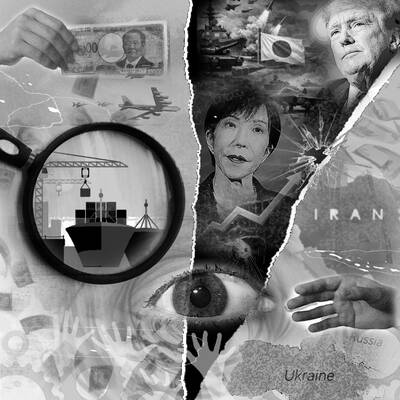
Japan’s imminent easing of arms export rules has sparked strong interest from Warsaw to Manila, Reuters reporting found, as US President Donald Trump wavers on security commitments to allies, and the wars in Iran and Ukraine strain US weapons supplies. Japanese Prime Minister Sanae Takaichi’s ruling party approved the changes this week as she tries to invigorate the pacifist country’s military industrial base. Her government would formally adopt the new rules as soon as this month, three Japanese government officials told Reuters. Despite largely isolating itself from global arms markets since World War II, Japan spends enough on its own
On March 31, the South Korean Ministry of Foreign Affairs released declassified diplomatic records from 1995 that drew wide domestic media attention. One revelation stood out: North Korea had once raised the possibility of diplomatic relations with Taiwan. In a meeting with visiting Chinese officials in May 1995, as then-Chinese president Jiang Zemin (江澤民) prepared for a visit to South Korea, North Korean officials objected to Beijing’s growing ties with Seoul and raised Taiwan directly. According to the newly released records, North Korean officials asked why Pyongyang should refrain from developing relations with Taiwan while China and South Korea were expanding high-level


 RSS
RSS