


In 2003, when Foundation Capital, a venture capital firm, started looking for new investors for Silver Spring Networks, one of its portfolio companies, it was rejected by every firm it called.
Investors in clean technology were just not excited about Silver Spring, because it makes hardware and software that utilities use to connect electric meters in a digital grid. They were more interested in companies that envisioned making energy from the sun’s rays, algae or tropical plants.
“People laughed at us,” said Adam Grosser, a partner at Foundation Capital.
Last summer, the thinking in Silicon Valley began to shift. Five top venture firms vied to invest in Silver Spring. The company chose Kleiner Perkins Caufield & Byers, perhaps the most well-known green technology investor, and two of its partners, venture capitalist John Doerr and former US vice president Al Gore, joined Silver Spring’s advisory board.
Venture capital is starting to move away from its infatuation with alternative energy and returning to one of its traditional strengths: applying information technology to improve the efficiency of energy consumption.
Many investors say developing new forms of energy can consume hundreds of millions of dollars over many years before showing any return. Grosser’s firm, however, is looking for technologies that reduce demand for energy.
“We need to move markets with small amounts of money,” he said.
About half of the dollars invested in clean technology last year went to alternative energy companies. In the first quarter of this year, though, only one-third of venture dollars invested in clean tech went to these companies, the National Venture Capital Association said.
Foundation Capital, which hires former entrepreneurs, not bankers, as investing partners, early on set a firm rule for green technology: It would not invest in any startups that needed hundreds of millions of dollars in capital, government subsidies or high oil prices.
The partners started exploring clean technology in 2002 and estimate that they look at a thousand startups each year. They found nine and are now investing about a quarter of their US$750 million fund in clean tech companies.
Warren Weiss, one of Foundation Capital’s clean tech partners, heard about Silver Spring, which was started in Milwaukee. It equips electric meters with networking cards so utilities can see power failures before customers call. In addition, customers can see which of their appliances use the most electricity and at which times of day they need to conserve.
In 2003, he and Grosser visited a dingy, overcrowded warehouse and ate deep-fried Twinkies with whipped cream with the founders.
Foundation Capital invested US$8 million, moved the company to a technology office park in Redwood City, California, hired a new chief executive, Scott Lang, and began pitching investors.
After Silver Spring ran out of cash in 2005, Foundation Capital kept it alive for 15 months with monthly loan checks. In 2007, it found a new investor, Duquesne Capital Management. Around that time, Silver Spring landed its first big contract, with Florida Power and Light. Other utilities called, including Pacific Gas & Electric and Pepco Holdings, based in Washington.
Today, backed by Kleiner Perkins and Google’s venture fund, Silver Spring is heralded as a promising green tech startup with the potential to go public.
“I think they have recognized our strategy is viable,” Grosser said about Kleiner Perkins.
Foundation Capital also invested in SunRun, which sells solar power to homeowners. It does not make solar panels, though. Instead, it offers solar power for a monthly fee so homeowners do not have to pay the installation and maintenance costs of rooftop panels.
Foundation Capital’s most successful investment so far is EnerNOC. It monitors energy in office buildings, grocery stores and hospitals and alerts operators to move power to places that need it most from those that need it least.
On a hot summer day, for example, EnerNOC will automatically shut off one-third of an office building’s lights, turn the air-conditioning down 3˚C and stop the fountain in the lobby so the energy can be used elsewhere.
Paul Holland, another Foundation Capital partner, met EnerNOC’s co-founders in 2002 at Dartmouth, where he was talking to business students. EnerNOC’s idea — to regulate energy supply and demand — stuck with him.
Two years later, the founders called him, and Foundation Capital invested US$21 million.
EnerNOC went public in May 2007, five years after its first round of venture capital, and raised US$98 million in its public offering of stock. Its revenue was US$106 million last year, and that is expected to grow 55 percent this year, said Timothy Healy, its chief executive.
“There are a lot of people who went down that path of solar and fuels and wish they didn’t,” Grosser said. “From where we sit, we are very grateful we didn’t put a pile of money down.”
Minister of Labor Hung Sun-han (洪申翰) on April 9 said that the first group of Indian workers could arrive as early as this year as part of a memorandum of understanding (MOU) between the Taipei Economic and Cultural Center in India and the India Taipei Association. Signed in February 2024, the MOU stipulates that Taipei would decide the number of migrant workers and which industries would employ them, while New Delhi would manage recruitment and training. Employment would be governed by the laws of both countries. Months after its signing, the two sides agreed that 1,000 migrant workers from India would
In recent weeks, Taiwan has witnessed a surge of public anxiety over the possible introduction of Indian migrant workers. What began as a policy signal from the Ministry of Labor quickly escalated into a broader controversy. Petitions gathered thousands of signatures within days, political figures issued strong warnings, and social media became saturated with concerns about public safety and social stability. At first glance, this appears to be a straightforward policy question: Should Taiwan introduce Indian migrant workers or not? However, this framing is misleading. The current debate is not fundamentally about India. It is about Taiwan’s labor system, its
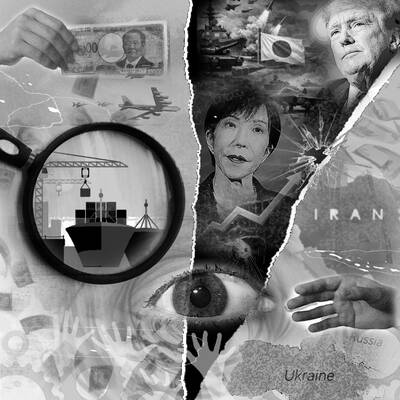
Japan’s imminent easing of arms export rules has sparked strong interest from Warsaw to Manila, Reuters reporting found, as US President Donald Trump wavers on security commitments to allies, and the wars in Iran and Ukraine strain US weapons supplies. Japanese Prime Minister Sanae Takaichi’s ruling party approved the changes this week as she tries to invigorate the pacifist country’s military industrial base. Her government would formally adopt the new rules as soon as this month, three Japanese government officials told Reuters. Despite largely isolating itself from global arms markets since World War II, Japan spends enough on its own
On March 31, the South Korean Ministry of Foreign Affairs released declassified diplomatic records from 1995 that drew wide domestic media attention. One revelation stood out: North Korea had once raised the possibility of diplomatic relations with Taiwan. In a meeting with visiting Chinese officials in May 1995, as then-Chinese president Jiang Zemin (江澤民) prepared for a visit to South Korea, North Korean officials objected to Beijing’s growing ties with Seoul and raised Taiwan directly. According to the newly released records, North Korean officials asked why Pyongyang should refrain from developing relations with Taiwan while China and South Korea were expanding high-level


 RSS
RSS