


A month after they first lined up to vote in India’s mammoth general election, the country’s voters will learn the outcome on Saturday. The election, staggered over five phases — involving five polling days over four weeks, rather than one “election day” — will determine who rules the world’s largest democracy. Only one thing is certain: No single party will win a majority on its own. India is set for more coalition rule.
That may not be a bad thing. India’s last two governments each served a full term and presided over significant economic growth, even though they comprised 23 and 20 parties respectively. Coalition politics gives representation to the myriad interests that make up a diverse and complex society, and ensures that the country as a whole accepts the policies ultimately adopted.
But coalition rule can also often mean governance of the lowest common denominator, as resistance by any of the government’s significant members to a policy can delay or even thwart it. In India’s parliamentary system, if a coalition loses its majority, the government falls and keeping allies together can sometimes prove a greater priority than getting things done.
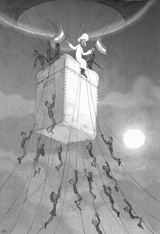
India’s national elections are really an aggregate of 30 different state elections, each influenced by its own local considerations, regional political currents and different patterns of political incumbency. Soon after Saturday, the largest single party that emerges will seek to construct a coalition out of a diverse array of victors from the various states.
Several outcomes are possible.
The most likely is that Indian Prime Minister Manmohan Singh’s Indian National Congress Party, currently leading the government, emerges once again as the largest single party and assembles a new ruling coalition. The main alternative would be a majority alliance put together by the Bharatiya Janata Party (BJP), led by the 82-year-old Lal Krishna Advani.
But there is a third possibility: A motley collection of regional parties, together with the Communists, gets enough seats to prevent either of the two big parties from forming a government. In that case, a “hung parliament” could see a “third front” coming to power as a minority government, supported tactically by one of the big parties. This has happened before — and each time, the government that resulted fell within a year.
Each alternative could have serious implications for India. Though the big parties are broadly committed to continuing an economic policy of liberalization and growth, the BJP is mostly focused on the well-being of India’s merchant class, whereas Congress wishes to redistribute enhanced government revenues to the poor through generous social programs.
The left, which would strongly influence any “third front” government, are staunchly opposed to economic liberalization and wish to strengthen, rather than dilute, India’s large public sector.
In foreign policy, India’s growing closeness with the US under both the BJP and the Congress has proved controversial at home, with leftist parties threatening to scrap the Indo-US nuclear deal and break defense ties with Israel if they come to power.
Should the regional parties dominate the government, domestic politics would strongly impact India’s foreign policy. The anger of Tamil voters over events in Sri Lanka, or of Muslims over Gaza, would be reflected in the government and therefore constrain policy options. The BJP has promised a more hawkish security posture than Congress in the wake of the Mumbai terrorist attacks, but when it was in power it conducted itself remarkably similarly to its rival, initiating a peace process with Pakistan.
The biggest differences among the various groupings consist in the tone and tenor of their respective visions of India.
Congress remains a “big tent” party, committed to preserving India’s pluralism and conscious of the multiple identities and interests of India’s many peoples. The BJP, which accuses Congress of “appeasing” India’s minorities, hews to a staunchly Hindu-chauvinist line and has received support from some of the most bigoted and intolerant sections of Indian society.
The “third front” involves assorted petty particularisms — parties representing the sectarian interests of specific castes, sub-regions or linguistic groups. The danger is that such groups could accentuate the divisions of a fractious society, rather than pull everyone together in the collective national interest.
That would be a startling change from five years ago.
The 2004 elections were won by the Congress party, led by a woman political leader of Roman Catholic faith and Italian descent (Sonia Gandhi), who made way for a Sikh prime minister (Manmohan Singh) to be sworn by a Muslim (President Abdul Kalam) in a country that is 81 percent Hindu. That single moment captured much of what elections have meant for this diverse democracy.
But the ultimate reality will remain that of a coalition government trying to make progress in a contentious polity. In India, policy changes require political consensus within the ruling coalition, labor laws are strongly defended by unions and political parties, and controversial decisions can be challenged on the streets, in the courts and ultimately at the polls. Necessary policy reforms advocated by a ruling party are often held hostage to the prejudices of its allies.
So change comes slowly. But it does come and once a policy consensus has been established, it tends to be durable. Indian democracy has often been likened to the stately progress of the elephant — ponderous in its gait and reluctant to change course, but it is not easily swayed from its new path when it does.
The elephant of Indian democracy will acquire a new set of mahouts before the month’s end. Who they are will have a major impact on the fortunes and prospects of one-sixth of humanity. That alone makes the election results due on Saturday worthy of the world’s attention.
Shashi Tharoor, a former UN under secretary-general, is the Congress Party candidate for parliament in Thiruvananthapuram, Kerala State.
COPYRIGHT: PROJECT SYNDICATE
The cancelation this week of President William Lai’s (賴清德) state visit to Eswatini, after the Seychelles, Madagascar and Mauritius revoked overflight permits under Chinese pressure, is one more measure of Taiwan’s shrinking executive diplomatic space. Another channel that deserves attention keeps growing while the first contracts. For several years now, Taipei has been one of Europe’s busiest legislative destinations. Where presidents and foreign ministers cannot land, parliamentarians do — and they do it in rising numbers. The Italian parliament opened the year with its largest bipartisan delegation to Taiwan to date: six Italian deputies and one senator, drawn from six
Recently, Taipei’s streets have been plagued by the bizarre sight of rats running rampant and the city government’s countermeasures have devolved into an anti-intellectual farce. The Taipei Parks and Street Lights Office has attempted to eradicate rats by filling their burrows with polyurethane foam, seeming to believe that rats could not simply dig another path out. Meanwhile, as the nation’s capital slowly deteriorates into a rat hive, the Taipei Department of Environmental Protection has proudly pointed to the increase in the number of poisoned rats reported in February and March as a sign of success. When confronted with public concerns over young
China has long given assurances that it would not interfere in free access to the global commons. As one Ministry of Defense spokesperson put it in 2024, “the Chinese side always respects the freedom of navigation and overflight entitled to countries under international law.” Although these reassurances have always been disingenuous, China’s recent actions display a blatant disregard for these principles. Countries that care about civilian air safety should take note. In April, President Lai Ching-te (賴清德) canceled a planned trip to Eswatini for the 40th anniversary of King Mswati III’s coronation and the 58th anniversary of bilateral diplomatic
Taiwan’s technology companies outpaced traditional sectors by swiftly penetrating the global artificial intelligence (AI) supply chain to occupy an indispensable place in the industry, breaking away from the slim-profit-margin business models of providing manufacturing services on a contract basis. That could explain why the tech-heavy TAIEX became an outperformer among its global peers. The drastic transformation gave a strong lift to the TAIEX, which has been showing outstanding performance since last month, rallying about 23 percent with daily turnover hovering at a record NT$1 trillion (US$31.6 billion) since the middle of last month. The TAIEX has risen to the world’s sixth-largest


 RSS
RSS