


How bittersweet it is to recall pronouncements — on and off the record — by Taiwan-based foreign chambers of commerce and individual businesses that the election of a Chinese Nationalist Party (KMT) government would improve Taiwan’s economy.
How amusing it is, then, to see the American Chamber of Commerce in Taipei (AmCham) and the European Chamber of Commerce Taipei (ECCT) complaining about a KMT legislative amendment that will lower the cap on credit card interest rates and probably damage Taiwan’s attractiveness as an investment destination.
The latter-day KMT is not the technocrat-friendly organization it once was, and in recent times individual legislators have used their authority within the party to advance spurious — sometimes almost anarchic — reforms at the expense of good governance and against all expert advice.
AmCham and the ECCT are absolutely justified in their concerns. But they cannot complain too loudly: They got what they asked for, and there is likely more of this to come. When they lament a “sudden and arbitrary shift in regulatory policy” resulting from political considerations, the real question that arises is why they didn’t heed this tendency when the KMT was in opposition.
Whether in opposition or government, the cultivation and protection of democracy has never been the guiding principle of the KMT machine. This is why it is so willing to cut hasty, unaccountable deals with the Chinese Communist Party. But with this latest display of financial ineptitude, there is a real concern that any economic cooperation framework agreement (ECFA) with China might carry a potentially crippling payload.
The evidence for this has amassed to the extent that it is shocking just how consistently think tanks in the US and other countries are ignoring it.
If Taiwan-based foreign professionals can be taken by surprise by such policy developments, what hope is there for political analysts and legislators overseas who don’t have the inside track?
In the last few weeks, people in high places in the US Congress have recycled expressions like “peaceful unification” as code for the rejection of the political and economic concerns of half of Taiwan’s population — and possibly many more.
With informed observers feeling gloomier all the time about Taiwan’s ability to defend itself, the “peaceful unification” supported by certain members of the US Congress may turn out to be a self-fulfilling prophecy — but only in part.
“Unification” is certainly on the cards. But the most generous concession that can be offered is that as long as the Chinese Communist Party rules China, “peaceful unification” will remain a fantasy, an expression that George Orwell might have fruitfully used in one of his dystopic novels.
A telling piece of research might solicit the KMT’s Central Standing Committee and other influential party officials on what they would do if — as is most likely — they were forced to choose between a democratic Taiwanese state with control over economic policy and an autocratic, “unified” China in which economics plays second fiddle.
The answer would hardly raise an eyebrow in Taiwan, but it would come as a real shock to foreign analysts here and in the US whose belief in “peaceful unification” is sincere.
KMT Chairwoman Cheng Li-wun’s (鄭麗文) recent visit to Beijing and her upcoming visit to Washington will serve as a high-level test of her diplomatic mettle. In Beijing, Cheng was received with symbolic gestures, a warm reception, and high-level access. In Washington, she will receive far less pomp and far sharper questions about the KMT’s vision for the future of Taiwan. Her challenge will be to persuade Washington that the KMT’s engagement with China can coexist with strong deterrence. Cheng’s April 7-12 visit to mainland China coincided with an intense period of conflict in Iran. Despite the strategic significance of Cheng’s trip,
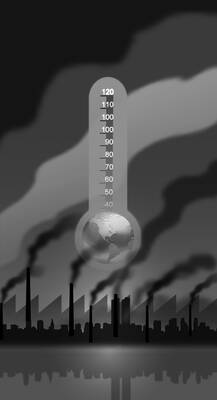
The closure of the Strait of Hormuz has sent the vast Asian chemicals industry into a tailspin. Deprived of the likes of Qatari natural gas and Saudi Arabian oil, the region’s fertilizer and plastics plants are slowing production or even shutting down. Everywhere except China, that is. In petrochemicals, China is unique. As well as a traditional industry that uses oil and gas as feedstock, it has parallel output that relies on its abundant domestic coal. Unsurprisingly, India and other regional powers want to copy and paste the Chinese method. This would not be easy — or climate friendly. The
US President Donald Trump recently repeated his claim that “Taiwan stole America’s chip industry,” reigniting public debate on the issue. As a former Taiwanese minister of economic affairs and an entrepreneur deeply involved in semiconductor supply chain development, I feel a responsibility to clarify this misunderstanding. From the perspective of global industrial evolution and the economic principle of comparative advantage, such a statement appears overly simplistic and risks obscuring the essence of the issue. The rise of Taiwan’s semiconductor industry was not built on “replacing America,” but rather emerged as a result of countries pursuing different development paths within the
Indonesian President Prabowo Subianto says he knows how to fix the problems facing Indonesia. Yet his economic mismanagement and authoritarian tendencies are steering the nation toward a familiar mix of currency instability and political chaos. The world’s fourth-most populous nation risks reversing the hard-won democratic and business reforms that came after the Asian Financial Crisis in 1997. At that time, the rupiah collapsed and the political upheaval that followed forced former president Haji Mohamed Suharto from power. Prabowo’s administration is ignoring similar warning signs. That disconnect was apparent in a national address on Wednesday, when Prabowo projected the swagger that has


 RSS
RSS