


A ridiculous comparison
President Ma Ying-jeou’s (馬英九) supporters love to compare him to US President Barack Obama. During last year’s presidential campaign, one of Ma’s most famous — now infamous — commercials featured galloping horses with the words “The Power of Change” plastered across the TV screen.
Pan-blue-camp supporters portrayed Ma as having characteristics similar to Obama: charismatic, athletic, youthful — not to mention Harvard-educated. Voters from both countries have high expectations for the presidents to dig their countries out of the economic slump.
But one can only take this comparison at face value, because when one probes deeper, comparing Ma and Obama is like comparing a bitter melon to a honeydew.
Since Ma took office on May 20 last year, he has gone back on almost all of his campaign promises. Even the economic policies that Ma has claimed credit for, such as opening direct flights and negotiating a trade agreement between Taiwan and China, have come at the expense of Taiwan’s sovereignty.
As crime and suicide rates rise, so does the cost of gas, electricity, groceries and everything else.
In addition, Taiwan’s democracy is again under siege, with riot police brutally cracking down on protesters during the visit of China’s envoy to Taiwan.
Despite warnings and criticisms from international human rights organizations such as Freedom House and Amnesty International, a high school student was arrested for simply chanting “Ma Ying-jeou, step down” just last week.
The most recent and appalling episode happened when the information chief of Taiwan’s representative office in Toronto was alleged to be the author of numerous articles, editorials and blog entries depicting Taiwanese as low-class, uneducated, unsophisticated idiots who deserve to be governed by a dictatorship, while advocating a military takeover of Taiwan by China.
When Ma was asked by reporters for comment on the matter, he chose to keep silent — as he has done countless times before when faced with a difficult situation.
Recently, Ma’s cohorts again compared him to Obama by mocking the gray hair that appeared on Obama’s temple since he took office. This was meant to flatter Ma for still having beautiful, jet-black locks 10 months into office.
What Ma’s adulators fail to depict in such comparisons is events such as this: When Obama addressed a group of concerned citizens this week at a town hall meeting in Costa Mesa, California, he said: “I know Washington is all in a tizzy, and everybody is pointing fingers at each other and saying it’s their fault, the Democrats’ fault, the Republicans’ fault. Listen, I’ll take responsibility; I’m the president.”
He went on: “So for everybody in Washington who’s busy scrambling, trying to figure out how to blame somebody else, just go ahead and talk to me, because it’s my job to make sure that we fix these messes, even if I don’t make them.”
Until Ma stops blaming the previous administration and the world environment for his stance that kowtows to China, his inability to manage crises and inability to assume the responsibilities that a president should, the act of comparing Ma to Obama will remain not only erroneous, but also ridiculous.
KETTY CHEN
Norman, Oklahoma
Kuo must be recalled
The Association of Taiwanese Organizations in Toronto (ATOT) held a press conference and community forum on the Kuo Kuan-ying (郭冠英) scandal last Friday.
ATOT, which consists of 15 local Taiwanese organizations, issued a statement calling on Taiwan’s government to bring in legislation in the spirit of UN General Assembly Resolutions on Holocaust denial, confirming the historical status of the Feb. 28 Incident and forbidding any minimization or denial of the same.
The ATOT statement also demanded that Kuo be removed from any official position and urged the government to make a clear statement that people who hold such views cannot represent Taiwan overseas.
Former lawmaker Albert Lin (林哲夫), chair of the Democratic Progressive Party (DPP) Canada Branch, said Kuo was guilty of hate crimes and should be reported to the Toronto Police Hate Crimes Unit for prosecution.
Lin’s view was widely supported by the assembly of 120 people.
As president of the Taiwanese Human Rights Association of Canada, I spoke about the importance of using this “absurd incident” to make changes in Taiwan, by passing appropriate hate speech and “228 massacre denial” laws to set limits on Taiwan’s emotional interethnic debates.
After the meeting, Taiwanese community leaders drove downtown to present their concerns to Taipei Economic and Cultural Office, Toronto, Director Wang Kuo-ran (王國然), who met with them for an hour. Wang promised to transmit their statement to the authorities in Taiwan.
ATOT leaders will be meeting with the Canadian Jewish Congress to discuss the possible application of Holocaust denial and hate crime law models to Taiwan, as well as seeking legal advice on charging Kuo under Canadian hate crime laws.
Michael Stainton
Toronto, Canada
Minister of Labor Hung Sun-han (洪申翰) on April 9 said that the first group of Indian workers could arrive as early as this year as part of a memorandum of understanding (MOU) between the Taipei Economic and Cultural Center in India and the India Taipei Association. Signed in February 2024, the MOU stipulates that Taipei would decide the number of migrant workers and which industries would employ them, while New Delhi would manage recruitment and training. Employment would be governed by the laws of both countries. Months after its signing, the two sides agreed that 1,000 migrant workers from India would
In recent weeks, Taiwan has witnessed a surge of public anxiety over the possible introduction of Indian migrant workers. What began as a policy signal from the Ministry of Labor quickly escalated into a broader controversy. Petitions gathered thousands of signatures within days, political figures issued strong warnings, and social media became saturated with concerns about public safety and social stability. At first glance, this appears to be a straightforward policy question: Should Taiwan introduce Indian migrant workers or not? However, this framing is misleading. The current debate is not fundamentally about India. It is about Taiwan’s labor system, its
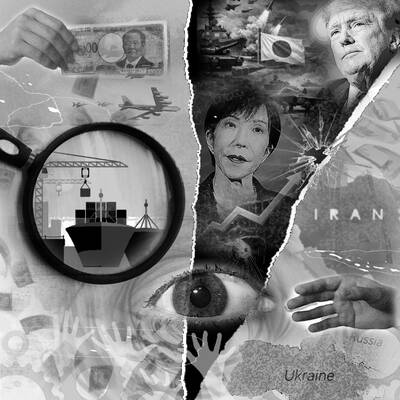
Japan’s imminent easing of arms export rules has sparked strong interest from Warsaw to Manila, Reuters reporting found, as US President Donald Trump wavers on security commitments to allies, and the wars in Iran and Ukraine strain US weapons supplies. Japanese Prime Minister Sanae Takaichi’s ruling party approved the changes this week as she tries to invigorate the pacifist country’s military industrial base. Her government would formally adopt the new rules as soon as this month, three Japanese government officials told Reuters. Despite largely isolating itself from global arms markets since World War II, Japan spends enough on its own
On March 31, the South Korean Ministry of Foreign Affairs released declassified diplomatic records from 1995 that drew wide domestic media attention. One revelation stood out: North Korea had once raised the possibility of diplomatic relations with Taiwan. In a meeting with visiting Chinese officials in May 1995, as then-Chinese president Jiang Zemin (江澤民) prepared for a visit to South Korea, North Korean officials objected to Beijing’s growing ties with Seoul and raised Taiwan directly. According to the newly released records, North Korean officials asked why Pyongyang should refrain from developing relations with Taiwan while China and South Korea were expanding high-level


 RSS
RSS