


The government’s plan to sign an economic cooperation framework agreement (ECFA) with China has provoked much controversy. This is just another move in Beijing’s plan to achieve unification through economic means. It intends to use ASEAN Plus One and other regional cooperation pacts to suppress and restrict Taiwan’s international economic space and lure Taiwan so far down the road of economic integration that it cannot escape.
Former president Lee Teng-hui’s (李登輝) “no haste, be patient” policy and the former Democratic Progressive Party government’s policy of “active opening and effective management” — later changed to “active management and effective opening” — were aimed at countering Beijing and preventing businesspeople from colluding with pro-China forces to push Taiwan down the road to Chinese domination.
With President Ma Ying-jeou’s (馬英九) aim of eventual unification, we are faced with collusion between government and business, both keen to rush into China’s embrace.
China makes no secret of its intention to annex Taiwan. Therefore, the government’s ideology-driven policy of looking to China for Taiwan’s economic prospects will have disastrous results for the country. There is no separation between political and economic concerns in Beijing’s treatment of Taiwan. All its policies are aimed at drawing Taiwan closer until it is entirely under Chinese domination. Some people in Taiwan, however, echo China’s claim that an ECFA should not be seen in a political light, maybe because they are naive or blinded by greed, or maybe because they harbor favor annexation.
The chief culprit obstructing Taiwan from establishing bilateral or multilateral free-trade agreements with other countries is China. The ECFA idea is Beijing’s barely disguised ploy to entice Taiwan into becoming part of China in terms of international trade. To see an ECFA as a way out of Taiwan’s so-called marginalization is, therefore, wishful thinking — unless, of course, its advocates are really intent on surrendering to the other side.
Taiwan has clearly lost more than it has gained on the road from former president Chiang Ching-kuo’s (蔣經國) 1980s “three noes” policy of no contact, no compromise and no negotiation with China to today’s growing dependence on China. Taiwan’s economic takeoff in the 1970s and 1980s was achieved by building close relations with the US, Europe and Japan.
Now that Taiwan is actively engaged in exchanges with China, it is putting more of its eggs in one basket, even though China is a backward country.
Production factor price equalization comes into play whenever an advanced economy integrates with a less-developed one. While individual business owners may profit from lower costs and a bigger scale of production, the process obstructs the upgrading of production technology and business standards. The economy of the more advanced country is weakened and workers either find themselves out of a job or see real wages decline.
Taiwan has recently seen the greatest ever fall in real wages. Clearly, Taiwan’s steps toward integration with China have done it great harm.
Disregarding these economic realities, the government remains determined to sign an ECFA. Worse, it wants to do so without going through the proper process of explaining the issues to the public, allowing open debate and forming a consensus. It wants to push the agreement through and have the legislature act as a mere rubber stamp.
If the public lets the government have its way, we will be headed toward becoming just another part of China, our lives at the whim of its despotic rulers.
Lu Shih-hsiang is an adviser to the Taipei Times.
TRANSLATED BY JULIAN CLEGG
KMT Chairwoman Cheng Li-wun’s (鄭麗文) recent visit to Beijing and her upcoming visit to Washington will serve as a high-level test of her diplomatic mettle. In Beijing, Cheng was received with symbolic gestures, a warm reception, and high-level access. In Washington, she will receive far less pomp and far sharper questions about the KMT’s vision for the future of Taiwan. Her challenge will be to persuade Washington that the KMT’s engagement with China can coexist with strong deterrence. Cheng’s April 7-12 visit to mainland China coincided with an intense period of conflict in Iran. Despite the strategic significance of Cheng’s trip,
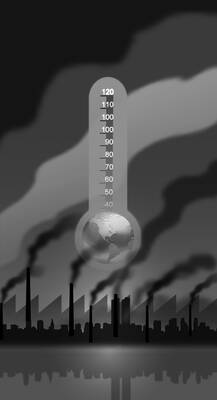
The closure of the Strait of Hormuz has sent the vast Asian chemicals industry into a tailspin. Deprived of the likes of Qatari natural gas and Saudi Arabian oil, the region’s fertilizer and plastics plants are slowing production or even shutting down. Everywhere except China, that is. In petrochemicals, China is unique. As well as a traditional industry that uses oil and gas as feedstock, it has parallel output that relies on its abundant domestic coal. Unsurprisingly, India and other regional powers want to copy and paste the Chinese method. This would not be easy — or climate friendly. The
US President Donald Trump recently repeated his claim that “Taiwan stole America’s chip industry,” reigniting public debate on the issue. As a former Taiwanese minister of economic affairs and an entrepreneur deeply involved in semiconductor supply chain development, I feel a responsibility to clarify this misunderstanding. From the perspective of global industrial evolution and the economic principle of comparative advantage, such a statement appears overly simplistic and risks obscuring the essence of the issue. The rise of Taiwan’s semiconductor industry was not built on “replacing America,” but rather emerged as a result of countries pursuing different development paths within the
Indonesian President Prabowo Subianto says he knows how to fix the problems facing Indonesia. Yet his economic mismanagement and authoritarian tendencies are steering the nation toward a familiar mix of currency instability and political chaos. The world’s fourth-most populous nation risks reversing the hard-won democratic and business reforms that came after the Asian Financial Crisis in 1997. At that time, the rupiah collapsed and the political upheaval that followed forced former president Haji Mohamed Suharto from power. Prabowo’s administration is ignoring similar warning signs. That disconnect was apparent in a national address on Wednesday, when Prabowo projected the swagger that has


 RSS
RSS