


On Oct. 9, 1967, Che Guevara faced a shaking sergeant Mario Teran, who was ordered to murder him by the Bolivian president and the CIA, and declared: “Shoot coward, you’re only going to kill a man.”
The climax of Stephen Soderbergh’s new two-part epic, Che, in real life this final act of heroic defiance marked the defeat of attempts to spread the Cuban revolution to the rest of Latin America.
But 40 years later, the long-retired executioner, now a reviled old man, had his sight restored for free by Cuban doctors, paid for by revolutionary Venezuela in the radicalized Bolivia of President Evo Morales. Teran was treated as part of a program that has seen 1.4 million free eye operations carried out by Cuban doctors in 33 countries across Latin America, the Caribbean and Africa. It is an emblem both of the humanity of former Cuban president Fidel Castro and Guevara’s legacy, but also of the transformation of Latin America, which has made such extraordinary cooperation possible.
The 50th anniversary of the Cuban revolution this month has already been the occasion for a regurgitation of Western media tropes about pickled totalitarian misery, while next week’s 10th anniversary of Venezuelen President Hugo Chavez’s time in power will undoubtedly trigger a parallel outburst of hostility, ridicule and unfounded accusations.
The fact that Chavez, still commanding close to 60 percent popular support, is again trying to convince the Venezuelan people to overturn the US-style two-term limit on his job will only intensify such charges, even though the change would merely bring the country into line with the rules in France and Britain.
But it is a response that utterly fails to grasp the significance of the wave of progressive change that has swept away the old elites and brought a string of radical socialist and social-democratic governments to power across the continent, from Ecuador to Brazil, Paraguay to Argentina, which is challenging US domination and neoliberal orthodoxy, breaking down social and racial inequality, building regional integration and taking back resources from corporate control.
That is the process which last week saw Bolivians vote, in the land where Guevara was hunted down, to adopt a sweeping new Constitution empowering the country’s long-suppressed indigenous majority and entrenching land reform and public control of natural resources — after months of violent resistance sponsored by the traditional white ruling class. It’s also seen Cuba finally brought into the heart of regional structures from which Washington has strained every nerve to exclude it.
The seeds of this Latin American rebirth were sown half a century ago in Cuba. But it is also more directly rooted in the region’s disastrous experience of neoliberalism, first implemented by the bloody regime of former Chilean dictator Augusto Pinochet in the 1970s — before being adopted with enthusiasm by former British prime minister Margaret Thatcher and former US president Ronald Reagan in the 1980s and duly enforced across the world.
The wave of privatization, deregulation and mass pauperization it unleashed in Latin America first led to mass unrest in Venezuela in 1989, savagely repressed in the Caracazo massacre of more than a 1,000 barrio dwellers and protesters. The economic meltdown of the 1998 financial crisis unleashed a far wider rejection of the new market order. The international significance of this revolt against neoliberalism on the periphery of the US empire could not be clearer as the global credit breakdown rapidly discredits the free market model first rejected in South America.
Hopes are high in the continent that US President Barack Obama will recognize the powerful national, social and ethnic roots of Latin America’s reawakening — the election of an Aymara president was as unthinkable in Bolivia as an African-American president in the US — and start to build a new relationship of mutual respect. The signs so far are mixed. The new US president has made some positive noises about Cuba, promising to lift the Bush administration’s travel and remittances ban for US citizens — though not to end the stifling 47-year-old trade embargo.
But on Venezuela, it seemed to be business as usual last month when Obama said Chavez was a “force that has interrupted progress” and claimed Venezuela was “supporting terrorist activities” in Colombia based on spurious computer disc evidence produced by the Colombian military.
If this is intended as political cover for an opening to Cuba, then perhaps it shouldn’t be taken too seriously. But if it is an attempt to isolate Venezuela and divide and rule in the US’ backyard, then it’s unlikely to work. Venezuela is a powerful regional player and while Chavez may have lost five out of 22 states in last November’s regional elections, his supporters still won 54 percent of the popular vote to the opposition’s 42 percent.
That is based on a decade of unprecedented mobilization of oil revenues to achieve social gains, including the near halving of poverty rates, the elimination of illiteracy and a massive expansion of free health and education. The same and more is true of Cuba, famous for first world health and education standards —- with better infant mortality rates than the US Less well known is the country’s success in diversifying its economy since the collapse of the Soviet Union, not just into tourism and biotechnology, but the export of medical services and affordable vaccines to the poorest parts of the world. Anyone who seriously cares about social justice cannot but recognize the scale of these achievements — just as the greatest contribution of those genuinely concerned about the lack of freedom and democracy in Cuba can make is to help get the US off the Cubans’ backs.
None of that means the global crisis engulfing Latin America isn’t potentially a threat to all its radical and progressive governments, with falling commodity prices cutting revenues and credit markets drying up. Revolutions can’t stand still and the deflation of the oil cushion that allowed Chavez to leave the interests of the traditional Venezuelan ruling elite untouched means pressure for more radical solutions is likely to grow.
Meanwhile, the common sense about the bankruptcy of neoliberalism first recognized in Latin America has gone global. Whether it generates the same kind of radicalism elsewhere remains to be seen.
KMT Chairwoman Cheng Li-wun’s (鄭麗文) recent visit to Beijing and her upcoming visit to Washington will serve as a high-level test of her diplomatic mettle. In Beijing, Cheng was received with symbolic gestures, a warm reception, and high-level access. In Washington, she will receive far less pomp and far sharper questions about the KMT’s vision for the future of Taiwan. Her challenge will be to persuade Washington that the KMT’s engagement with China can coexist with strong deterrence. Cheng’s April 7-12 visit to mainland China coincided with an intense period of conflict in Iran. Despite the strategic significance of Cheng’s trip,
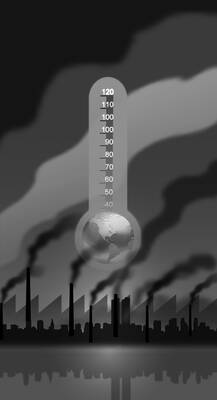
The closure of the Strait of Hormuz has sent the vast Asian chemicals industry into a tailspin. Deprived of the likes of Qatari natural gas and Saudi Arabian oil, the region’s fertilizer and plastics plants are slowing production or even shutting down. Everywhere except China, that is. In petrochemicals, China is unique. As well as a traditional industry that uses oil and gas as feedstock, it has parallel output that relies on its abundant domestic coal. Unsurprisingly, India and other regional powers want to copy and paste the Chinese method. This would not be easy — or climate friendly. The
US President Donald Trump recently repeated his claim that “Taiwan stole America’s chip industry,” reigniting public debate on the issue. As a former Taiwanese minister of economic affairs and an entrepreneur deeply involved in semiconductor supply chain development, I feel a responsibility to clarify this misunderstanding. From the perspective of global industrial evolution and the economic principle of comparative advantage, such a statement appears overly simplistic and risks obscuring the essence of the issue. The rise of Taiwan’s semiconductor industry was not built on “replacing America,” but rather emerged as a result of countries pursuing different development paths within the
Indonesian President Prabowo Subianto says he knows how to fix the problems facing Indonesia. Yet his economic mismanagement and authoritarian tendencies are steering the nation toward a familiar mix of currency instability and political chaos. The world’s fourth-most populous nation risks reversing the hard-won democratic and business reforms that came after the Asian Financial Crisis in 1997. At that time, the rupiah collapsed and the political upheaval that followed forced former president Haji Mohamed Suharto from power. Prabowo’s administration is ignoring similar warning signs. That disconnect was apparent in a national address on Wednesday, when Prabowo projected the swagger that has


 RSS
RSS