


The brawl between Han Chinese and Uighurs at a factory in southern China was scarcely covered by state media, but accounts and photos spread quickly via the Internet and became a spark that helped ignite deadly riots thousands of kilometers away in the Uighur homeland.
Even in tightly controlled China, relatively unfettered commentaries and images circulating on Web sites helped stir up tensions and rally people to join an initially peaceful protest in the Xinjiang region that spiraled into violence on Sunday, leaving more than 150 people dead.
In China, as in Iran and other hotspots, the Internet, social networking and micro-blogging are playing a central role in mobilizing people power — and becoming contested ground as governments fight back.
In the Internet age, events in “places like Xinjiang or Tibet, which were always considered very remote,” can suddenly become close and immediate for people around the world, said Xiao Qiang (蕭強), director of the Berkeley China Internet Project at the University of California-Berkeley.
Since the outburst in the Xinjiang capital of Urumqi, the Chinese government has blocked Twitter and Facebook, scrubbed news sites, unplugged the Internet entirely in some places and slowed it and cell phone service to a crawl in others to stifle reports about the violence — and get its own message out that authorities are in control.
Keyword filters have been activated on search engines like Baidu and Google’s Chinese version so that searches for “Xinjiang” or “Uighur” only turn up results that jibe with the official version of events.
That a fight in one part of China could generate a riot 10 days later thousands of kilometers away underscores how slippery fast-evolving communication technologies can be.
State media reports said only two people died in the June 25 fight between Uighur and Han Chinese workers at a toy factory in southern Shaoguan city. In the days that followed, however, graphic photos spread on the Internet purportedly showing at least a half-dozen bodies of Uighurs, with Han Chinese — members of China’s majority ethnic group — standing over them, arms raised in victory.
Expunged from some sites, the photos were posted and reposted, some on overseas servers beyond the reach of censors. Their impact was amplified by postings on bulletin boards and other sites.
Uighurbiz.cn, a site popular among Uighurs, carried an open letter over the weekend suggesting there would be revenge for the factory fight.
A flurry of postings on another popular site, Diyarim.com, began calling for action in Urumqi. Diyarim’s founder, Dilixati, remembers one: “Gather at 5 pm at People’s Square. Young people if you have time come to the square.”
The messages kept reappearing, and he called police to alert them and took the site off-line, said Dilixati, who would give only his first name for fear of reprisals.
Hours after Sunday’s riot, when police were still trying to pacify Urumqi’s streets, Xinjiang’s leaders went on TV to denounce Uighur separatists living abroad for using Diyarim and Uighurbiz to organize the disturbance.
That the riot occurred in Urumqi may be testament to its being the most-wired place in Xinjiang, a remote region of vast deserts and towering mountains.
Only a dozen years ago, when China was scarcely wired, details of the authorities’ brutal quelling of a similar protest by Uighurs in the city of Yining leaked out slowly and even today remain obscure.
Unplugging Internet and cell phone service has become standard practice for dealing with civil unrest. The government did so in March over worries about renewed anti-Chinese demonstrations in Tibetan areas.
Though officials usually prefer to keep silent about such tactics, Urumqi’s top Communist Party official, Li Zhi (栗智), told a news conference on Tuesday that the Internet was deliberately cut off in parts of the city. He said it was done “in order to quench the riot quickly and prevent violence from spreading to other places.”
Such censorship does not quiet unrest for long, but instead ends up giving rumors more credence than they deserve, Xiao said.
“The more you try to police the Internet, and delete information, the more those rumors become some kind of truth and people just pick what they want to believe,” Xiao said. “That’s the negative direct consequences of such tight information control.”
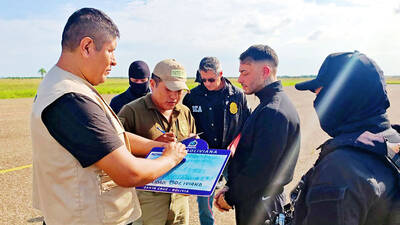
KINGPIN: Marset allegedly laundered the proceeds of his drug enterprise by purchasing and sponsoring professional soccer teams and even put himself in the starting lineups Notorious Latin American narco trafficker Sebastian Marset, who eluded police for years, was handed over to US authorities after his arrest on Friday in Bolivia. Marset, a Uruguayan national who was on the US most-wanted list, was passed to agents of the US Drug Enforcement Administration at Santa Cruz airport in Bolivia, then put on a US airplane, Bolivian state television showed. “The arrest and deportation were carried out pursuant to a court order issued by the US justice system,” Bolivian Minister of Government Marco Antonio Oviedo told reporters. The alleged kingpin was arrested in an upscale neighborhood of Santa
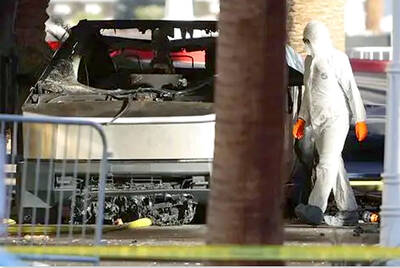
ACTIONABLE ADVICE: The majority of chatbots tested provided guidance on weapons, tactics and target selections, with Perplexity and Meta AI deemed to be the least safe From school shootings to synagogue bombings, leading artificial intelligence (AI) chatbots helped researchers plot violent attacks, according to a study published on Wednesday that highlighted the technology’s potential for real-world harm. Researchers from the nonprofit watchdog Center for Countering Digital Hate and CNN posed as 13-year-old boys in the US and Ireland to test 10 chatbots, including ChatGPT, Google Gemini, Perplexity, Deepseek and Meta AI. Eight of the chatbots assisted the make-believe attackers in more than half the responses, providing advice on “locations to target” and “weapons to use” in an attack, the study said. The chatbots had become a “powerful accelerant for
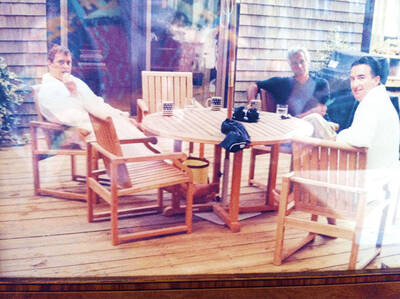
SCANDAL: Other images discovered earlier show Andrew bent over a female and lying across the laps of a number of women, while Mandelson is pictured in his underpants A photograph of former British prince Andrew and veteran politician Peter Mandelson sitting in bathrobes alongside late sex offender Jeffrey Epstein was unearthed on Friday in previously published documents. The image is believed to be the first known photograph of the two men with Epstein. They are currently engulfed in scandal in the UK over their ties to their mutual friend. The undated photograph, first reported by ITV News, shows King Charles III’s disgraced brother and former British ambassador to the US sitting barefoot outside on a wooden deck. They appear to have mugs with a US flag on them
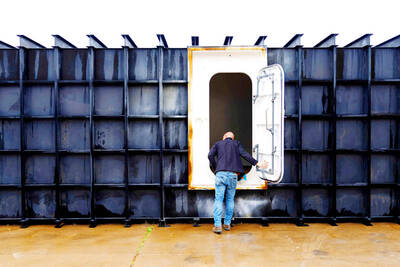
Since the war in the Middle East began nearly two weeks ago, the telephone at Ron Hubbard’s bomb shelter company in Texas has not stopped ringing. Foreign and US clients are rushing to buy his bunkers, seeking refuge in case of air raids, nuclear fallout or apocalypse. With the US and Israel pounding Iran, and Tehran retaliating with strikes across the region, Hubbard has seen demand for his product soar, mostly from Gulf nation customers in Bahrain, Qatar, Kuwait and the United Arab Emirates. “You can imagine how many people are thinking: ‘I wish I had a bomb shelter,’” Hubbard, 63, said in


 RSS
RSS