


South Korea, Australia and Japan withdrew melamine-contaminated sweets and drinks from supermarkets yesterday amid a widening scandal over Chinese milk products tainted with the toxic chemical.
Authorities in Seoul ordered Mars and Nestle to pull three products after melamine, which is usually used for making plastics, was detected in snacks made in China by the multinationals.
The industrial chemical had been found in M&M’s and Snickers peanut Fun Size packets, both produced by Mars, and Kit Kat chocolate bars imported from Nestle Tianjin in China, the Korea Food and Drug Administration said.
“Mars is recalling these products because it is legally obligated to do so following the announcement by the Korean Food and Drug Administration [KFDA],” Mars said.
Melamine has been blamed for making thousands of infants ill and killing four in China after it tainted baby milk powder in one of the country’s worst-ever product safety scandals.
China is struggling to limit the damage to its food safety reputation as a growing number of countries suspend imports of Chinese milk products or withdraw them from sale.
Mars said that while it was complying with the South Korean request, the melamine levels detected were too small to pose a health risk. The firm called for a standard reporting limit of the industrial chemical across Asia.
“Minute traces of melamine are commonly found throughout the global food chain and melamine levels below 2.5ppm [parts per million] are not deemed to indicate adulteration with melamine,” it said.
A KFDA official said South Korea does not allow any level of melamine in food.
WHO food safety expert Peter Ben Embarek said earlier this week that many countries had only recently fixed limits for melamine in food as “melamine has nothing to do with the food chain.”
The chemical was added to milk before being sold to dairy manufacturers in a bid to falsely boost protein readings, Chinese authorities have said.
A fourth Chinese milk product has been withdrawn from sale in Australia after tests revealed it was tainted with melamine, Food Standards Australia New Zealand said in a statement.
“Consumers are advised not to consume Kirin milk tea made in China,” the organization said.
The Australian food watchdog has already recalled White Rabbit sweets and Chinese-made Cadbury chocolate eclairs, while importers of Lotte Koala Biscuits have undertaken a precautionary withdrawal of the product.
A Japanese importer, meanwhile, began recalling Chinese chocolates suspected of being contaminated with melamine.
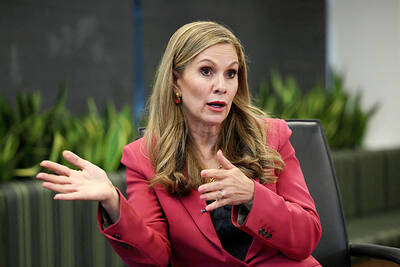
Australians were downloading virtual private networks (VPNs) in droves, while one of the world’s largest porn distributors said it was blocking users from its platforms as the country yesterday rolled out sweeping online age restriction. Australia in December became the first country to impose a nationwide ban on teenagers using social media. A separate law now requires artificial intelligence (AI)-powered chatbot services to keep certain content — including pornography, extreme violence and self-harm and eating disorder material — from minors or face fines of up to A$49.5 million (US$34.6 million). The country also joined Britain, France and dozens of US states requiring
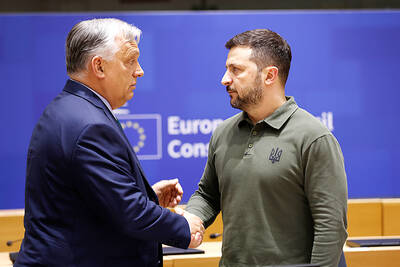
Hungarian authorities temporarily detained seven Ukrainian citizens and seized two armored cars carrying tens of millions of euros in cash across Hungary on suspicion of money laundering, officials said on Friday. The Ukrainians were released on Friday, following their detention on Thursday, but Hungarian officials held onto the cash, prompting Ukraine to accuse Hungary’s Russia-friendly government of illegally seizing the money. “We will not tolerate this state banditism,” Ukrainian Minister of Foreign Affairs Andrii Sybiha said. The seven detained Ukrainians were employees of the Ukrainian state-owned Oschadbank, who were traveling in the two armored cars that were carrying the money between Austria and
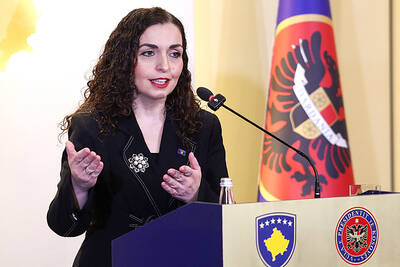
Kosovar President Vjosa Osmani on Friday after dissolving the Kosovar parliament said a snap election should be held as soon as possible to avoid another prolonged political crisis in the Balkan country at a time of global turmoil. Osmani said it is important for Kosovo to wrap up the upcoming election process and form functional institutions for political stability as the war rages in the Middle East. “Precisely because the geopolitical situation is that complex, it is important to finish this electoral process which is coming up,” she said. “It is very hard now to imagine what will happen next.” Kosovo, which declared

MORE BANS: Australia last year required sites to remove accounts held by under-16s, with a few countries pushing for similar action at an EU level and India considering its own ban Indonesia on Friday said it would ban social media access for children under 16, citing threats from online pornography, cyberbullying, online fraud and Internet addiction. “Accounts belonging to children under 16 on high-risk platforms will start to be deactivated, beginning with YouTube, TikTok, Facebook, Instagram, Threads, X, Bigo Live and Roblox,” Indonesian Minister of Communications and Digital Meutya Hafid said. “The government is stepping in so that parents no longer have to fight alone against the giants of the algorithm. Implementation will begin on March 28, 2026,” she said. The social media ban would be introduced in stages “until all platforms fulfill their


 RSS
RSS