


With the approach of elections for a legislature with a new single-district, double ballot system, the public seems to be looking forward to the outcome while also being afraid of disappointment.
As a result, there is much debate on how to make the next legislature less dislikable than the outgoing one. There have been powerful calls for reform, and although there are differences among them, most of the demands have common goals: transparency of information (such as lawmakers' attendance rates, voting records, disclosure of assistants' names and registration of lobbyists) live broadcast of question-and-answer sessions and disclosure of negotiations between party caucuses.
These practices are commonplace in democratically advanced countries. So why does the legislature find it so difficult to take even one step forward in achieving such transparency?
Some academics worry that excessive transparency, such as complete disclosure of caucus negotiations, will not be conducive to consensus-building or otherwise harm the efficiency of legislative review.
Other academics think that -- based on the experiences of the US Congress -- too much openness will provide lobbyists with excellent opportunities to assess their achievements.
When more technical bills are discussed, the general public can only follow developments through meeting protocols, while only insiders can see what is really going on. Thus, some observers do not believe that complete transparency can prevent corruption or other irregularities.
But do these concerns explain why the legislature is dragging its heels on implementing reform? After forums organized by the Taiwan Vision Forum and Association and Citizen Congress Watch, I was amazed to find that the more dedicated legislators want more transparency, especially with real-time publication of committee meetings and attendance records and what is said on the record.
But the legislature has refused to permit live broadcast of its sessions because some legislators deem it inappropriate to let voters know just how poorly many among their number perform.
There also seems to be a consensus among dedicated legislators that, at the very least, key points of discussions during party caucus negotiations should be publicized, as well as the reasoning behind the initial and post-negotiation stances of the parties after bills have been made law.
The outgoing legislature as a whole, however, has considered none of these things.
Public calls for legislative transparency are only just beginning to be heard. Meanwhile, some local councils have already implemented transparency measures and have left the legislature far behind.
For example, the Chinese-language Liberty Times -- the Taipei Times' sister newspaper -- checks attendance at the Taipei City Council at 2pm every session day, and any councilors late for the session are named in the following edition. As a result, councilors have been arriving at meetings on time more regularly.
The problem is that by 2:30pm half of those present will have left, therefore live broadcasts of the full meeting are necessary.
Although the Taipei City Council is struggling on this score, the Kaohsiung City Council has been able to live up to public expectations of punctuality. So why not the legislature?
Legislative reform, especially transparency, requires that outstanding and devoted legislators and non-government supervisory organizations work together.
It is hoped that these visionary politicians and monitors alike will be able to see these necessary changes through to the end.
Liao Da-chi is a professor at the Institute of Political Science at National Sun Yat-sen University.
Translated by Ted Yang
KMT Chairwoman Cheng Li-wun’s (鄭麗文) recent visit to Beijing and her upcoming visit to Washington will serve as a high-level test of her diplomatic mettle. In Beijing, Cheng was received with symbolic gestures, a warm reception, and high-level access. In Washington, she will receive far less pomp and far sharper questions about the KMT’s vision for the future of Taiwan. Her challenge will be to persuade Washington that the KMT’s engagement with China can coexist with strong deterrence. Cheng’s April 7-12 visit to mainland China coincided with an intense period of conflict in Iran. Despite the strategic significance of Cheng’s trip,
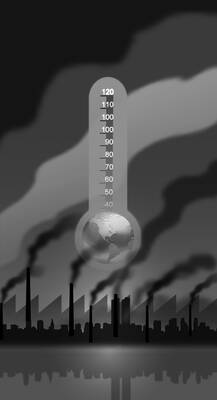
The closure of the Strait of Hormuz has sent the vast Asian chemicals industry into a tailspin. Deprived of the likes of Qatari natural gas and Saudi Arabian oil, the region’s fertilizer and plastics plants are slowing production or even shutting down. Everywhere except China, that is. In petrochemicals, China is unique. As well as a traditional industry that uses oil and gas as feedstock, it has parallel output that relies on its abundant domestic coal. Unsurprisingly, India and other regional powers want to copy and paste the Chinese method. This would not be easy — or climate friendly. The
US President Donald Trump recently repeated his claim that “Taiwan stole America’s chip industry,” reigniting public debate on the issue. As a former Taiwanese minister of economic affairs and an entrepreneur deeply involved in semiconductor supply chain development, I feel a responsibility to clarify this misunderstanding. From the perspective of global industrial evolution and the economic principle of comparative advantage, such a statement appears overly simplistic and risks obscuring the essence of the issue. The rise of Taiwan’s semiconductor industry was not built on “replacing America,” but rather emerged as a result of countries pursuing different development paths within the
Indonesian President Prabowo Subianto says he knows how to fix the problems facing Indonesia. Yet his economic mismanagement and authoritarian tendencies are steering the nation toward a familiar mix of currency instability and political chaos. The world’s fourth-most populous nation risks reversing the hard-won democratic and business reforms that came after the Asian Financial Crisis in 1997. At that time, the rupiah collapsed and the political upheaval that followed forced former president Haji Mohamed Suharto from power. Prabowo’s administration is ignoring similar warning signs. That disconnect was apparent in a national address on Wednesday, when Prabowo projected the swagger that has


 RSS
RSS