


Globalization and regional economic integration are two major factors that have affected the world economy. Globalization speeds up capital flow, promotes cross-border activities and invites business competition.
The process of globalization has reshaped the global economic and trade structures and encouraged foreign direct investment (FDI). In response to new competition, FDI has been used by the business sectors of most economies as a strategy for development and expansion. To retain its economic competitiveness, Taiwan should embrace such a strategy.
Regarding the other factor, regional economic integration, it has been presented with two different dimensions, market-driven and institutional-driven. The market-driven dimension is about comparative advantages in the global arena.
The institutional-driven dimension comprises regional trade agreements, preferential arrangements, free-trade agreements (FTAs) and customs unions to strengthen various advantages. Among them, the free-trade agreement is the main form dominating all regional integration processes, and the FTA and FDI are actually closely related.
Taiwan has done some FDI and has been seeking to sign FTAs with its major trading partners. Taiwan began investing overseas in the 1980s.
Taiwanese companies decided to invest overseas include dealing with increasing domestic labor costs and facing with competition from foreign economies.
In the 1990s, many Taiwanese companies selected Southeast Asia as the target of investment; however, the East Asian financial crisis and the effect of a rising China led to a shift in Taiwan's investment from this area to China. It would be economically beneficial for Taiwan to diversify its FDIs and push for FTAs through FDIs.
A full analysis of Taiwan's FDI strategies, as well as the economic and trade relations between Taiwan and its FDI targets, is needed in order to negotiate better deals for Taiwan when signing bilateral economic treaties. It is also necessary to identify feasible ways to manage the potential impacts of globalization as well as regional integration.
The purpose can be extended to avoid risks, protect Taiwanese investors and explore business opportunities.
Several recent studies by the Taiwan Institute of Economic Research delved into the feasibility of Taiwan signing an FTA or bilateral investment treaty with other economies, analyzed the impacts on relevant sectors of Taiwan's investment in target areas, promoted trade and economic relations with other countries, emphasized the need to protect the rights and benefits of Taiwanese investors, and provided practical policy suggestions for the government.
Some study results showed that globalization and regional integration have brought Taiwanese businesspeople not only challenges but also opportunities. These two factors have jointly helped shape the nation's economic structure.
China has attracted many Taiwanese investments, but the Chinese government also has been pressuring Taiwan internationally. Therefore, Taiwan needs to sign FTAs with its trading partners to expand its international opportunities.
Moreover, efficiency-oriented vertical FDIs have gradually replaced market-seeking horizontal FDIs.
At the same time, economic and trade relations are presented in the form of division of international production.
These forms complicate bilateral trade relations that involve more imports and exports of intermediate goods and raw materials.
Taiwan might be able to use its FDIs as a means to push for signing an FTA with certain targets, but there are pros and cons.
Using FDIs to enhance the flexibility of investment strategies would help promote trade relations.
The cons are: a) it is not easy to convince investors unless the government's selected targets can provide value-added incentives; b) FDIs might not always be in alignment with government trade policies; c) a cluster effect caused by FDIs could dilute the expected effect of government FTA policies; d) FDIs might not be able to balance local stakeholders' interests; and e) Taiwan is not able to play the role of a leader in the global supply chain just yet, so using FDIs as a means may not be as effective.
As a general rule, investments invite two outcomes -- direct and indirect ones. Direct outcome includes encouraging capital flow, increasing returns and creating job opportunities.
Indirect outcome comprises technology and knowledge transfer and exports enhancement. It is suggested that Taiwan should seek to expand its investment and economic influences in countries other than China.
For example, India is interested in overseas financial services, so Taiwan could consider deregulating its financial markets and inviting India's investment in this area. The objective is to form a bilateral relationship. After all, strengthening economic relations with trading partners requires a sound scheme, and that scheme shall place FDIs as a good way to form potential FTAs.
Darson Chiu is an associate research fellow at the Taiwan Institute of Economic Research.
Minister of Labor Hung Sun-han (洪申翰) on April 9 said that the first group of Indian workers could arrive as early as this year as part of a memorandum of understanding (MOU) between the Taipei Economic and Cultural Center in India and the India Taipei Association. Signed in February 2024, the MOU stipulates that Taipei would decide the number of migrant workers and which industries would employ them, while New Delhi would manage recruitment and training. Employment would be governed by the laws of both countries. Months after its signing, the two sides agreed that 1,000 migrant workers from India would
In recent weeks, Taiwan has witnessed a surge of public anxiety over the possible introduction of Indian migrant workers. What began as a policy signal from the Ministry of Labor quickly escalated into a broader controversy. Petitions gathered thousands of signatures within days, political figures issued strong warnings, and social media became saturated with concerns about public safety and social stability. At first glance, this appears to be a straightforward policy question: Should Taiwan introduce Indian migrant workers or not? However, this framing is misleading. The current debate is not fundamentally about India. It is about Taiwan’s labor system, its
On March 31, the South Korean Ministry of Foreign Affairs released declassified diplomatic records from 1995 that drew wide domestic media attention. One revelation stood out: North Korea had once raised the possibility of diplomatic relations with Taiwan. In a meeting with visiting Chinese officials in May 1995, as then-Chinese president Jiang Zemin (江澤民) prepared for a visit to South Korea, North Korean officials objected to Beijing’s growing ties with Seoul and raised Taiwan directly. According to the newly released records, North Korean officials asked why Pyongyang should refrain from developing relations with Taiwan while China and South Korea were expanding high-level
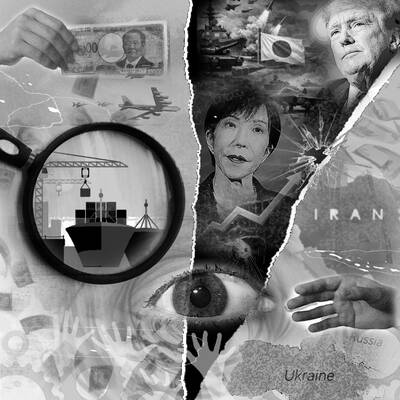
Japan’s imminent easing of arms export rules has sparked strong interest from Warsaw to Manila, Reuters reporting found, as US President Donald Trump wavers on security commitments to allies, and the wars in Iran and Ukraine strain US weapons supplies. Japanese Prime Minister Sanae Takaichi’s ruling party approved the changes this week as she tries to invigorate the pacifist country’s military industrial base. Her government would formally adopt the new rules as soon as this month, three Japanese government officials told Reuters. Despite largely isolating itself from global arms markets since World War II, Japan spends enough on its own


 RSS
RSS