


Monday was the 18th anniversary of the Tiananmen Square Massacre. Eighteen years is a long time, but the countless people who witnessed it on the television can still clearly imagine those bloody scenes.
Yet in China, many people don't believe there was a massacre on June 4, 1989, and a lot of young people have no idea that anything occurred at Beijing's Tiananmen Square on that date.
Chinese studying abroad have written that it was only when they went overseas that they learned there had been a massacre.
It is hard to believe when we hear it, but this is the result of the Chinese Communist Party (CCP) monopolizing the media, destroying evidence and fabricating history.
The Chinese government has been able to obliterate an incident that happened before people's eyes.
In this respect, the CCP and the Chinese Nationalist Party (KMT) are like brothers.
In Taiwan's 228 Incident, the KMT government also used the military to massacre civilians, later destroyed evidence and monopolized the media to change history.
Not long ago, SET-TV aired a special program about the 228 Incident.
The program's use of footage from a Shanghai massacre by the KMT caused a lot of debate, but SET-TV used the material because they had no footage of the actual incident.
It has been reported that there are only three photographs of the 228 massacre in existence.
Pictures and documentaries about World War II are widely available because by that time photography and filming were widespread.
It is odd that of the 228 Incident, which happened after World War II, hardly a photograph can be found, let alone documentaries.
Common sense
Common sense tells us that if little record of the 228 Incident can be found, the KMT must have destroyed all evidence of it.
In the more than half a century that has followed, the KMT acted just like the CCP after the Tiananmen Square Massacre: It fabricated history in order to prevent Taiwanese from knowing what really happened.
A few months ago, the KMT got together to demonstrate, dress someone up as Chiang Kai-shek (
They don't see him as the culprit responsible for the 228 Incident at all.
Although the KMT has not been the ruling party for years and can't rule like autocrats anymore, its reliance on the use of party power to suppress dissenting voices and its attempts to influence the media have not changed.
Underground radio
A week ago, Ocean Voice Radio, which is devoted to Taiwan's normalization, was closed by the National Communications Commission (NCC) because it was an underground radio station.
Ocean Voice Radio responded by saying it had not intended to broadcast illegally and had applied for a license several times, only to be refused.
According to an estimate by the Broadcasting Development Fund, six radio stations in Taiwan are controlled by the KMT's Broadcasting Corporation of China and four other stations are also predominantly controlled by the pan-blue camp.
The so-called "underground radio stations" have actually been created by the unfair system by which the pan-blue camp monopolizes radio channels.
The NCC also applies a double standard when dealing with underground radio stations.
The Broadcasting Development Fund has said that the NCC is not closing down a pan-blue radio station like Voice of the New Party, even though it is located right in Taipei, while traveling all the way to Taichung just to close down Ocean Voice Radio.
Furthermore, the NCC has not moved against TVBS even though it is funded by "100 percent foreign investment," despite a law that says foreign investment cannot account for more than half of the funding of a company.
Control
All of this serves to demonstrate that the KMT uses terms like "underground" or "illegal" as excuses to control the media -- the real reason it seeks to close such stations is because they support the pan-green camp.
Today the NCC, which is controlled by the KMT, is still monopolizing and controlling the media.
The KMT is well aware that monopolizing freedom of speech means that the monopolizers can control the understanding of history.
Taiwan is a democracy, but until the pan-blue camp's media monopoly is broken, there is still a long way to go.
Cao Changqing is a Chinese writer based in the US.
Translated by Anna Stiggelbout
We are used to hearing that whenever something happens, it means Taiwan is about to fall to China. Chinese President Xi Jinping (習近平) cannot change the color of his socks without China experts claiming it means an invasion is imminent. So, it is no surprise that what happened in Venezuela over the weekend triggered the knee-jerk reaction of saying that Taiwan is next. That is not an opinion on whether US President Donald Trump was right to remove Venezuelan President Nicolas Maduro the way he did or if it is good for Venezuela and the world. There are other, more qualified
The immediate response in Taiwan to the extraction of Venezuelan President Nicolas Maduro by the US over the weekend was to say that it was an example of violence by a major power against a smaller nation and that, as such, it gave Chinese President Xi Jinping (習近平) carte blanche to invade Taiwan. That assessment is vastly oversimplistic and, on more sober reflection, likely incorrect. Generally speaking, there are three basic interpretations from commentators in Taiwan. The first is that the US is no longer interested in what is happening beyond its own backyard, and no longer preoccupied with regions in other
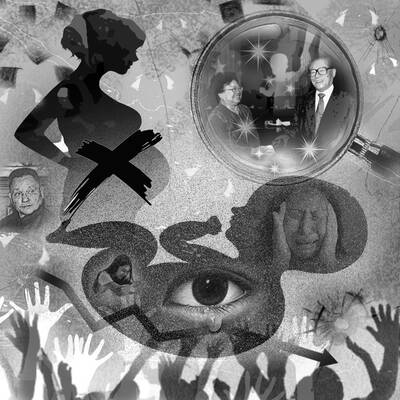
Jan. 1 marks a decade since China repealed its one-child policy. Just 10 days before, Peng Peiyun (彭珮雲), who long oversaw the often-brutal enforcement of China’s family-planning rules, died at the age of 96, having never been held accountable for her actions. Obituaries praised Peng for being “reform-minded,” even though, in practice, she only perpetuated an utterly inhumane policy, whose consequences have barely begun to materialize. It was Vice Premier Chen Muhua (陳慕華) who first proposed the one-child policy in 1979, with the endorsement of China’s then-top leaders, Chen Yun (陳雲) and Deng Xiaoping (鄧小平), as a means of avoiding the
As technological change sweeps across the world, the focus of education has undergone an inevitable shift toward artificial intelligence (AI) and digital learning. However, the HundrED Global Collection 2026 report has a message that Taiwanese society and education policymakers would do well to reflect on. In the age of AI, the scarcest resource in education is not advanced computing power, but people; and the most urgent global educational crisis is not technological backwardness, but teacher well-being and retention. Covering 52 countries, the report from HundrED, a Finnish nonprofit that reviews and compiles innovative solutions in education from around the world, highlights a


 RSS
RSS