


It would be difficult to overstate the likely impact on Taiwan of last week's free-trade agreement (FTA) between South Korea and the US, because South Korea and Taiwan produce many similar products and are rivals in key industrial sectors.
But the strange thing is that few -- especially in the media -- saw the issue as being as serious as trade officials and analysts did. Most daily newspapers last week displayed such an indifference to the trade pact it was as though it had never happened. Instead, these newspapers were reporting on the campaign activities of the potential candidates for next year's presidential election, the proposals to allow auto and horse racing and politicians bickering over issues of ethnicity.
On the bright side, the South Korea-US trade pact could encourage the US to develop more bilateral free-trade agreements in the region, as countries fear they may fall behind in the race to cut trade barriers.
Most importantly, though, if the pact is ratified by lawmakers in both countries, South Korean companies will receive advantageous access to the US market, which would in turn put many Taiwanese firms at a potential disadvantage. In other words, it would not only make South Korea's economy more competitive but also result in US trade being lost by Taiwan and gained by South Korea.
Based on a study conducted by the Chung Hua Institute for Economic Research, approximately US$2 billion worth of goods are shipped to the US from Taiwan each year, goods that could be replaced by those from South Korea.
Those US$2 billion goods are likely to be shipped from South Korea once the lower, or zero, tariffs agreed in the FTA take effect. That would represent a potential loss of approximately 5 percent of Taiwan's annual shipments to the US, or 0.5 percent of the nation's GDP growth.
Some economists have warned that a South Korea-US deal would negatively impact on Taiwanese firms, particularly those in traditional manufacturing sectors such as textiles, automobiles, bicycles and shoes, and urged the government to accelerate its own trade talks with Washington. Others believe that Taiwanese manufacturers would be able to survive the South Korean competition as they have shifted production offshore to retain a price advantage.
The South Korea-US trade deal is likely to increase the pressure on other Asian countries to seek similar pacts, and, as long as Taiwan's economy is heavily export-oriented, it also needs to negotiate similar pacts with its trading partners.
It is lamentable that the "China factor" has been used as an excuse to slow the progress of the nation's FTA negotiations, and so far Taiwan has only managed to secure FTAs with some Central American allies, including Panama, Guatemala and Nicaragua. But the trend toward trade agreements is not going to stop and the government needs to catch up and better prepare for the imminent changes in trading patterns that these agreements will bring.
Whether the plan is to achieve FTAs with other countries or the nation looks to join a Free-Trade Area of Asia Pacific -- a free trade area proposed by APEC leaders at their summit in Vietnam last November -- the government should study the South Korea-US deal carefully and use it as a starting point for their future talks.
For now, the government should be watchful, because, with no immediate possibility of new trade pacts, large Taiwanese manufacturers may well respond by shifting even more production overseas, adding to concerns about economic isolation. As for the future of Taiwanese firms, without the promise of FTAs to remove tariffs and other trade barriers, all they can do is strive to enhance their competitiveness and quality, nothing else.
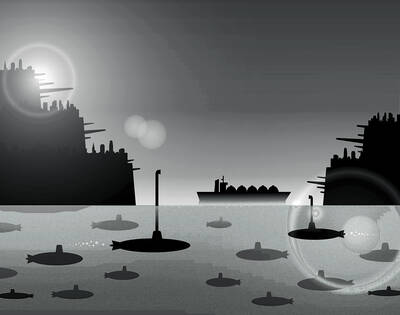
In the event of a war with China, Taiwan has some surprisingly tough defenses that could make it as difficult to tackle as a porcupine: A shoreline dotted with swamps, rocks and concrete barriers; conscription for all adult men; highways and airports that are built to double as hardened combat facilities. This porcupine has a soft underbelly, though, and the war in Iran is exposing it: energy. About 39,000 ships dock at Taiwan’s ports each year, more than the 30,000 that transit the Strait of Hormuz. About one-fifth of their inbound tonnage is coal, oil, refined fuels and liquefied natural gas (LNG),
On Monday, the day before Chinese Nationalist Party (KMT) Chairwoman Cheng Li-wun (鄭麗文) departed on her visit to China, the party released a promotional video titled “Only with peace can we ‘lie flat’” to highlight its desire to have peace across the Taiwan Strait. However, its use of the expression “lie flat” (tang ping, 躺平) drew sarcastic comments, with critics saying it sounded as if the party was “bowing down” to the Chinese Communist Party (CCP). Amid the controversy over the opposition parties blocking proposed defense budgets, Cheng departed for China after receiving an invitation from the CCP, with a meeting with
Chinese Nationalist Party (KMT) Chairwoman Cheng Li-wun (鄭麗文) is leading a delegation to China through Sunday. She is expected to meet with Chinese President Xi Jinping (習近平) in Beijing tomorrow. That date coincides with the anniversary of the signing of the Taiwan Relations Act (TRA), which marked a cornerstone of Taiwan-US relations. Staging their meeting on this date makes it clear that the Chinese Communist Party (CCP) intends to challenge the US and demonstrate its “authority” over Taiwan. Since the US severed official diplomatic relations with Taiwan in 1979, it has relied on the TRA as a legal basis for all
To counter the CCP’s escalating threats, Taiwan must build a national consensus and demonstrate the capability and the will to fight. The Chinese Communist Party (CCP) often leans on a seductive mantra to soften its threats, such as “Chinese do not kill Chinese.” The slogan is designed to frame territorial conquest (annexation) as a domestic family matter. A look at the historical ledger reveals a different truth. For the CCP, being labeled “family” has never been a guarantee of safety; it has been the primary prerequisite for state-sanctioned slaughter. From the forced starvation of 150,000 civilians at the Siege of Changchun


 RSS
RSS