


While US political leaders and citizens are concentrating their attention on Iraq, the Chinese appear to have embarked on a long-range plan intended to challenge the US for military superiority in Asia.
China's latest white paper on defense asserts: "To build a powerful and fortified national defense is a strategic task of China's modernization drive." Using code words for the US, the paper says: "Hegemonism and power politics remain key factors in undermining international security."
The white paper envisions three phases: to lay a solid foundation by 2010, to make "major progress" by 2020 and to reach the strategic goal of building armed forces capable of winning high-tech wars "by the mid-21st century."
In a report more candid than earlier versions, last year's paper says Chinese military spending from 1990 to 2005 rose at an annual average rate of 9.6 percent, after adjusting for inflation.
The US National Intelligence Director, John Negroponte, reinforced that view on Thursday, telling the Senate Intelligence Committee: "We assess that China's aspirations for great-power status, threat perceptions and security strategy would drive this modernization effort even if the Taiwan problem were resolved."
That is the highest growth rate of defense spending among the world's large nations.
Beijing's military budget for last year, the report says, was US$35.9 billion, up from US$31.3 billion the year before. US intelligence analysts estimate that China's overall military spending is at least twice as much since many defense related expenditures don't show up in published accounts.
The white paper indicates that most of the spending increases have gone into the navy, air force and what the Chinese call the Second Artillery, which is their nuclear force. These are the services whose missions are to project power beyond China's borders and coasts.
Targeting of US forces in East Asia is sometimes cloaked in euphemisms, but the meanings are clear. The white paper asserts: "Some developed countries have increased their input into the military and speeded up R&D [research and development] of high-tech weaponry to gain military superiority."
At other times, the paper is forthright in disclosing how the Chinese see things: "The United States is accelerating its realignment of military deployment to enhance its military capability in the Asia-Pacific region. The United States and Japan are strengthening their military alliance in pursuit of operational integration."
Although the paper has an undertone of hostility toward the US, it acknowledges the benefits of military exchanges last year: "The Chinese Navy and the US Navy conducted joint maritime search and rescue exercises in the offshore waters of San Diego."
Nor is the Taiwan question neglected. The white paper contends: "The struggle to oppose and contain the separatist forces for Taiwan independence and their activities remains a hard one." The tone, however, seems less harsh than that of the 2004 white paper.
On the other hand, the People's Liberation Army has adopted a new policy that, if carried out, would gladden the hearts of soldiers in any army, anywhere: "The food supply for officers and men aims at providing sufficient nutrition rather than just serving enough food."
Richard Halloran is a writer based in Hawaii.
Minister of Labor Hung Sun-han (洪申翰) on April 9 said that the first group of Indian workers could arrive as early as this year as part of a memorandum of understanding (MOU) between the Taipei Economic and Cultural Center in India and the India Taipei Association. Signed in February 2024, the MOU stipulates that Taipei would decide the number of migrant workers and which industries would employ them, while New Delhi would manage recruitment and training. Employment would be governed by the laws of both countries. Months after its signing, the two sides agreed that 1,000 migrant workers from India would
On March 31, the South Korean Ministry of Foreign Affairs released declassified diplomatic records from 1995 that drew wide domestic media attention. One revelation stood out: North Korea had once raised the possibility of diplomatic relations with Taiwan. In a meeting with visiting Chinese officials in May 1995, as then-Chinese president Jiang Zemin (江澤民) prepared for a visit to South Korea, North Korean officials objected to Beijing’s growing ties with Seoul and raised Taiwan directly. According to the newly released records, North Korean officials asked why Pyongyang should refrain from developing relations with Taiwan while China and South Korea were expanding high-level
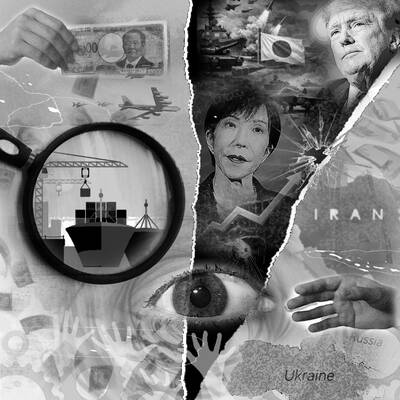
Japan’s imminent easing of arms export rules has sparked strong interest from Warsaw to Manila, Reuters reporting found, as US President Donald Trump wavers on security commitments to allies, and the wars in Iran and Ukraine strain US weapons supplies. Japanese Prime Minister Sanae Takaichi’s ruling party approved the changes this week as she tries to invigorate the pacifist country’s military industrial base. Her government would formally adopt the new rules as soon as this month, three Japanese government officials told Reuters. Despite largely isolating itself from global arms markets since World War II, Japan spends enough on its own
When 17,000 troops from the US, the Philippines, Australia, Japan, Canada, France and New Zealand spread across the Philippine archipelago for the Balikatan military exercise, running from tomorrow through May 8, the official language would be about interoperability, readiness and regional peace. However, the strategic subtext is becoming harder to ignore: The exercises are increasingly about the military geography around Taiwan. Balikatan has always carried political weight. This year, however, the exercise looks different in ways that matter not only to Manila and Washington, but also to Taipei. What began in 2023 as a shift toward a more serious deterrence posture


 RSS
RSS