


The rapid growth of China's economic and national strength has misled people into believing that it is a developed country. However, judging by the recent prison sentences handed down to New York Times researcher Zhao Yan (
According to the Measures for Administering the Release of News and Information in China by Foreign News Agencies issued on Sunday, the official Xinhua news agency will be both a key player and the sole referee in the media marketplace. The rules give a long list of "don'ts" for the foreign media, including not violating the Constitution or the nation's sovereignty, national security or religious policies. The foreign media has also been told not to promote evil cults, spread false information, disrupt the economy or undermine social stability.
Article 11 of the new regulations specifies that the foreign media shall not "undermine social ethics or the fine cultural traditions of the Chinese nation, or include other content banned by Chinese laws and administrative regulations."
The press restrictions are not only broad and indiscriminate, they are also supposed to apply to news agencies in Taiwan, Hong Kong and Macau. If prohibited material is found in any reports from those areas, Xinhua can delete it. Xinhua can also give the offending agency a warning, demand a correction, suspend its release of specified materials or suspend or revoke the agency's permit for operating in China.
Of course, China's domestic news agencies have long been under Beijing's thumb and efforts to widen the scope of their reporting have usually been quickly quashed. Nevertheless, Sunday's pronouncement was a great step backward for China. The Hong Kong Journalists Association has protested the regulations, as have press associations and activists in many other countries.
With the keyword-based blocking of information from Web sites, including Google and Wikipedia, and e-mails, the strict regulations placed on foreign print media, the prohibition of wireless, cable and satellite TV and the new restrictions on foreign news agencies, the Chinese people are only able to see sanitized information that their government wants them to see.
Beijing has been fighting an uphill battle for several years to maintain the iron curtain it erected to keep foreign media from "poisoning" its people and eroding the foundation of the Chinese Communist Party's (CCP) grip on power.
While the new regulations have been widely -- and appropriately -- condemned, they also signal how desperate China's rearguard battle to defend its media "whiteout" has become. Its relations with the rest of the world are becoming closer by the day, its society is moving toward freedom and all-pervasive broadcasting technology is becoming more widespread. Technological advances are corroding the iron curtain even as China's rapid economic growth is driving it toward greater openness, internationalization and liberalization.
Political and social regression will not only hinder economic development, but create new social tensions. As the CCP works to expand its ties with the Chinese Nationalist Party (KMT), perhaps it should pause to reflect on the latter's fate. The KMT imposed strict media controls in Taiwan for decades, but in the end could no longer hold back the flood of information that came with the country's economic and political development.
KMT Chairwoman Cheng Li-wun’s (鄭麗文) recent visit to Beijing and her upcoming visit to Washington will serve as a high-level test of her diplomatic mettle. In Beijing, Cheng was received with symbolic gestures, a warm reception, and high-level access. In Washington, she will receive far less pomp and far sharper questions about the KMT’s vision for the future of Taiwan. Her challenge will be to persuade Washington that the KMT’s engagement with China can coexist with strong deterrence. Cheng’s April 7-12 visit to mainland China coincided with an intense period of conflict in Iran. Despite the strategic significance of Cheng’s trip,
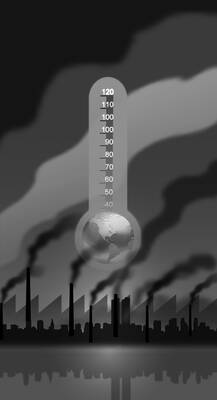
The closure of the Strait of Hormuz has sent the vast Asian chemicals industry into a tailspin. Deprived of the likes of Qatari natural gas and Saudi Arabian oil, the region’s fertilizer and plastics plants are slowing production or even shutting down. Everywhere except China, that is. In petrochemicals, China is unique. As well as a traditional industry that uses oil and gas as feedstock, it has parallel output that relies on its abundant domestic coal. Unsurprisingly, India and other regional powers want to copy and paste the Chinese method. This would not be easy — or climate friendly. The
US President Donald Trump recently repeated his claim that “Taiwan stole America’s chip industry,” reigniting public debate on the issue. As a former Taiwanese minister of economic affairs and an entrepreneur deeply involved in semiconductor supply chain development, I feel a responsibility to clarify this misunderstanding. From the perspective of global industrial evolution and the economic principle of comparative advantage, such a statement appears overly simplistic and risks obscuring the essence of the issue. The rise of Taiwan’s semiconductor industry was not built on “replacing America,” but rather emerged as a result of countries pursuing different development paths within the
Indonesian President Prabowo Subianto says he knows how to fix the problems facing Indonesia. Yet his economic mismanagement and authoritarian tendencies are steering the nation toward a familiar mix of currency instability and political chaos. The world’s fourth-most populous nation risks reversing the hard-won democratic and business reforms that came after the Asian Financial Crisis in 1997. At that time, the rupiah collapsed and the political upheaval that followed forced former president Haji Mohamed Suharto from power. Prabowo’s administration is ignoring similar warning signs. That disconnect was apparent in a national address on Wednesday, when Prabowo projected the swagger that has


 RSS
RSS