


A good leader understands that everyone learns differently. A bad leader thinks everyone should learn the way he or she does. The "my way or the highway" style of leadership, as manifested in Taiwan's daily political wrestling between the governing and the opposition parties, should already be seen as a thing of the past.
However, few people really appreciate the importance of the public's craving for political stability when it comes to their own survival or self-interests. Recent flip-flops between the Chinese Nationalist Party (KMT) and the People First Party (PFP) on how to proceed with the campaign against President Chen Shui-bian (陳水扁) illustrate not only the internal contradictions within the pan-blue camp but also a severe disconnect with what the public really wants. Now that the recall motion has failed, each party has been taking advantage of the anti-Chen campaign to maximize its own interests or at least to minimize its own damage.
Aside from the incapacity of the Legislative Yuan to reach the two-thirds threshold required for recalling the president, Chen survived the motion largely because of a split between KMT Chairman Ma Ying-jeou (馬英九) and PFP Chairman James Soong (宋楚瑜).
Ma's flirtation with Soong's more radical approach to oust Chen led to a decline in his approval rating to less 50 percent -- the lowest approval rating he has received since taking over the KMT chairmanship last July.
Soong's popularity plunged, too. However, as a potential candidate for the upcoming Taipei mayoral election, Soong's extremist agenda of bringing down Chen or his government at any cost successfully captured the media's attention. Soong's political maneuvering was aimed mostly at shoring-up hard-core pan-blue camp supporters and was pursued irrespective of its impact on the PFP.
Soong's obstructionism is a product of Taiwan's still immature democracy. Soong's argument after the recall vote that "a minority of pan-green legislators have hijacked the will of Taiwan's 23 million people to force Chen to step down" not only lacked legitimacy but also displayed huge disrespect for the Constitution.
After the recall motion most politicians called for a truce and an end to political confrontation -- except Soong. Even Ma re-orientated the KMT's strategy and distanced himself from Soong's extremism. Both Ma and the pan-green leaders understand that the public has sent a clear message to all political leaders. That is, political stability and economic order are what they are most concerned about. Conflict and hostility between the governing and the opposition parties should end and no single politician should ever take advantage of political circumstances to suit their own narrow self interest.
Now's the time to get back to work. Taiwanese are wiser now in the wake of the scandals related to Chen's aides and family members. The public knows how to flex their muscles if the incumbent leader fails to live up to his promises. It is also suspicious of the green-blue division and is reluctant to became a tool of mobilization by certain politicians.
Finally, the public is confident enough now to respect Taiwan's democratic system, committed to playing by the constitutional rules and avoiding moves that would destabilize the government.
A smart leader is one who knows how to incorporate discipline and a high-standard of morality into governance. Further, a smart leader is pragmatic and will put aside partisan interests to serve the public.
Obstructionism or extremism in Taiwan politics will only be despised. This is the lesson that all politicians must draw from the recall fiasco.
Liu Kuan-teh is a Taipei-based political commentator.
KMT Chairwoman Cheng Li-wun’s (鄭麗文) recent visit to Beijing and her upcoming visit to Washington will serve as a high-level test of her diplomatic mettle. In Beijing, Cheng was received with symbolic gestures, a warm reception, and high-level access. In Washington, she will receive far less pomp and far sharper questions about the KMT’s vision for the future of Taiwan. Her challenge will be to persuade Washington that the KMT’s engagement with China can coexist with strong deterrence. Cheng’s April 7-12 visit to mainland China coincided with an intense period of conflict in Iran. Despite the strategic significance of Cheng’s trip,
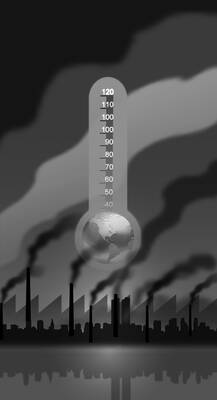
The closure of the Strait of Hormuz has sent the vast Asian chemicals industry into a tailspin. Deprived of the likes of Qatari natural gas and Saudi Arabian oil, the region’s fertilizer and plastics plants are slowing production or even shutting down. Everywhere except China, that is. In petrochemicals, China is unique. As well as a traditional industry that uses oil and gas as feedstock, it has parallel output that relies on its abundant domestic coal. Unsurprisingly, India and other regional powers want to copy and paste the Chinese method. This would not be easy — or climate friendly. The
History might remember 2026, not 2022, as the year artificial intelligence (AI) truly changed everything. ChatGPT’s launch was a product moment. What is happening now is an anthropological moment: AI is no longer merely answering questions. It is now taking initiative and learning from others to get things done, behaving less like software and more like a colleague. The economic consequence is the rise of the one-person company — a structure anticipated in the 2024 book The Choices Amid Great Changes, which I coauthored. The real target of AI is not labor. It is hierarchy. When AI sharply reduces the cost
US President Donald Trump recently repeated his claim that “Taiwan stole America’s chip industry,” reigniting public debate on the issue. As a former Taiwanese minister of economic affairs and an entrepreneur deeply involved in semiconductor supply chain development, I feel a responsibility to clarify this misunderstanding. From the perspective of global industrial evolution and the economic principle of comparative advantage, such a statement appears overly simplistic and risks obscuring the essence of the issue. The rise of Taiwan’s semiconductor industry was not built on “replacing America,” but rather emerged as a result of countries pursuing different development paths within the


 RSS
RSS