


According to media reports, the UN has announced that it will use only simplified characters in all Chinese documents starting in 2008. Many Taiwanese are worried that simplified characters will one day become the only system for writing Chinese, while traditional characters will fade away
I believe traditional Chinese writing is facing a crisis, although the popularization of simplified Chinese is not the only cause. I believe many attempts to maintain traditional Chinese may be misguided, be it the unification camp opposing simplified Chinese because they oppose communism, the independence camp opposing it because they oppose China, or traditionalists opposing it because they oppose unorthodox ideas. To keep traditional Chinese characters alive, we must adopt a healthy attitude of competition. We cannot merely oppose simplified Chinese.
We must realize that both simplified and traditional characters are legitimate systems for writing modern Chinese. Both record Chinese effectively, and allow their readers to read efficiently. If we oppose simplified Chinese without improving the competitiveness of traditional Chinese, or are unable to give up a concept and an ideology that we think is correct, we will never be able to save traditional Chinese, no matter how hard we attack the simplified writing system.
Recently, I had a discussion on this matter in my Psychology of Reading course. A student said he found that the number of online documents in simplified Chinese is greater than the number of traditional Chinese documents. He therefore said that one would lose an important channel for information if one could not read simplified Chinese, and that Taiwan's schools should start to teach it.
This idea is very pragmatic, but looks unlikely to be implemented in light of Taiwan's current attitude of opposing simplified Chinese. Accepting simplified Chinese in Taiwan will not necessarily have a negative impact on traditional Chinese, and resisting the former will not necessarily save the latter. I would like to stress that with the development of the Internet, the biggest threat to traditional Chinese is the decreasing number of pieces written in traditional Chinese.
Taiwan is the realm of traditional Chinese. With its level of economic development and the pervasiveness of the Internet, the Taiwanese people should be capable of writing numerous valuable articles and then posting them online. Unfortunately, it seems that the people of Taiwan do not really like to write. For example, very few Taiwanese have contributed to Wikipedia -- the world's most popular online encyclopedia, which can be edited by anyone. Another example of this is Taiwan's blogging culture -- the writing of online diaries or a personal chronological log of thoughts published on a Web page. Although some Taiwanese have caught up with this trend, most bloggers are busy reproducing articles they have found elsewhere online or summarizing printed articles.
Taiwanese people are too accustomed to using what others have created, and seldom create something original. If most of us only read articles or use software written by others, and do not spend time to think, write or create, then traditional Chinese will disappear. It is not about simplified Chinese or the oppression of the "communist bandits." It would be our own fault.
If we can create valuable works using traditional Chinese, people across the world would be encouraged to learn it. We must keep writing so that people will feel that being unable to read traditional Chinese means losing an important source of information. This is not only the best way to stimulate the use of traditional Chinese, it is also the best way to highlight Taiwan's influence.
Tsai Chih-hao is an assistant professor of psychology at Kao-hsiung Medical University. Translated by Eddy Chang
KMT Chairwoman Cheng Li-wun’s (鄭麗文) recent visit to Beijing and her upcoming visit to Washington will serve as a high-level test of her diplomatic mettle. In Beijing, Cheng was received with symbolic gestures, a warm reception, and high-level access. In Washington, she will receive far less pomp and far sharper questions about the KMT’s vision for the future of Taiwan. Her challenge will be to persuade Washington that the KMT’s engagement with China can coexist with strong deterrence. Cheng’s April 7-12 visit to mainland China coincided with an intense period of conflict in Iran. Despite the strategic significance of Cheng’s trip,
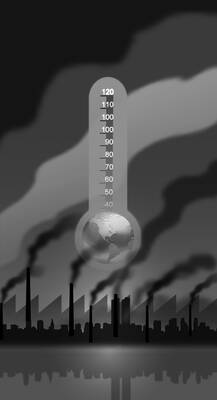
The closure of the Strait of Hormuz has sent the vast Asian chemicals industry into a tailspin. Deprived of the likes of Qatari natural gas and Saudi Arabian oil, the region’s fertilizer and plastics plants are slowing production or even shutting down. Everywhere except China, that is. In petrochemicals, China is unique. As well as a traditional industry that uses oil and gas as feedstock, it has parallel output that relies on its abundant domestic coal. Unsurprisingly, India and other regional powers want to copy and paste the Chinese method. This would not be easy — or climate friendly. The
US President Donald Trump recently repeated his claim that “Taiwan stole America’s chip industry,” reigniting public debate on the issue. As a former Taiwanese minister of economic affairs and an entrepreneur deeply involved in semiconductor supply chain development, I feel a responsibility to clarify this misunderstanding. From the perspective of global industrial evolution and the economic principle of comparative advantage, such a statement appears overly simplistic and risks obscuring the essence of the issue. The rise of Taiwan’s semiconductor industry was not built on “replacing America,” but rather emerged as a result of countries pursuing different development paths within the
Indonesian President Prabowo Subianto says he knows how to fix the problems facing Indonesia. Yet his economic mismanagement and authoritarian tendencies are steering the nation toward a familiar mix of currency instability and political chaos. The world’s fourth-most populous nation risks reversing the hard-won democratic and business reforms that came after the Asian Financial Crisis in 1997. At that time, the rupiah collapsed and the political upheaval that followed forced former president Haji Mohamed Suharto from power. Prabowo’s administration is ignoring similar warning signs. That disconnect was apparent in a national address on Wednesday, when Prabowo projected the swagger that has


 RSS
RSS