


No amount of smarmy rationalization and rabble-rousing alters the fact that the death penalty is a vicious affront to a civilized society. But capital punishment is not the preserve of autocratic governments. Perfectly democratic processes in countries around the world have instituted capital punishment and many of these states show no signs of removing it from their books. So opponents of the death penalty should not be too hard on Taiwan in this respect.
Yet the executions of two brothers in Kaohsiung this week, together with the complicity of most of the media in refusing to report on the matter in meaningful detail, suggest that there remains an obliviousness to the killing of prisoners in a society in which courts are laughably inconsistent and the law is sneered at by the opposition party that wrote most of it in the first place.
Most of all, however, the deaths of Lin Meng-kai (
In 1996, when Chinese Nationalist Party (KMT) Chairman Ma Ying-jeou (
Good gracious, many marveled at the time, behold this politician's conscience! Despite his adherence to a suicidal "Greater China" ideology and the dubious ethics of his associates, Ma attracts traditional DPP voters on the basis of his sincere image and ability to occasionally stand up and be counted at the most surprising of times. And that was one of those times.
Ten years later, the Democratic Progressive Party (DPP) is in power, but the power of the conscience has apparently evaporated and death remains an attractive option for the nation's prosecutors. Imagine the surreal scene when Chen met international human-rights activists in the Presidential Office in September. He had to account for the retention of a weapon of state whose traditional victims were political, and in countless instances innocent of the crimes with which they were charged. One can imagine Chen barely keeping a straight face as he told International Federation for Human Rights delegates that he was working to end the death penalty. Which begs the question: What work, exactly?
Perhaps Chen was too busy licking his wounds from the DPP's loss of long-held county electorates earlier this month to notice this week's killings. Perhaps being president is such an onerous task that one forgets the years spent as a lawyer working on behalf of democracy activists threatened with death -- including Vice President Annette Lu (
If a president with Chen's background lacks the conscience to intervene on a matter such as this, and lacks the courage and ambition to face the public and explain why he has intervened, yet has all of the constitutional power and time he needs to do both of these things, then what is he doing in the Presidential Office?
Minister of Labor Hung Sun-han (洪申翰) on April 9 said that the first group of Indian workers could arrive as early as this year as part of a memorandum of understanding (MOU) between the Taipei Economic and Cultural Center in India and the India Taipei Association. Signed in February 2024, the MOU stipulates that Taipei would decide the number of migrant workers and which industries would employ them, while New Delhi would manage recruitment and training. Employment would be governed by the laws of both countries. Months after its signing, the two sides agreed that 1,000 migrant workers from India would
In recent weeks, Taiwan has witnessed a surge of public anxiety over the possible introduction of Indian migrant workers. What began as a policy signal from the Ministry of Labor quickly escalated into a broader controversy. Petitions gathered thousands of signatures within days, political figures issued strong warnings, and social media became saturated with concerns about public safety and social stability. At first glance, this appears to be a straightforward policy question: Should Taiwan introduce Indian migrant workers or not? However, this framing is misleading. The current debate is not fundamentally about India. It is about Taiwan’s labor system, its
On March 31, the South Korean Ministry of Foreign Affairs released declassified diplomatic records from 1995 that drew wide domestic media attention. One revelation stood out: North Korea had once raised the possibility of diplomatic relations with Taiwan. In a meeting with visiting Chinese officials in May 1995, as then-Chinese president Jiang Zemin (江澤民) prepared for a visit to South Korea, North Korean officials objected to Beijing’s growing ties with Seoul and raised Taiwan directly. According to the newly released records, North Korean officials asked why Pyongyang should refrain from developing relations with Taiwan while China and South Korea were expanding high-level
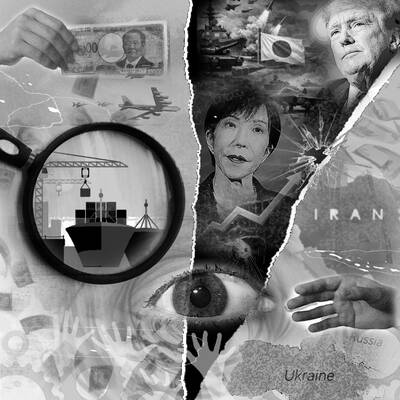
Japan’s imminent easing of arms export rules has sparked strong interest from Warsaw to Manila, Reuters reporting found, as US President Donald Trump wavers on security commitments to allies, and the wars in Iran and Ukraine strain US weapons supplies. Japanese Prime Minister Sanae Takaichi’s ruling party approved the changes this week as she tries to invigorate the pacifist country’s military industrial base. Her government would formally adopt the new rules as soon as this month, three Japanese government officials told Reuters. Despite largely isolating itself from global arms markets since World War II, Japan spends enough on its own


 RSS
RSS