


The last name of the president of Russia is Putin, right? Not so fast. Paris, we have a pronunciation problem. To solve it, we must plunge headlong in the argumentative world of transliteration -- the representation of sounds of words from one alphabet in another alphabet. However you do it, with whatever authority you cite, some native speaker will surely tell you that you're all wrong.
We in the English-speaking world, and in most of the Western world using the 26-letter Roman alphabet, write the Russian president's name as "Putin." That's not a good transliteration from the 32-letter modern Cyrillic alphabet, which the Russians use, because our Roman spelling suggests we pronounce it PYOO-tin, as in "putrid," or PUT-in, as in "put-down."
We are officially informed by the Kremlin that Vladimir Putin pronounces the u in this name with neither the yew sound nor the u in put or but. If we wanted our spelling to represent accurately the sound of the way Russians pronounce the first syllable of his name, it would be POO-tin or POU-tin. Our mouthing of that last syllable would still be a little off because of what phonologists, the scientists of sounds, call "the soft t," which doesn't exist in our alphabet. The closest I can get in Roman spelling to the sound of his name in Russian would be POO-tsyin, or POO-tyeen.
In France, they do the right thing by Putin's first syllable, spelling it Pou (as in the French ou, "where," and fou, "crazy"). But their difficulty arises in that second syllable, tsyin, which we approximate with in. The French have a linguistic problem that may also be a diplomatic problem. It's the affair of the spelling of in.
In English, we see the letter i followed by n, and we're in: with our tongues pressed against our palates, we find plenty of room at the inn. But in French, the sound represented by in is pronounced nasally, at the back of the throat, and comes out somewhat like anh. English does not have a sound quite like it, except for a kind of derisive snort that often precedes geddoutahere.
Now we come to the reason that French is known as the language of diplomacy. In France's official documents, as well as uniformly in the French press, Vladimir Putin's last name is spelled Poutine. As a natural result, it is pronounced poo-TEEN, rhyming with our "routine." The French undoubtedly know that is not the way he or his compatriots, or even President Bush looking into his soul, pronounce Putin's name. (To head off a torrent of e-mail from Quebec, let me acknowledge that poutine is also French-Canadian comfort food: fried potatoes suffused in cheese and dollops of salty gravy.)
Why the error in transliteration? Official French sources tell me that because the sound that we write as in has no place in French pronunciation, an e has been added to make the sound more amenable to the French tongue, and that's all there is to it. They note -- somewhat stiffly, anticipating the direction of my inquiry -- that they have added a vowel to other names for this purpose. But other, more conspiratorial linguists suggest that the spelling of Putin in English would be pronounced as putain in French -- that is, sounding close to pew-TANH.
Putain, in French, means "prostitute; whore," or in current correctese, "sexual-services provider." According to the Oxford English Dictionary, it is the probable source, slightly corrupted, of the US slang term poontang, a derogation of women as a means of sexual gratification. Hence, the rejection of the English spelling of Putin and the switch to Poutine, pronounced poo-TEEN. Small wonder that French arbiters of usage and pronunciation -- perhaps out of commendable delicacy, in the interest of the avoidance of offense and the leers of pundits -- have embraced phony phonetics, unanimously choosing to mispronounce the name of the president of Russia.
ARISE, TRANSLITERATI
In digging up this lecherous speculation, I tripped over a matter of concern to those seriously interested in global communication. For years, the transliterati at the Library of Congress, the British Museum, the US Board on Geographic Names and other scholarly institutions have been breaking their heads over ways to bring order to the somewhat slapdash way we express sounds in different languages. Meanwhile, acting unilaterally, the Russian government has worked out its own plan for handling Russian names on its passports to make life simpler for immigration officials of other nations.
"These are deep waters," says Michael Newcity of Duke University's Center for Slavic, Eurasian and East European Studies, "because there are many different systems for transliterating words written in Cyrillic alphabets into Latin letters. The permutations increase when you realize that there are different Cyrillic alphabets for Russian, Ukrainian, Serbian, Bulgarian, Macedonian, etc."
So what's the big deal if there are different keystrokes for different folks? Here's the problem for globocrats: most computer operating systems are based on the Roman alphabet. Maybe, like a new Caesar, the imperial computer will impose our present system on the rest of the world, forcing Slavic and Asian systems into our alphabet soup. Or maybe the UN will find a new raison d'etre (that's ray-ZON DET-ra) in standardizing a system to encode Roman and Cyrillic letters and Chinese and Japanese characters to make them computer-friendly on all the world's screens. Others of a bellicose bent may argue that we should enshrine diversity and let Caesar's letter symbols fight out the future communications battle with the alphabet of St. Cyril and word symbols of the predecessors of Confucius.
No one system is likely to win out. For users of tomorrow's Internet to accurately cross cultures, experts in phonetics and transliteration will first have to create and agree on a standard system. Only then will President Poutine get his real name back.
Minister of Labor Hung Sun-han (洪申翰) on April 9 said that the first group of Indian workers could arrive as early as this year as part of a memorandum of understanding (MOU) between the Taipei Economic and Cultural Center in India and the India Taipei Association. Signed in February 2024, the MOU stipulates that Taipei would decide the number of migrant workers and which industries would employ them, while New Delhi would manage recruitment and training. Employment would be governed by the laws of both countries. Months after its signing, the two sides agreed that 1,000 migrant workers from India would
In recent weeks, Taiwan has witnessed a surge of public anxiety over the possible introduction of Indian migrant workers. What began as a policy signal from the Ministry of Labor quickly escalated into a broader controversy. Petitions gathered thousands of signatures within days, political figures issued strong warnings, and social media became saturated with concerns about public safety and social stability. At first glance, this appears to be a straightforward policy question: Should Taiwan introduce Indian migrant workers or not? However, this framing is misleading. The current debate is not fundamentally about India. It is about Taiwan’s labor system, its
On March 31, the South Korean Ministry of Foreign Affairs released declassified diplomatic records from 1995 that drew wide domestic media attention. One revelation stood out: North Korea had once raised the possibility of diplomatic relations with Taiwan. In a meeting with visiting Chinese officials in May 1995, as then-Chinese president Jiang Zemin (江澤民) prepared for a visit to South Korea, North Korean officials objected to Beijing’s growing ties with Seoul and raised Taiwan directly. According to the newly released records, North Korean officials asked why Pyongyang should refrain from developing relations with Taiwan while China and South Korea were expanding high-level
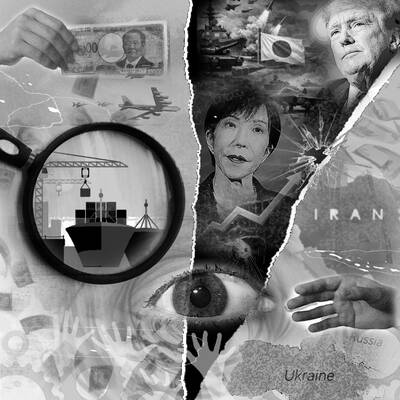
Japan’s imminent easing of arms export rules has sparked strong interest from Warsaw to Manila, Reuters reporting found, as US President Donald Trump wavers on security commitments to allies, and the wars in Iran and Ukraine strain US weapons supplies. Japanese Prime Minister Sanae Takaichi’s ruling party approved the changes this week as she tries to invigorate the pacifist country’s military industrial base. Her government would formally adopt the new rules as soon as this month, three Japanese government officials told Reuters. Despite largely isolating itself from global arms markets since World War II, Japan spends enough on its own


 RSS
RSS