


On July 26, the Taipei High Administrative Court (台北高等行政法院) ruled that the expulsion of students by universities for misdemeanors or academic failure was a violation of the ROC Constitution. According to the ruling, since a student's right to education is protected by the constitution, expulsions should be based on laws passed by the legislature instead of school regulations. In the name of academic freedom and university autonomy, this ruling protects students' right to education to such a great extent that it in fact militates against academic freedom and university development.
The Council of Grand Justices' interpretation held that all mat-ters relating to students' studies, such as curriculum and course design, course content, student evaluation, examination rules and graduation requirements are matters covered by university autonomy.
To maintain educational standards as well as to promote their own special characteristics, it is necessary for universities to establish regulations regarding the subjects they offer, evaluation standards and students' behavior on campus. All regulations should, under Article 17 of the University Law, be respected and accepted by the court as the legal basis of a school's power to expel students if such regulations are jointly established or amended by school authorities and student representatives.
The court stressed that under the "rule by law" principle, as stated in Article 23 of the constitution, the rights and freedoms of the people may only be restricted in certain exceptional circumstances, and even then only by legislation. The court, however, has ignored the fact that universities are also subjects to be protected by Article 11 of the constitution, which states, "The people shall have freedom of speech, teaching, writing and publication."
University education cannot be placed on a par with primary and secondary education, which provide basic compulsory education; it is not part of that system. Whether universities operate a "half or two-thirds expulsion system" -- which allows the expulsion of students who fail to gain half or two-thirds of their credit points in a single semester -- any decisions to expel are made on the basis of the teachers' professionalism, educational responsibilities and each school's requirements. After all, these systems are more reliable and reasonable than a law drawn up by legislative haggling.
The court also suggested that the University Law be amended to enshrine in law the univer-sities' power of expulsion. By expressing the hope that the legislature would set up a universal standard for expulsions, the court is trying to restrict university autonomy. It is just like the 1995 amendment to the University Law, which called for standard general education courses for all universities and was later ruled by the Grand Justices to be a violation of the constitution.
Other advanced countries which emphasize the "rule by law" principle don't go to such extremes. Germany has never stipulated expulsion standards in its university law and has greatly respected the internal regulations of each and every university.
Another issue that arose from the ruling is whether universities should maintain the semester system or adopt a credit system. Under the former, students generally have up to four years to complete the coursework needed to graduate. Students who fail to gain a certain ratio of the required credit points in a single semester will fail.
Under the credit system, students must earn a certain number of credits to graduate, but there is no time limit. Under this system, students would not have to face the threat of a "half" or a "two-thirds expulsion system." They would be able to study freely for as long as they needed to. This could lead, however, to an in-crease in the average number of years taken to graduate, produce more mature students and create a burden on the education system.
I believe the credit system should be adopted. Students who pursue their studies for too long, however, should be charged higher fees. Under the semester system, many students are often on the verge of being expelled due to the schools' "half" or "two-thirds expulsion system," but teachers tend not to fail them out of compassion. This situation is conducive neither to the cause of university autonomy nor to the raising of the academic standards of local universities.
Dung Bau-tscheng is a professor of law at National Chengchi University.
Translated by Eddy Chang
KMT Chairwoman Cheng Li-wun’s (鄭麗文) recent visit to Beijing and her upcoming visit to Washington will serve as a high-level test of her diplomatic mettle. In Beijing, Cheng was received with symbolic gestures, a warm reception, and high-level access. In Washington, she will receive far less pomp and far sharper questions about the KMT’s vision for the future of Taiwan. Her challenge will be to persuade Washington that the KMT’s engagement with China can coexist with strong deterrence. Cheng’s April 7-12 visit to mainland China coincided with an intense period of conflict in Iran. Despite the strategic significance of Cheng’s trip,
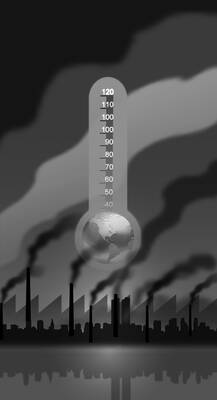
The closure of the Strait of Hormuz has sent the vast Asian chemicals industry into a tailspin. Deprived of the likes of Qatari natural gas and Saudi Arabian oil, the region’s fertilizer and plastics plants are slowing production or even shutting down. Everywhere except China, that is. In petrochemicals, China is unique. As well as a traditional industry that uses oil and gas as feedstock, it has parallel output that relies on its abundant domestic coal. Unsurprisingly, India and other regional powers want to copy and paste the Chinese method. This would not be easy — or climate friendly. The
US President Donald Trump recently repeated his claim that “Taiwan stole America’s chip industry,” reigniting public debate on the issue. As a former Taiwanese minister of economic affairs and an entrepreneur deeply involved in semiconductor supply chain development, I feel a responsibility to clarify this misunderstanding. From the perspective of global industrial evolution and the economic principle of comparative advantage, such a statement appears overly simplistic and risks obscuring the essence of the issue. The rise of Taiwan’s semiconductor industry was not built on “replacing America,” but rather emerged as a result of countries pursuing different development paths within the
Indonesian President Prabowo Subianto says he knows how to fix the problems facing Indonesia. Yet his economic mismanagement and authoritarian tendencies are steering the nation toward a familiar mix of currency instability and political chaos. The world’s fourth-most populous nation risks reversing the hard-won democratic and business reforms that came after the Asian Financial Crisis in 1997. At that time, the rupiah collapsed and the political upheaval that followed forced former president Haji Mohamed Suharto from power. Prabowo’s administration is ignoring similar warning signs. That disconnect was apparent in a national address on Wednesday, when Prabowo projected the swagger that has


 RSS
RSS