


"Being scared is realistic," Dr. Gail Thomson said. "You must always respect the virus and the situation you're in."
Thomson, a physician from Manchester, England, who treated Ebola virus victims in Uganda, has been working for the World Health Organization (WHO) here, teaching doctors how to avoid becoming infected when taking care of patients with the deadly Marburg virus.
The Marburg outbreak here, thought to have begun in October, has killed 193 out of 218 known cases; at least a dozen of the victims have been health-care workers, including an Italian pediatrician. Training is considered essential to prevent more deaths and to convince doctors and nurses that they can do their jobs safely. At hospitals in Uige, the northern province that is the epicenter of the outbreak, some hospital employees have been afraid to go to work.
"To be able to provide the dignified supportive care patients deserve, you have to have workers," Thomson said. "Otherwise the system breaks down. We don't want to just isolate patients and not provide care."
Doctors and nurses from other countries, many with experience in other outbreaks, have flown to Angola to help. But the agencies that send them, recognizing how risky and stressful the work is, often assign them for only a few weeks at a time and then rotate in new workers.
"It is important we don't stay too long," said Dr. Dominique Legros of the WHO, who spent two weeks in Uige. "If you do, you lose the necessary distance and you forget about the danger, which is always here, and you might put yourself in some sort of danger."
But the local doctors and nurses have no respites, and until international help began to arrive, most lacked the gear they needed to protect themselves.
Those treating infected patients need to be covered head to toe to avoid being exposed to bodily fluids, like blood, vomit and diarrhea, which transmit the disease. The protective gear includes masks, goggles, head coverings, gowns, aprons, boots and gloves. People are encouraged to work in pairs, never alone, and to keep an eye on each other to make sure the protective gear is not breached.
The equipment is hot and uncomfortable, and must be taken off carefully to avoid exposure to any contamination that might have landed on the outside layers. Disposable gowns and gloves must be buried or burned, and boots and goggles must be disinfected with chlorine.
The gear can also be intimidating for patients already frightened by the disease, so they may need reassurance that there is still a human being under all the gear.
"Even on an isolation unit, you can still show them you care," Thomson said. "Your face may be covered, but they know you by your eyes and your voice, and when you smile, even though it is behind the mask, they can tell from your eyes that you're smiling."
Doctors outside the isolation wards, tracking cases in the community, also face risks. Legros and other doctors have been tracking about 200 people who have been in contact with Marburg victims -- mostly health-care workers and people who lived with patients -- visiting them daily to see if any develop symptoms that would call for isolation. Each has to be followed for 21 days, the outer limit of the incubation period.
His team also investigated "alerts," reports of people sick with symptoms that might be Marburg. The team's job was to identify likely cases, and then summon other teams equipped with protective gear and ambulances to transport them to an isolation unit set up by Doctors Without Borders.
Entering homes has its own dangers, Legros said.
"You need good light," he said, to avoid accidentally touching vomit or diarrhea.
"When you investigate an alert, you assume it is a case," he said. "You try not to touch anyone. If you have to get close, you wear gloves and a mask."
He said he generally stayed about 1m from patients, to avoid being exposed in case they vomited, and made sure he was not surrounded or crowded by family members. If he needed to check for signs of hemorrhage, he would ask patients to pull down their own eyelids or lips, rather than doing it himself.
His team began working in late March, and was the first to head out into the community.
"When you just start, you aren't going to see early cases," Legros said. "You'll see deaths. We were catching up."
Of the 20 or so alerts his team responded to, about half turned out to be deaths, mostly from Marburg, he said. Corpses are especially dangerous because the disease is spread by bodily fluids, and dying patients suffer from diarrhea, vomiting and bleeding.
"Infectivity increases with disease progression, and is highest with cadavers," Legros said. Bodies must be sprayed with bleach to disinfect them, and placed into two leakproof body bags and a coffin for burial by teams in full protective gear.
Families with patients still alive have been reluctant to let them be taken to the hospital, Legros said.
"For the community, sending them to the isolation ward is almost like sending them to the cemetery," he said. "They will hide patients."
Some families simply want to let the patient die at home.
"It's understandable," Legros said. "We don't force them." In one case, he said, he and his team taught a family member how to care for the patient, and provided equipment to help that person avoid infection.
"The best case is to bring the patient to isolation," he said. "The worst is to leave them home with no protection for the family. We try to find something in between."
He said the team had declined an offer from the local police to compel sick people to go to the hospital.
Explaining why doctors would volunteer to work in the midst of a deadly epidemic far from home, Legros said, "The more awful it is, the more useful you feel you are."

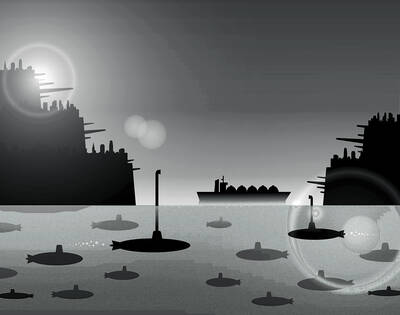
In the event of a war with China, Taiwan has some surprisingly tough defenses that could make it as difficult to tackle as a porcupine: A shoreline dotted with swamps, rocks and concrete barriers; conscription for all adult men; highways and airports that are built to double as hardened combat facilities. This porcupine has a soft underbelly, though, and the war in Iran is exposing it: energy. About 39,000 ships dock at Taiwan’s ports each year, more than the 30,000 that transit the Strait of Hormuz. About one-fifth of their inbound tonnage is coal, oil, refined fuels and liquefied natural gas (LNG),
On Monday, the day before Chinese Nationalist Party (KMT) Chairwoman Cheng Li-wun (鄭麗文) departed on her visit to China, the party released a promotional video titled “Only with peace can we ‘lie flat’” to highlight its desire to have peace across the Taiwan Strait. However, its use of the expression “lie flat” (tang ping, 躺平) drew sarcastic comments, with critics saying it sounded as if the party was “bowing down” to the Chinese Communist Party (CCP). Amid the controversy over the opposition parties blocking proposed defense budgets, Cheng departed for China after receiving an invitation from the CCP, with a meeting with
Chinese Nationalist Party (KMT) Chairwoman Cheng Li-wun (鄭麗文) is leading a delegation to China through Sunday. She is expected to meet with Chinese President Xi Jinping (習近平) in Beijing tomorrow. That date coincides with the anniversary of the signing of the Taiwan Relations Act (TRA), which marked a cornerstone of Taiwan-US relations. Staging their meeting on this date makes it clear that the Chinese Communist Party (CCP) intends to challenge the US and demonstrate its “authority” over Taiwan. Since the US severed official diplomatic relations with Taiwan in 1979, it has relied on the TRA as a legal basis for all
To counter the CCP’s escalating threats, Taiwan must build a national consensus and demonstrate the capability and the will to fight. The Chinese Communist Party (CCP) often leans on a seductive mantra to soften its threats, such as “Chinese do not kill Chinese.” The slogan is designed to frame territorial conquest (annexation) as a domestic family matter. A look at the historical ledger reveals a different truth. For the CCP, being labeled “family” has never been a guarantee of safety; it has been the primary prerequisite for state-sanctioned slaughter. From the forced starvation of 150,000 civilians at the Siege of Changchun


 RSS
RSS