


A South Korean journalist in Seoul last weekend asked the visiting US Secretary of State Condoleeza Rice a pointed question about how she coped with a bureaucracy staffed largely with white men.
Rice neither sidestepped the query nor brushed it away but took it head-on.
She reminded the questioner that neither of her predecessors, Colin Powell and Madeleine Albright, had been white men, then asserted: "I'm a package, I'm black and female and me."
"I think I act as Condi Rice, and that's a person who is female and black and grew up in Alabama and lived in California and was a professor," she said.
She noted that her ancestors had been slaves but that "we're making a lot of progress in the United States." Rice concluded that her appointment was "a testament to what can happen in a democracy over time."
Throughout her first journey to East Asia as America's top diplomat, Rice showed herself to be tough-minded but temperate in public and patient in responding to the press. Many headlines focused on North Korea's nuclear ambitions but Rice said: "I don't see it by any means as the central issue of the trip."
Rather, she said, the trip should "be seen in the context of what is evolving in this region as a set of relationships that are going to have to manage a host of security concerns."
Rice, who was President George W. Bush's national security adviser in his first administration, seemed bent on establishing her credentials as secretary of state with leaders in Japan, South Korea and China.
She was almost effusive on the US alliance with Japan. In a speech, Rice addressed an issue important to status-conscious Japanese:
"Japan has earned its honorable place among the nations of the world by its own effort and by its own character. That is why the United States unambiguously supports a permanent seat for Japan on the United Nations Security Council."
In South Korea, where anti-American and anti-Japanese sentiments run high, Rice was guarded as she tried to put a good image on the troubled alliance. With Foreign Minister Ban Ki-moon standing beside her, Rice said: "We will continue to coordinate very, very closely" on ways to react to North Korea's refusal so far to give up its nuclear arms.
Rice sought to be upbeat on the contentious US decision to reduce its forces in South Korea, which some South Koreans lament while others applaud. She noted the realignment would "return valuable urban land to the Korean people, while we continue to modernize the alliance."
What South Korean leaders said in closed meetings about differences with the US was not disclosed but Rice got an earful of South Korean thinking in questions from the South Korean press.
South Korean reporters asserted that many South Koreans do not consider the US an ally, that many thought the US should make concessions to North Korea, and many wanted Rice to retract the accusation that North Korea is an "outpost of tyranny."
Rice responded that North Koreans are "trying to change the subject. I'm not going to let them change the subject."
Several South Korean reporters asserted that the US was encouraging Japanese military expansion, that the US should not support Japan's petition for a permanent seat on the UN Security Council, and that anti-American and anti-Japanese feelings among Koreans were connected. Rice reiterated her praise for the US-Japan alliance.
In China, the emerging power of Asia, Rice was even more cautious. She said, "US-China relations have developed remarkably and in ways that would have been thought unthinkable a few years ago" but then laid out American differences with China.
She criticized a new law giving Beijing justification for attacking Taiwan, over which China claims sovereignty but whose people wish to remain apart. Rice reiterated Bush policy that this dispute must not be settled unilaterally.
Rice called on China to undertake political reform: "We believe that when China's leaders confront the need to align their political institutions with their increased economic openness, they will look around them in Asia and they will see that freedom works."
Without naming China, Rice brought up a long-standing irritant: "American businesses lose US$200 to US$250 billion a year to pirated and counterfeit goods. Innovation stimulates economic growth, but innovation will suffer without proper protection for intellectual property rights."
Amid this serious talk, Rice flashed a sense of humor. Asked whether she stood by an article she had written in 2000, she replied: "Never write an article and then go into government; people might actually read it."
Richard Halloran is a writer based in Hawaii.
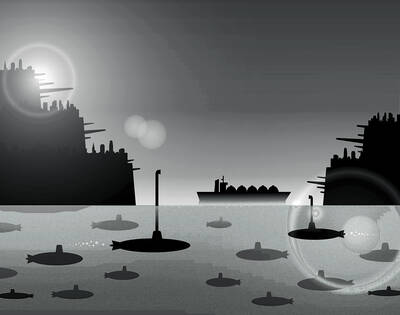
In the event of a war with China, Taiwan has some surprisingly tough defenses that could make it as difficult to tackle as a porcupine: A shoreline dotted with swamps, rocks and concrete barriers; conscription for all adult men; highways and airports that are built to double as hardened combat facilities. This porcupine has a soft underbelly, though, and the war in Iran is exposing it: energy. About 39,000 ships dock at Taiwan’s ports each year, more than the 30,000 that transit the Strait of Hormuz. About one-fifth of their inbound tonnage is coal, oil, refined fuels and liquefied natural gas (LNG),
To counter the CCP’s escalating threats, Taiwan must build a national consensus and demonstrate the capability and the will to fight. The Chinese Communist Party (CCP) often leans on a seductive mantra to soften its threats, such as “Chinese do not kill Chinese.” The slogan is designed to frame territorial conquest (annexation) as a domestic family matter. A look at the historical ledger reveals a different truth. For the CCP, being labeled “family” has never been a guarantee of safety; it has been the primary prerequisite for state-sanctioned slaughter. From the forced starvation of 150,000 civilians at the Siege of Changchun
The two major opposition parties, the Chinese Nationalist Party (KMT) and the Taiwan People’s Party (TPP), jointly announced on Tuesday last week that former TPP lawmaker Chang Chi-kai (張啟楷) would be their joint candidate for Chiayi mayor, following polling conducted earlier this month. It is the first case of blue-white (KMT-TPP) cooperation in selecting a joint candidate under an agreement signed by their chairpersons last month. KMT and TPP supporters have blamed their 2024 presidential election loss on failing to decide on a joint candidate, which ended in a dramatic breakdown with participants pointing fingers, calling polls unfair, sobbing and walking
In recent weeks, Taiwan has witnessed a surge of public anxiety over the possible introduction of Indian migrant workers. What began as a policy signal from the Ministry of Labor quickly escalated into a broader controversy. Petitions gathered thousands of signatures within days, political figures issued strong warnings, and social media became saturated with concerns about public safety and social stability. At first glance, this appears to be a straightforward policy question: Should Taiwan introduce Indian migrant workers or not? However, this framing is misleading. The current debate is not fundamentally about India. It is about Taiwan’s labor system, its


 RSS
RSS