


In recent weeks, China announced a 12.6 percent increase in its defense spending; the American CIA director, Porter Goss, testified about a worsening military balance in the Taiwan Strait; and US President George W. Bush pleaded with Europeans not to lift their embargo on arms sales to China. Yet Chinese leaders have spoken of China's "peaceful rise" or, more recently, its "peaceful development."
Analysts such as John Mearsheimer of the University of Chicago have flatly proclaimed that China cannot rise peacefully, and predict that "the United States and China are likely to engage in an intense security competition with considerable potential for war." Optimists point out that China has engaged in good neighbor policies since the 1990s, settled border disputes, played a greater role in international institutions, and recognized the benefits of using soft power. But skeptics reply that China is merely waiting for its economy to lay the basis for future hegemony.
Who is right? We will not know for some time, but the debaters should recall Thucydides' warning more than two millennia ago that belief in the inevitability of conflict can become one of its main causes. Each side, believing it will end up at war with the other, makes reasonable military preparations that are read by the other side as confirmation of its worst fears.
In fact, the "rise of China" is a misnomer. "Re-emergence" would be more accurate, since by size and history the Middle Kingdom has long been a major power in East Asia. Technically and economically, China was the world's leader (though without global reach) from 500 to 1500. Only in the last half-millennium was it overtaken by Europe and the US.
The Asian Development Bank has estimated that in 1820, at the beginning of the industrial age, Asia accounted for three-fifths of world output. By 1940, this fell to one-fifth, even though Asia was home to three-fifths of the world's population. Rapid economic growth has brought output back to two-fifths of the world total today, and the bank speculates that Asia could return to its historical levels by 2025.
Asia, of course, includes Japan, India, Korea and others, but China will eventually play the largest role. Its high annual growth rates of 8 percent to 9 percent led to a tripling of its GNP in the last two decades of the 20th century.
Nonetheless, China still has a long way to go and faces many obstacles. The US economy is about twice the size of China's; if it grows by only 2 percent annually, and China's economy grows by 6 percent, they could reach parity sometime after 2025. Even so, they would not be equal in composition or sophistication. China would still have a vast, underdeveloped countryside, and would not equal the US in per capita income until sometime after 2075 (depending on the measures of comparison.) China is a long way from posing the kind of challenge to US preponderance that the Kaiser's Germany posed when it surpassed Britain in the years leading up to World War I.
Moreover, simple projections of economic growth trends can mislead. Countries tend to pick the low-hanging fruit as they benefit from imported technologies in the early stages of economic take-off, and growth rates generally slow as economies reach higher levels of development. In addition, China's economy suffers from inefficient state-owned enterprises, a shaky financial system and inadequate infrastructure.
At the same time, politics has a way of confounding economic projections. Creating a rule of law and institutions for political participation has lagged behind economic growth, and growing inequality, massive internal migration, an inadequate social safety net and corruption could foster political instability. Indeed, some observers fear instability caused by a weak, rather than a rising, China.
As long as China's economy does grow, its military power will likely increase, thus making China appear more dangerous to its neighbors and complicating the US' commitments in Asia. A RAND study projects that by 2015, China's military expenditure will be more than six times higher than Japan's, and its accumulated military capital stock will be roughly five times higher (measured at purchasing power parity).
Whatever the accuracy of such assessments of China's military growth, the outcome will also depend on what the US and other countries do. The key to military power in the information age depends on the ability to collect, process, disseminate, and integrate complex systems of space-based surveillance, high speed computers, and "smart" weapons. China and others will develop some of these capabilities, but, according to many military analysts, China is not likely to close the gap with the US soon.
China's inability to compete with the US on a global basis does not mean that it could not challenge the US in East Asia, or that war over Taiwan is impossible. Weaker countries sometimes attack when they feel backed into a corner, such as Japan did at Pearl Harbor or China did when it entered the Korean War in 1950.
If, for example, Taiwan were to declare independence, China would likely intervene with armed force, regardless of the perceived economic or military costs. But it would be unlikely to win such a war, and prudent policy on both sides can make such a war unlikely.
There is no need for the US and China to go to war. Not every rising power leads to war -- witness America's overtaking of Britain at the end of the 19th century. If China's rise remains peaceful, it promises great benefits to its own people and to its neighbors -- and to Americans. But, remembering Thucydides' advice, it will be important not to mistake analysts' theories for reality, and to continue pointing this out to political leaders and publics.
Joseph Nye, a former US assistant secretary of defense, is distinguished service professor at Harvard, and author of Soft Power: The Means to Success in World Politics.
Copyright: Project Syndicate
KMT Chairwoman Cheng Li-wun’s (鄭麗文) recent visit to Beijing and her upcoming visit to Washington will serve as a high-level test of her diplomatic mettle. In Beijing, Cheng was received with symbolic gestures, a warm reception, and high-level access. In Washington, she will receive far less pomp and far sharper questions about the KMT’s vision for the future of Taiwan. Her challenge will be to persuade Washington that the KMT’s engagement with China can coexist with strong deterrence. Cheng’s April 7-12 visit to mainland China coincided with an intense period of conflict in Iran. Despite the strategic significance of Cheng’s trip,
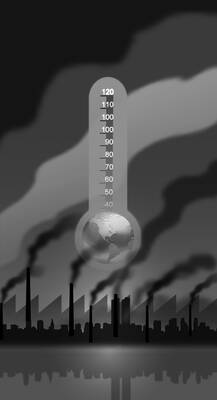
The closure of the Strait of Hormuz has sent the vast Asian chemicals industry into a tailspin. Deprived of the likes of Qatari natural gas and Saudi Arabian oil, the region’s fertilizer and plastics plants are slowing production or even shutting down. Everywhere except China, that is. In petrochemicals, China is unique. As well as a traditional industry that uses oil and gas as feedstock, it has parallel output that relies on its abundant domestic coal. Unsurprisingly, India and other regional powers want to copy and paste the Chinese method. This would not be easy — or climate friendly. The
US President Donald Trump recently repeated his claim that “Taiwan stole America’s chip industry,” reigniting public debate on the issue. As a former Taiwanese minister of economic affairs and an entrepreneur deeply involved in semiconductor supply chain development, I feel a responsibility to clarify this misunderstanding. From the perspective of global industrial evolution and the economic principle of comparative advantage, such a statement appears overly simplistic and risks obscuring the essence of the issue. The rise of Taiwan’s semiconductor industry was not built on “replacing America,” but rather emerged as a result of countries pursuing different development paths within the
The Presidential Office on Saturday reiterated that Taiwan is a sovereign, independent nation after US President Donald Trump said that Taiwan should not “go independent.” “We’re not looking to have somebody say: ‘Let’s go independence because the United States is backing us,’” Trump said in an interview with Fox News aired on Friday. President William Lai (賴清德) on Monday said that the Republic of China (ROC) — Taiwan’s official name — and the People’s Republic of China (PRC) are not subordinate to each other. Speaking at an event marking the 40th anniversary of the establishment of the Democratic Progressive Party (DPP), Lai said


 RSS
RSS