


Thursday's sweep on United Microelectronics Corp (UMC, 聯電), rather than being a rushed operation, was part of an investigation in which evidence had been collected over the last year: The investigation commenced following a tip-off that UMC was providing personnel and technology to "nurture" the Chinese company He Jian Technology (Suzhou) (和艦), behavior deemed to be against the interests of shareholders and to constitute a breach of trust. Regardless, revelations of the investigation proved to be somewhat explosive, and talk, particularly in the high-tech world, came thick and fast.
Although not everyone in the industry was implicated, it did throw up questions of the authorities' playing at being "economic police" and their interference with the operation of business, and there were even questions regarding the encroachment on human rights and freedom. In addition, as soon as the situation was given a political bent, there were also concerns about whether this might endanger the hard-earned atmosphere of conciliation between the parties.
Looking through the newspapers the day after the news broke, one could clearly discern two camps taking shape: Those that applauded the investigation, and those that slammed it. Putting aside for a minute the rather prickly topics of the legality of the investigation, or whether or not it does in fact encroach on human rights or liberty, we can say, purely from the perspective of investments in industry within a free, democratic society, the more freedom there is, and the more developed the market, all the government can really do is protect industrial rights and encourage innovation, and provide a fair, just, secure environment in which people can have a high quality of life and which attracts others from afar. Therefore, if Taiwan is a free, democratic society advocating a free market, the government truly has no business interfering in business, let alone searching the offices of companies.
This having been said, everyone is quite aware that, even now, a lot of government policy in Taiwan is quite interventionist. Naturally, if the majority of people agreed with this, there wouldn't be a problem, but many are, in fact, doubtful. This is especially true regarding policies giving preferential treatment, such as tax breaks or tax exemptions, to certain industries. The provision of government perks for research and development in technology because of its inherent "utility" also has its critics.
Regardless, it cannot be denied that in Taiwan, some industries and some companies enjoy public (all the people's) resources. Since this is so, it only seems reasonable that the government also poses demands. If we accept this, then demands such as whether manufacturers should be allowed to freely transfer technology become a matter of reasonable interference. Not long ago, Vice President Annette Lu (呂秀蓮) at a public event questioned Taiwan's high-tech industries' return on investment by bringing up the issue of whether the government should support industry. That was just another expression of this issue.
What we should ask is this: Who is it that is asking for these policies that reward companies and offer them preferential treatment? If the government were to treat all industries fairly and not offer industry any kind of preferential treatment, then industry circles could tell the government to stay away. Thus, given today's drive toward globalization, maybe it is time for companies to stand up and say "No!" to the government, ie, say that they do not want any preferential treatment or help.
In fact, if UMC really did use He Jian to move funds around, then this is also a matter of people finding ways of getting around government policies. Outsiders should not get involved, nor should they engage in political mudslinging.
It is worth noting that if all the world's nations were liberal democracies, then the best policy would be one of full deregulation, free trade and free investment. But any communist and totalitarian society should be discussed separately, because in such a system there is no free market.
Wu Hui-lin is a research fellow at the Chung Hua Institution for Economic Research.
Translated by Perry Svennson and Paul Cooper
Taiwan’s higher education system is facing an existential crisis. As the demographic drop-off continues to empty classrooms, universities across the island are locked in a desperate battle for survival, international student recruitment and crucial Ministry of Education funding. To win this battle, institutions have turned to what seems like an objective measure of quality: global university rankings. Unfortunately, this chase is a costly illusion, and taxpayers are footing the bill. In the past few years, the goalposts have shifted from pure research output to “sustainability” and “societal impact,” largely driven by commercial metrics such as the UK-based Times Higher Education (THE) Impact
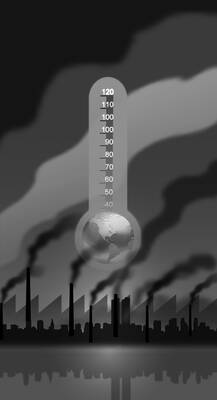
The closure of the Strait of Hormuz has sent the vast Asian chemicals industry into a tailspin. Deprived of the likes of Qatari natural gas and Saudi Arabian oil, the region’s fertilizer and plastics plants are slowing production or even shutting down. Everywhere except China, that is. In petrochemicals, China is unique. As well as a traditional industry that uses oil and gas as feedstock, it has parallel output that relies on its abundant domestic coal. Unsurprisingly, India and other regional powers want to copy and paste the Chinese method. This would not be easy — or climate friendly. The
KMT Chairwoman Cheng Li-wun’s (鄭麗文) recent visit to Beijing and her upcoming visit to Washington will serve as a high-level test of her diplomatic mettle. In Beijing, Cheng was received with symbolic gestures, a warm reception, and high-level access. In Washington, she will receive far less pomp and far sharper questions about the KMT’s vision for the future of Taiwan. Her challenge will be to persuade Washington that the KMT’s engagement with China can coexist with strong deterrence. Cheng’s April 7-12 visit to mainland China coincided with an intense period of conflict in Iran. Despite the strategic significance of Cheng’s trip,
History might remember 2026, not 2022, as the year artificial intelligence (AI) truly changed everything. ChatGPT’s launch was a product moment. What is happening now is an anthropological moment: AI is no longer merely answering questions. It is now taking initiative and learning from others to get things done, behaving less like software and more like a colleague. The economic consequence is the rise of the one-person company — a structure anticipated in the 2024 book The Choices Amid Great Changes, which I coauthored. The real target of AI is not labor. It is hierarchy. When AI sharply reduces the cost


 RSS
RSS