


After an unidentified official hinted that the government would reimpose the securities income tax on the morning of July 20, public anxiety led the stock market to plunge 163 points. The minister of finance made a personal appearance in the afternoon to clarify the matter, but the damage had already been done and the next day, due to continued lack of confidence, the market only recovered half of the previous day's loss. Some people believe that this was just an occasional instance of misinformation being released, but in fact the matter is not so simple.
Anyone concerned with national politics will know that after the national elections earlier this year, those with pro-unification views and promoters of westward development have been most concerned with two issues: direct transport links and tax reform.
To promote their cause, they have sought to brainwash the public and government officials with weekly seminars in which sympathetic scholars and officials take part, and by publicizing these seminars in full-page reports. They want to make people believe that "if Taiwan does not establish direct links it will be marginalized," and that "if Taiwan doesn't immediately reform its tax system, it will never achieve social justice."
It hopes to seduce the government into policies that will benefit China and serve the interests of "unification through economic means." The news of a reimposition of the securities income tax that emerged on July 20 was a result of these efforts.
Why are they suddenly so interested in tax reform? For proponents of westward development and unification, tax reform and direct links are inseparable and complimentary.
Based on reports over the last few months in the pro-unification media, these people have two main demands with respect to tax reform: reimposition of the securities income tax and the abolition or reduction of preferential tax rates for upgrading industries. Naturally, they have included a number of less controversial demands as padding to blur their true intentions. (Media with a stronger Taiwan awareness have fewer reports and discussions about tax reform.)
We all know pro-unificationists have consistently promoted the "three direct links" and closer economic ties with China. The reason is to create a situation in which cross-strait affairs are dealt with as domestic affairs, with Taiwan relegated to the fringes of a "Chinese economic sphere."
As far as tax reform is concerned, if the preferential tax rates in the Statutes for Industrial Upgrading (
To give justification to their "tax reform" measures and win public support, those favoring westward development have also sought to use the logic of "one China" in developing their argument. Their premises are:
One, Taiwan's tax-to-GDP ratio fell from 19.4 percent in 1990 to 12.5 percent this year, which is lower than that of most major countries and therefore taxes should be raised.
Two, the reason why the ratio has fallen is because the government has given certain industries and sectors preferential tax rates that have undermined the tax base and this is a cause of serious inequality within the tax system. The conclusion is that it is essential to abolish or reduce preferential tax rates for upgrading industries and reimpose a securities income tax. After months of exposure, this policy is beginning to have an effect, causing the government to consider these two issues.
I do not oppose tax reform and believe that the government has a responsibility to maintain a tax system that is equitable and complete. There are improvements that can be made, such as making income tax assessments based on both the individual and on the place of assessment, abolishing the additional 10 percent business tax on unallocated profits, increasing business taxes and abolishing the stamp duty. As for the reimposition of the securities income tax and the reduction or abolition of preferential tax rates for upgrading industries, however, we should take a long-term perspective, especially as, in recent years, these laws have served as a line of defense against China's economic pull and are preventing Taiwan from becoming marginalized economically.
In assessing the quality of a tax system, we should not only be concerned about whether it is fair, but also how it contributes to the economy as a whole. Past experience has already shown us that terminating the securities income tax did not decrease tax revenue from securities transactions.
Even though it goes against the principle that all income should be taxed, terminating this levy has stimulated the development of Taiwan's capital markets, which are an important source of funds for our industries. If one also considers the system of stock options for employees, this has contributed to making Taiwan a world famous information technology producer; these regulations have clearly proved successful.
Since the Statutes for Industrial Upgrading have proved strategically effective in counter-balancing cheap Chinese labor and land, and keeping industry in Taiwan, we can accept the unfair competition created by these tax incentives as a necessary evil.
It was 20-odd years ago that a former leader echoed China's call for "one China" without realizing his opponent's deeper strategy would lead him into a trap. It is this that has created the current difficulties for Taiwan's 23 million people. The scholars and officials who are echoing China's calls for "three direct links" and calling for "tax reform" are leading our economy into a new crisis.
I sincerely hope that other scholars and officials will eventually perceive the deeper strategy that China is pursuing in seeking unification through economic means and not be misled or brainwashed by these pro-unification forces. They should pull back before they fall into China's trap, for only in this way will we be able to preserve Taiwan's economic sovereignty.
Huang Tien-lin is a national policy advisor.
TRANSLATED BY Ian Bartholomew
Minister of Labor Hung Sun-han (洪申翰) on April 9 said that the first group of Indian workers could arrive as early as this year as part of a memorandum of understanding (MOU) between the Taipei Economic and Cultural Center in India and the India Taipei Association. Signed in February 2024, the MOU stipulates that Taipei would decide the number of migrant workers and which industries would employ them, while New Delhi would manage recruitment and training. Employment would be governed by the laws of both countries. Months after its signing, the two sides agreed that 1,000 migrant workers from India would
In recent weeks, Taiwan has witnessed a surge of public anxiety over the possible introduction of Indian migrant workers. What began as a policy signal from the Ministry of Labor quickly escalated into a broader controversy. Petitions gathered thousands of signatures within days, political figures issued strong warnings, and social media became saturated with concerns about public safety and social stability. At first glance, this appears to be a straightforward policy question: Should Taiwan introduce Indian migrant workers or not? However, this framing is misleading. The current debate is not fundamentally about India. It is about Taiwan’s labor system, its
On March 31, the South Korean Ministry of Foreign Affairs released declassified diplomatic records from 1995 that drew wide domestic media attention. One revelation stood out: North Korea had once raised the possibility of diplomatic relations with Taiwan. In a meeting with visiting Chinese officials in May 1995, as then-Chinese president Jiang Zemin (江澤民) prepared for a visit to South Korea, North Korean officials objected to Beijing’s growing ties with Seoul and raised Taiwan directly. According to the newly released records, North Korean officials asked why Pyongyang should refrain from developing relations with Taiwan while China and South Korea were expanding high-level
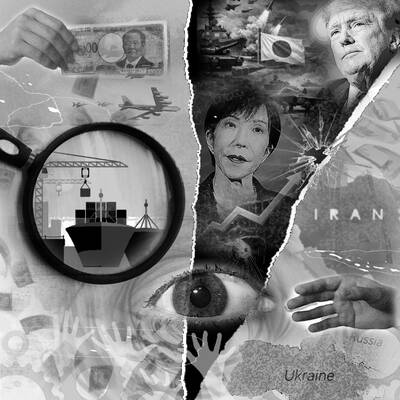
Japan’s imminent easing of arms export rules has sparked strong interest from Warsaw to Manila, Reuters reporting found, as US President Donald Trump wavers on security commitments to allies, and the wars in Iran and Ukraine strain US weapons supplies. Japanese Prime Minister Sanae Takaichi’s ruling party approved the changes this week as she tries to invigorate the pacifist country’s military industrial base. Her government would formally adopt the new rules as soon as this month, three Japanese government officials told Reuters. Despite largely isolating itself from global arms markets since World War II, Japan spends enough on its own


 RSS
RSS