


US National Security Adviser Condoleezza Rice recently visited Japan, China and South Korea. The tour was probably related to US President George W. Bush's preparations for the presidential election campaign.
The US has invited Chinese President Hu Jintao (
Of the two US presidential candidates, China clearly prefers the presumptive Democratic candidate, Senator John Kerry, who has said that he wants to solve the Taiwan issue using the "one country, two systems" model to Bush, who is militarily aggressive and quite friendly towards Taiwan. China will therefore raise the price for accepting Bush's invitation, since it doesn't want to improve Bush's chances during the election campaign. Rice's visit to China was therefore a difficult task. If Hu visits the US next month, it will attract a lot of attention. Apart from affecting the China-US relationship, such a visit will also have an effect on Beijing's internal power struggles.
There is also an aspect to this interaction between China and the US that is positive to the US. Changes negative to China have occurred in the international strategic situation. Namely, China's relationships with neighboring states have become strained. Although not too obvious as yet, it can be said with near-certainty that these tensions will intensify in the future. They are thus important changes, and most important among them are the changes in China's relationships with Russia and Japan.
There are two aspects to the changes in the China-Russia relationship. The first aspect was embodied by the three-week-long military exercise held in Russia's far east last month. It was the nation's biggest military exercise in the 15 years since the collapse of the Soviet Union, and it was held in the vicinity of Dongning, Heilongjiang Province, and Chunhua, Jilin Province. These two cities are situated close to Vladivostok, the largest port in Russia's far east, and Nakhodka, which will be the end point on the pipeline that will be built to transport Russian oil to Japan.
There is also another oil-related change: the official Russian announcement that it has reversed course on the construction of the pipeline from Angarsk in Russia to Daqing in China, which Russia originally had agreed to. Although the Angarsk-Nakhodka pipeline suggested by Japan will not be built, there will be a pipeline from Taishet to Nakhodka, still clearly biased towards Japan. Observers are now trying to assess what retributive measures China will adopt towards Russia.
Over the past dozen years or so, Russia has sold large quantities of advanced weapons to China, and former president Jiang Zemin (江澤民) has confirmed treaties signed in the19th century and in which China ceded a total of 3 million km2 of its territory to Russia, but without succeeding in winning back the friendship of "Big Brother" Russia.
Russia has both ambitions and worries, thinking that once China grows strong, it may demand the return of the land included in those treaties. Furthermore, a few million Chinese people have already moved into these sparsely populated areas, and could in the future demand self determination. Maybe this is how the Washington Times, in a recent report, came to the conclusion that Russia and the US are cooperating to build the submarines to be sold to Taiwan. Some observers also think that Russia may use a possible Chinese attack on Taiwan as an opportunity to attack China from behind.
The old slogan of the Chinese Communist Party that "the Russian revisionists are still trying to destroy us" anticipated the fact that the Soviet Union's tanks could roll directly into the Chinese capital through Mongolia. This was also the reason that Mao Zedong (毛澤東) changed his policy of "overthrowing US imperialism" into a policy of friendship with the US.
Japan has also tried hard to destroy China in the past, but the greatest threat has instead been Russia, which also is the nation to which China has ceded the largest part of its territory. After Jiang came to power, he changed Mao and Deng Xiaoping's (鄧小平) policies in favor of anti-American nationalism, ignoring the Russian threat.
In order to cover up the cracks in the China-Russia relationship, the vice chairman of the Central Military Commission, Guo Boxiong (郭伯雄), recently visited Moscow. On July 6, he met with Russian Defense Minister Sergei Ivanov. Unexpectedly, the two sides signed a memorandum on holding joint military exercises, something which will only make the problems more obvious. Russia specialist Rice will have her own way of widening these cracks.
Paul Lin is a commentator based in New York.
Translated by Perry Svensson
KMT Chairwoman Cheng Li-wun’s (鄭麗文) recent visit to Beijing and her upcoming visit to Washington will serve as a high-level test of her diplomatic mettle. In Beijing, Cheng was received with symbolic gestures, a warm reception, and high-level access. In Washington, she will receive far less pomp and far sharper questions about the KMT’s vision for the future of Taiwan. Her challenge will be to persuade Washington that the KMT’s engagement with China can coexist with strong deterrence. Cheng’s April 7-12 visit to mainland China coincided with an intense period of conflict in Iran. Despite the strategic significance of Cheng’s trip,
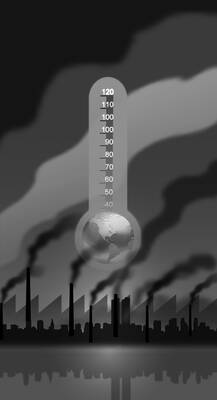
The closure of the Strait of Hormuz has sent the vast Asian chemicals industry into a tailspin. Deprived of the likes of Qatari natural gas and Saudi Arabian oil, the region’s fertilizer and plastics plants are slowing production or even shutting down. Everywhere except China, that is. In petrochemicals, China is unique. As well as a traditional industry that uses oil and gas as feedstock, it has parallel output that relies on its abundant domestic coal. Unsurprisingly, India and other regional powers want to copy and paste the Chinese method. This would not be easy — or climate friendly. The
US President Donald Trump recently repeated his claim that “Taiwan stole America’s chip industry,” reigniting public debate on the issue. As a former Taiwanese minister of economic affairs and an entrepreneur deeply involved in semiconductor supply chain development, I feel a responsibility to clarify this misunderstanding. From the perspective of global industrial evolution and the economic principle of comparative advantage, such a statement appears overly simplistic and risks obscuring the essence of the issue. The rise of Taiwan’s semiconductor industry was not built on “replacing America,” but rather emerged as a result of countries pursuing different development paths within the
Indonesian President Prabowo Subianto says he knows how to fix the problems facing Indonesia. Yet his economic mismanagement and authoritarian tendencies are steering the nation toward a familiar mix of currency instability and political chaos. The world’s fourth-most populous nation risks reversing the hard-won democratic and business reforms that came after the Asian Financial Crisis in 1997. At that time, the rupiah collapsed and the political upheaval that followed forced former president Haji Mohamed Suharto from power. Prabowo’s administration is ignoring similar warning signs. That disconnect was apparent in a national address on Wednesday, when Prabowo projected the swagger that has


 RSS
RSS