


Mrs. Akinyi's husband died of AIDS in 1990. She believes her husband infected her with HIV -- he had a history of extra-marital affairs.
When he died, her in-laws denied her property inheritance. In her words, "Immediately after the burial I was chased away from home with my children."
Mrs. Nyakumabor's husband died of AIDS in 1998 and left her HIV-positive with five children. Her in-laws grabbed household items and took over the house and land she had helped pay for. Soon after her husband's death, Mrs. Nyakumabor's father-in-law called a family meeting, told her to choose an inheritor and ordered her to be cleansed by having sex with a fisherman. Mrs Nyakumabor refused, causing an uproar. She now struggles to meet her family's needs, and her slum landlord has threatened to evict her because she cannot always pay rent on time.
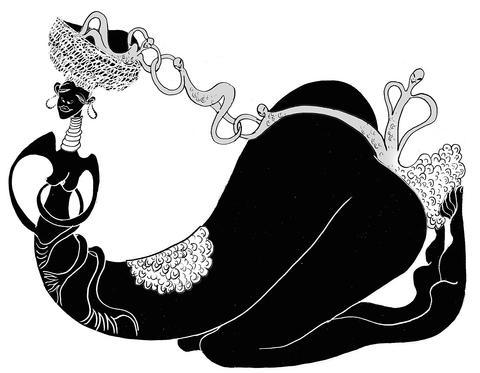
ILLUSTRATION MOUNTAIN PEOPLE
These women's stories (their names have been changed) are two of the hundreds collected by Human Rights Watch and other organizations documenting the stripping of property rights in the wake of AIDS among some of the most vulnerable people on earth.
The global fight against AIDS has been endorsed by all the UN member states and declared a high priority at countless summits. Resources are being mobilized -- still short of what is needed, but a lot more than was available only a few years ago. At last, programs to extend life-saving HIV treatment to the developing world are being mounted with the seriousness and urgency they require. And HIV prevention, which currently reaches fewer than one in five of those who need it, is also on the agenda.
But for as long as women and girls are unable to enjoy education, property rights, freedom from violence and economic security, progress on the AIDS front will pass them by.
Women make up about half of the victims of the global HIV epidemic, and where the epidemic is longer-standing, in Africa, they are well over half. The ABC slogan -- abstain, be faithful, use a condom -- is the mainstay of many HIV prevention programs. But for too many women and girls, this message has no purchase.
Where sexual violence is widespread, abstinence or insisting on condom use is not a realistic option.
Across the world, between one fifth and half of all girls and young women report that their first sexual encounter was forced.
Only 11 percent of women in Zambia believe they have the right to ask a husband to use a condom.
Nor does marriage provide the answer. The reality across the developing world is that the majority of women will be married by age 20, and have higher rates of HIV than their unmarried, sexually active peers.
At the same time, women bear a disproportionate share of the burden of AIDS care.
In poor households, the presence of an AIDS patient can absorb a third of all household labor, most of it performed by women. One common response to a plunge in household income caused by AIDS is to pull children out of school -- and girls are the first to go. Across Africa, formal school participation is declining.
The answers to reducing women's vulnerability to AIDS clearly lie deeper than the use of slogans. To address AIDS effectively, we first have to understand how women are being treated and why.
A comprehensive strategy is needed to boost girls' access to education (particularly secondary education), strengthen legal protection for women's property, eradicate violence against women and girls and ensure they have fair access to HIV care and prevention services.
Tackling these inequalities is not just a matter for women -- men must be fully involved.
For starters, they need to declare zero tolerance for violence against women, be committed to their daughters' education and help alleviate the burden of care.
Moves are under way -- for example, the global push to achieve education for all, or the campaign by the WHO and UNAIDS to ensure that three million people in the developing world have access to HIV treatment by 2005 -- and that half are women. But more is needed, and urgently.
The escalating global struggle against AIDS cannot afford to neglect women, and special efforts will be needed to ensure it is not allowed to.
To that end, UNAIDS has pulled together a high-profile group of men and women -- the Global Coalition on Women and AIDS -- which gathers activists, government representatives, celebrities and community workers who are committed to improving the lives of women and girls.
The call to empower women is not new, but AIDS makes it more urgent. Millions of women around the world were already facing a lifetime of hard labor. AIDS has turned this into a death sentence.
The skills, knowledge and resources to relieve women of the devastating burden of AIDS already exist.
What is needed now is the will to see that they are applied.
Dr Peter Piot is executive director of the Joint UN Program on HIV/AIDS (UNAIDS).
Emma Thompson is an Oscar-winning actress and a steering committee member of the Global Coalition on Women and AIDS.

The White House’s decision to take a 9.9 percent stake in Intel Corp is looking like very shrewd business indeed. Since the government bought in at US$20.47 a share last August, the US chipmaker’s surging stock price has delivered the US a US$43 billion return. One of the reasons the investment has so far proved so sound is that the White House has made sure of it. According to The Wall Street Journal, Howard personally pushed deals on Intel’s behalf with some of the most lucrative clients imaginable. They include Nvidia Corp, the company at the heart of the AI
A single photograph can cut through a lot of noise, but it can also be used to misrepresent the truth. At the very least, it can concentrate the mind on something that requires further investigation. On Monday last week, Ma Ying-jeou Foundation CEO Tai Hsia-ling (戴遐齡) and former National Security Council secretary-general King Pu-tsung (金溥聰) held a news conference in which they showed a photograph of former foundation CEO Hsiao Hsu-tsen (蕭旭岑), now Chinese Nationalist Party (KMT) deputy chairman. In the image Hsiao is seated next to Xiamen Taiwan Businessmen Association chairman Han Ying-huan (韓螢煥). The two men were holding
I first met Professor Ray Jiing (井迎瑞) as a film and documentary student at Shih Hsin University’s (SHU) Department of Radio Television and Film in 1988. The following year, he went on to become the director of the Chinese Taipei Film Archive — forerunner of the Taiwan Film and Audiovisual Institute (TFAI). Over his eight-year tenure, Jiing rescued and restored over 200 classic Taiwanese films. In 1997, he established the Graduate Institute of Studies in Documentary and Film Archiving at Tainan National University of the Arts (TNNUA), and I joined the program in his third cohort of students. Beyond a
A recent report concerning a student who is suing his teacher posed the question in its headline: Does failing a student in two subjects constitute bullying? The college student in Chiayi County apparently sought NT$2 million (US$63,603) in state compensation, but a court dismissed the case. The first reaction of many might have been to ask: What has happened to students nowadays? Some say that teachers have lost their authority, while others say students are overindulged. Some even start reminiscing over the days when “whatever the teacher says goes.” However, the real issue might be overlooked if emotional reactions like that are the


 RSS
RSS