


Less than 100 days after Malaysia's Mahathir Mohamad ended an era with his retirement, his successor, Abdullah Ahmad Badawi, has served notice to Malaysia's business cronies and corrupt officials that times have changed.
Analysts had questioned whether the softer, gentler Abdullah could step out of the shadow of Mahathir, whose 22-year reign was characterized by vitriolic rhetoric against the West, Zionists, homosexuals and liberal democracy.
But now they see as much change in substance as style in the leadership of the man popularly known as "Pak Lah" -- a diminutive for Uncle Abdullah that testifies to the warm, fuzzy image the former civil servant enjoys with people.
"Nothing new was expected of him. It has been a pleasant surprise," said Shahrir Samad, a member of the United Malays National Organization (UMNO) Supreme Council, and one of the few vocal critics of Mahathir in the ruling party.
Francis Yeoh, an ethnic Chinese tycoon whose YTL Group prospered during the Mahathir years, said people were more willing to speak out: "In the past, there was some cynicism and orneriness."
Malaysians aren't alone seeing a change for the better.
Abdullah, 64, is soothing ties with Washington, strained by Mahathir's anger over the invasion of Iraq and by his remarks about Jews to an Islamic summit just before he retired.
Singapore, too, has felt Abdullah's healing touch as he and Prime Minister Goh Chok Tong used the Lunar New Year to put aside the bad blood that surfaced in Mahathir's final years over water supplies and a host of other more minor disagreements.
But it is Abdullah's emphasis on ethics and his stand against graft at home that sets him apart.
No one expects any witch hunts -- but he has drawn a line.
He's installed a new police chief and ordered a review of the awful image of the force -- something he never dared to do as Mahathir's home minister.
He wants a more efficient, transparent civil service.
His taxmen have begun chasing VIPs and big companies.
He's also shelved multi-billion dollar deals Mahathir gave to one tycoon, and said in future most government contracts will be awarded through open tender.
Shahrir sees in Abdullah a return to the old values of Malaysia's second prime minister, Abdul Razak, who in the 1970s envisaged a program of gradual social reform rather than big projects and big business that Mahathir indulged.
"The question is whether Abdullah can drive the anti-corruption campaign at the highest level," says Khoo Boo Teik, a political scientist at Penang's Universiti Sains Malaysia.
JUST BEHIND ITALY
By Asian standards, Malaysia is not too bad, but the Berlin based Transparency International reckoned it is still a touch worse than Italy in terms of graft.
"Mahathir was not corrupt. The trouble was he tolerated corruption too much," said one well-known personality in the Malay political establishment, whose star fell soon after the change in premiership.
But he doubted whether Abdullah and his young team will be strong enough to change the system.
Like many people, he believed Abdullah will last for one term at most before handing over to Najib Razak, the defense minister who was seen as a potential challenger before being made deputy prime minister earlier this month.
Abdullah's first Cabinet reshuffle left all the old faces in place, though he went outside politics to give Nor Mohamed Yakcop, a central banker with an unsullied reputation, the powerful second finance minister spot.
Abdullah will pick a Cabinet he can call his own only after an election, expected sometime between late March and early May.
The multicultural Barisan Nasional coalition is assured of victory. But UMNO, which leads the alliance, needs to win back Malay votes lost in 1999 for Abdullah to be confident.
JAILHOUSE MOCK
"He's smart enough not to change anything right now. He'll change after the election comes around," Shahrir said.
Political analysts don't expect Abdullah to do anything about Anwar Ibrahim any time soon. Last week, judges again refused to release the imprisoned opposition hero on bail.
"What is Mr. Nice Guy talking about -- that we are a free and fair democracy is sheer hypocrisy," Anwar said in a courtroom outburst referring to Abdullah by one of his nicknames.
The former deputy prime minister was sentenced to jail for 15 years on abuse of power and sodomy convictions after challenging Mahathir in 1998.
But the Anwar case aside, Malaysia's new prime minister has done some very unMahathir-like things, confounding cynics who thought he would be Mahathir's puppet.
Even the preachers who lead the Islamist opposition struggle to find fault.
KMT Chairwoman Cheng Li-wun’s (鄭麗文) recent visit to Beijing and her upcoming visit to Washington will serve as a high-level test of her diplomatic mettle. In Beijing, Cheng was received with symbolic gestures, a warm reception, and high-level access. In Washington, she will receive far less pomp and far sharper questions about the KMT’s vision for the future of Taiwan. Her challenge will be to persuade Washington that the KMT’s engagement with China can coexist with strong deterrence. Cheng’s April 7-12 visit to mainland China coincided with an intense period of conflict in Iran. Despite the strategic significance of Cheng’s trip,
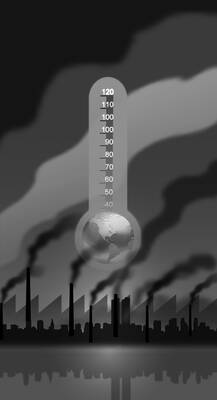
The closure of the Strait of Hormuz has sent the vast Asian chemicals industry into a tailspin. Deprived of the likes of Qatari natural gas and Saudi Arabian oil, the region’s fertilizer and plastics plants are slowing production or even shutting down. Everywhere except China, that is. In petrochemicals, China is unique. As well as a traditional industry that uses oil and gas as feedstock, it has parallel output that relies on its abundant domestic coal. Unsurprisingly, India and other regional powers want to copy and paste the Chinese method. This would not be easy — or climate friendly. The
History might remember 2026, not 2022, as the year artificial intelligence (AI) truly changed everything. ChatGPT’s launch was a product moment. What is happening now is an anthropological moment: AI is no longer merely answering questions. It is now taking initiative and learning from others to get things done, behaving less like software and more like a colleague. The economic consequence is the rise of the one-person company — a structure anticipated in the 2024 book The Choices Amid Great Changes, which I coauthored. The real target of AI is not labor. It is hierarchy. When AI sharply reduces the cost
US President Donald Trump recently repeated his claim that “Taiwan stole America’s chip industry,” reigniting public debate on the issue. As a former Taiwanese minister of economic affairs and an entrepreneur deeply involved in semiconductor supply chain development, I feel a responsibility to clarify this misunderstanding. From the perspective of global industrial evolution and the economic principle of comparative advantage, such a statement appears overly simplistic and risks obscuring the essence of the issue. The rise of Taiwan’s semiconductor industry was not built on “replacing America,” but rather emerged as a result of countries pursuing different development paths within the


 RSS
RSS