


Attitudes in the media toward the European Parliament's recent Taiwan-friendly resolutions have been varied. The positive opinion is that the parliament is a crucial international organization and the resolutions mark another diplomatic victory for Taipei. The negative view is that the resolutions are a result of efforts by Taiwan to collude with, even to buy off, members of the parliament, and that the parliament is, in any case, only a sideshow in European politics. I don't fully agree with either view.
First, it is not fair to say that the resolutions were the result of an attempt to buy off members of parliament. Jules Maaten, who advanced one of the proposals, is a member of the European Liberal Democrats, a party on the political right but the economic left. The party is anti-authoritarianism and pro-democracy and views opposition to regimes that disregard human rights, such as China and Egypt, as integral to its mission. A firm supporter of Taiwan's democratization, the party is itself a rare phenomenon at a time when China fever is sweeping the globe. There is no need for Taiwan to collude with, not to mention bribe, this party.
However, it is only partially correct to say that the European Parliament is a key international organization. Power restructuring in the arena of public affairs is the most complex aspect of European integration. The reason the pro-Taiwan resolutions have only limited influence is because EU states are unwilling to transfer authority over national defense and diplomacy to the Union. But that does not mean the parliament is completely powerless. It enjoys a high level of authority.
Two years ago, for instance, the Dutch government failed to support its regional administrations in applications for EU subsidies. The regional administrations then turned to Brussels and successfully lobbied the parliament and the European Commission to reverse the Dutch government's policy. During the process, the regional administrations established their own office in Brussels, enabling them to challenge the might of their government's office at the EU. The targets of their lobbying efforts were members of parliament.
This also highlights the fact that Taiwan, in its observation of the EU, has overlooked the fact that power in many areas has moved away from the member states' central governments and toward their regional governments during the process of European integration.
Germany's Ministry of Foreign Affairs insisted more than a decade ago that EU affairs fell within the jurisdiction of the central government and that local administrations should not interfere in them. But the ministry had to give ground after all of Germany's state governments established their own offices in Brussels to conduct lobbying. An amendment to Article 23 of Germany's Constitution stipulated that whether to participate in EU affairs is a matter for each Ger-man state to decide. Similar developments followed in Italy, Finland and Spain.
Relations with China are a case in point. Although EU members refuse to transfer this diplomatic issue to lower levels of government, some EU regional governments have been conducting exchanges with provincial or local governments in China for some time -- for example Essex County in Britain with Jiangsu Province and Emilia-Romagna Province in Italy with Tianjin.
What's important is that these exchanges are backed by the European Commission. The most important proof of this was the appointment last month of Isabelle Jagiello as its representative to China. She was brought over from the Local Government International Bureau, the European and international arm of the Local Government Association for England and Wales.
In other words, international affairs not only fall within the jurisdiction of the parliament but also within the purview of regional governments within EU members. This will have a bearing on the Commission's China strategy in coming years.
The significance of the EU is beyond question. Taiwan is right to seek the support of its friends in the European Parliament, but it can do better in its diplomatic strategies. Taiwan must clearly recognize the realpolitik under which the EU operates. It is futile to waste energy on useless Taiwan-friendly proposals at a time when the parliament has no real diplomatic power. Taiwan should, instead, make pragmatic, long-term investments to strengthen exchanges with parliament members and regional European governments.
Chien Shiuh-shen is a doctoral candidate at the London School of Economics and Political Science.
Translated by Jackie Lin
Minister of Labor Hung Sun-han (洪申翰) on April 9 said that the first group of Indian workers could arrive as early as this year as part of a memorandum of understanding (MOU) between the Taipei Economic and Cultural Center in India and the India Taipei Association. Signed in February 2024, the MOU stipulates that Taipei would decide the number of migrant workers and which industries would employ them, while New Delhi would manage recruitment and training. Employment would be governed by the laws of both countries. Months after its signing, the two sides agreed that 1,000 migrant workers from India would
In recent weeks, Taiwan has witnessed a surge of public anxiety over the possible introduction of Indian migrant workers. What began as a policy signal from the Ministry of Labor quickly escalated into a broader controversy. Petitions gathered thousands of signatures within days, political figures issued strong warnings, and social media became saturated with concerns about public safety and social stability. At first glance, this appears to be a straightforward policy question: Should Taiwan introduce Indian migrant workers or not? However, this framing is misleading. The current debate is not fundamentally about India. It is about Taiwan’s labor system, its
On March 31, the South Korean Ministry of Foreign Affairs released declassified diplomatic records from 1995 that drew wide domestic media attention. One revelation stood out: North Korea had once raised the possibility of diplomatic relations with Taiwan. In a meeting with visiting Chinese officials in May 1995, as then-Chinese president Jiang Zemin (江澤民) prepared for a visit to South Korea, North Korean officials objected to Beijing’s growing ties with Seoul and raised Taiwan directly. According to the newly released records, North Korean officials asked why Pyongyang should refrain from developing relations with Taiwan while China and South Korea were expanding high-level
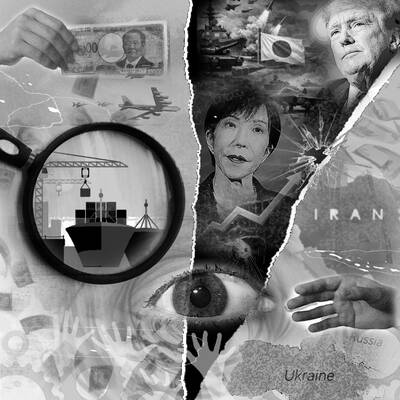
Japan’s imminent easing of arms export rules has sparked strong interest from Warsaw to Manila, Reuters reporting found, as US President Donald Trump wavers on security commitments to allies, and the wars in Iran and Ukraine strain US weapons supplies. Japanese Prime Minister Sanae Takaichi’s ruling party approved the changes this week as she tries to invigorate the pacifist country’s military industrial base. Her government would formally adopt the new rules as soon as this month, three Japanese government officials told Reuters. Despite largely isolating itself from global arms markets since World War II, Japan spends enough on its own


 RSS
RSS