


Can genetically engineered bacteria prevent tooth decay? A small biotechnology company is about to take the first step toward answering that question.
The company, Oragenics, has applied to the US Food and Drug Administration to conduct the first clinical trial in which genetically modified bacteria will be put into people's mouths.
The new bacteria, which are genetically neutered so they do not make the acid that eats away at teeth, would be designed to replace the acid-producing bacteria already present in most mouths.
"The idea is simply to use good bacteria to fight bad bacteria," said Jeffrey Hillman, the chief scientific officer at Oragenics, based in Alachua, Florida.
Hillman says that if it all works as planned, people may eventually receive a single painless five-minute treatment: A dentist would rub the bacteria on their teeth, and the patients would be protected from cavities for life.
There is still a long way to go to prove the treatment's effectiveness, however. The first trial, which the company said it hoped to start as soon as next month, will be a small test of safety, not effectiveness in fighting cavities.
Still, even getting to this point has been a challenge. Hillman has been working on this therapy for 25 years and first applied to the FDA for permission to begin a clinical trial in 1998. The agency, the company said, has demanded change upon change to make sure the modified bacteria will not run amok, cause undesirable changes in the mouth or revert to a cavity-producing form.
To win approval, Oragenics has agreed that the 15 volunteers in the first trial will not even have teeth -- they will have dentures. That way, if something unexpected happens, the dentures can be plopped into bleach to exterminate the microbes, which mainly stick to teeth.
"The FDA has its failsafe," said Chuck Soponis, the chief executive of Oragenics. A spokeswoman for the FDA said the agency was not allowed to discuss clinical trials under its purview.
Oragenics' approach, which it calls replacement therapy, is part of a broader movement to view tooth decay as an infectious disease, probably the world's most common one.
Now, cavities are "basically treated as a surgical problem rather than an infection problem," said Dr. Martin Taubman, head of the department of immunology at the Forsyth Institute in Boston, a private dental research organization.
Taubman is working on a vaccine that he envisions will one day be sprayed in the nostrils of 1-year-old children to protect them from the cavity-causing microbe.
Planet Biotechnology of Hayward, California, is using genetically engineered plants to make antibodies that may be able to neutralize the bacteria.
There are hundreds of species of bacteria in people's mouths, but scientists say that one, Streptococcus mutans, accounts for most tooth decay.
This strain is adept at clinging to teeth and lives on sugar, producing as a waste product lactic acid, which eats away at the minerals in teeth. Most young children get S. mutans from close contact with their mothers when their teeth start appearing.
The replacement-therapy approach is not unlike adding good bacteria to yogurt in the hopes of combating bad bacteria in the digestive tract.
To make his anticavity bacteria, Hillman, who is on leave from the University of Florida, where much of the work was done, removed the gene for lactic acid production from S. mutans.
That change killed the bacteria, because they had no way to eliminate their waste. So he added an extra copy of a gene for alcohol production, allowing the bacteria to produce extra alcohol as a waste product, though far too little, Hillman said, to have any effect on people.
Another challenge is ensuring that the modified bacteria can fend off their conventional cousins to remain in the mouth. To create his biotech bug, Hillman started with a rare but natural strain, found in about 1 percent of mouths. It makes an antibiotic that kills other S. mutans strains.
In tests on rats fed a high-sugar diet, the modified bugs reduced cavities by half. And the natural antibiotic producing the S. mutans strain did displace the more common strain in two people and persisted in their mouths for 15 years, Hillman said.
Still there are numerous questions. Will the antibiotic kill other bacteria as well, upsetting the delicate balance of species in the mouth? Will the genetically engineered bacteria spread to others, by kissing, for example?
To satisfy safety concerns, Oragenics modified the bacteria further to make them dependent on a certain amino acid that is not usually found in the human diet. To keep the bacteria alive, participants in the first clinical trial will have to use a mouthwash containing that amino acid twice a day. The company plans to eliminate that requirement in the final product.
In this trial the volunteers will have the bugs spread on their teeth with cotton swabs, and then be required to eat sugary foods to help the bacteria colonize. The biotech bacteria will be in their mouths for only seven days before they eliminate them with an antibacterial mouthwash. The trial will involve men whose spouses or partners will also be tested to see of the bacteria has spread.
The proposed trial was reviewed in March without major objections by the Recombinant DNA Advisory Committee, an advisory arm of the National Institutes of Health that screens trials involving genetically engineered organisms, particularly gene therapy tests.
Oragenics' treatment does not seem to have aroused the concern of groups that oppose genetically modified crops.
Soponis of Oragenics said that if all went well with this safety trial and future trials on effectiveness, the treatment could reach the market by 2009 or 2010.
Attracting investors and business partners, however, could be hard. Fluoride treatments, which strengthen the teeth, have reduced tooth decay sharply. And Oragenics, a publicly traded company, has only about US$4 million in cash and will need a bigger partner to get its treatment through clinical trials, Soponis said.
Replacement therapy or vaccines probably will not eliminate tooth decay completely, since there are other bacteria that make acid. And tooth brushing will still be needed, Hillman said, if only to fight bad breath and gum disease.
"I would never tell anyone not to brush their teeth," Hillman said.
But clearly people do not always brush or floss. And that, he said, leaves room for a treatment that will allow people to sit back and let genetically engineered bacteria do all the work.

PROVOCATIVE: Chinese Deputy Ambassador to the UN Sun Lei accused Japan of sending military vessels to deliberately provoke tensions in the Taiwan Strait China denounced remarks by Japan and the EU about the South China Sea at a UN Security Council meeting on Monday, and accused Tokyo of provocative behavior in the Taiwan Strait and planning military expansion. Ayano Kunimitsu, a Japanese vice foreign minister, told the Council meeting on maritime security that Tokyo was seriously concerned about the situation in the East China and South China seas, and reiterated Japan’s opposition to any attempt to change the “status quo” by force, and obstruction of freedom of navigation and overflight. Stavros Lambrinidis, head of the EU delegation to the UN, also highlighted South China Sea

SILENCING CRITICS: In addition to blocking Taiwan, China aimed to prevent rights activists from speaking out against authoritarian states, a Cabinet department said The Ministry of Foreign Affairs (MOFA) yesterday condemned transnational repression by Beijing after RightsCon, a major digital human rights conference scheduled to be held in Zambia this week, was abruptly canceled due to Chinese pressure over Taiwanese participation. This year’s RightsCon, the world’s largest conference discussing issues “at the intersection of human rights and technology,” was scheduled to take place from tomorrow to Friday in Lusaka, and expected to draw 2,600 in-person attendees from 150 countries, along with 1,100 online participants. However, organizers were forced to cancel the event due to behind-the-scenes pressure from China, the ministry said, expressing its “strongest condemnation”
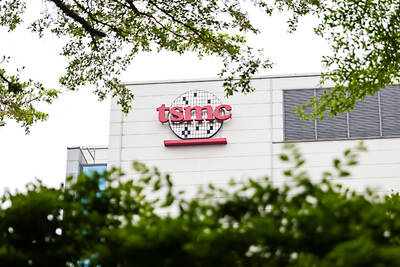
Taiwan Semiconductor Manufacturing Co (TSMC, 台積電), the world’s largest contract chipmaker, said it expects its 2-nanometer (2nm) chip capacity to grow at a compound annual rate of 70 percent from this year to 2028. The projection comes as five fabs begin volume production of 2-nanometer chips this year — two in Hsinchu and three in Kaohsiung — TSMC senior vice president and deputy cochief operating officer Cliff Hou (侯永清) said at the company’s annual technology symposium in Silicon Valley, California, last week. Output in the first year of 2-nanometer production, which began in the fourth quarter of last year, is expected to

Taiwan’s economy grew far faster than expected in the first quarter, as booming demand for artificial intelligence (AI) applications drove a surge in exports, spilling over into investment and consumption, the Directorate-General of Budget, Accounting and Statistics (DGBAS) said yesterday. GDP growth was 13.69 percent year-on-year during the January-to-March period, beating the DGBAS’ February forecast by 2.23 percentage points and marking the most robust growth in nearly four decades, DGBAS senior official Chiang Hsin-yi (江心怡) told a news conference in Taipei. The result was powered by exports, which remain the backbone of Taiwan’s economy, Chiang said. Outbound shipments jumped 51.12 percent year-on-year to


 RSS
RSS