


It does not get any more glamorous here than the premiere last May of The Matrix Reloaded, the sequel to the wildly successful 1999 hit that turned actor Keanu Reeves into a cult hero.
"Oh God, turn around!" screamed a young woman at Reeves as he posed for more than 200 photographers who were lining the black carpet. Will Smith, who did his own star turn in Bad Boys II, waved at fans seated six deep on metal bleachers. Even David Geffen, the billionaire and DreamWorks SKG partner, showed up, quietly slipping into the theater lobby.
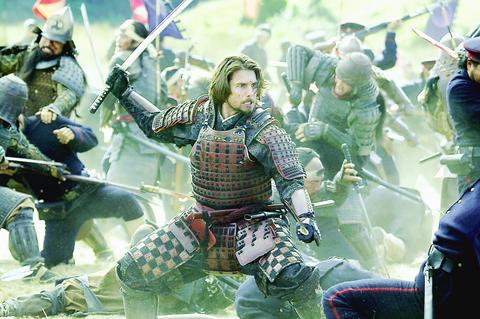
PHOTO: NY TIMES
Of course, the Warner Brothers Entertainment chairman, Barry M. Meyer, and the president, Alan Horn, were there, too. The two took over the entertainment unit in 1999 after Terry Semel and Robert A. Daly left at the end of a successful 19-year run. Under Horn, Warner Brothers Pictures has continued to dominate Hollywood, churning out blockbusters like the Harry Potter series, Scooby-Doo and Ocean's Eleven. The division had its best year in 2001, with US$1.3 billion at the domestic box office. And the last two years have been among its most profitable.
But as Horn accepted congratulations that night, some attendees remarked that two people who had played a big part in the studio's success no longer worked there: Lorenzo di Bonaventura, a longtime production executive in the film division who oversaw development of the Matrix series, and Warren Lieberfarb, who had been at Time Warner for 27 years and had turned the company's DVD unit into a profit juggernaut. Their departures spoke volumes about the changes at Warner Brothers.
Warner Brothers had long been regarded as a place where the fine art of corporate back-stabbing was as prized as a good table at Spago. Division presidents rarely talked to one another, let alone shared information, and fiercely defended their turf. In fact, it wasn't enough to have a great quarterly report; your rivals in, say, distribution or marketing had to have a bad one.
Even in such a milieu, di Bonaventura and Lieberfarb stood out as world-class corporate infighters, according to former AOL Time Warner executives.
Now, four years into Horn's tenure, the chill at the studio is beginning to thaw. According to people who work there, the atmosphere is more open, with diverse story suggestions sought and heard. When the studio was deciding which of two Superman scripts to make into a movie last year, Horn asked for suggestions from all departments -- marketing, production, even consumer products -- something unheard of three years ago. Different opinions are tolerated, and conversations are more polite.
But the bigger surprise to many is that Horn, 60, may end up the smartest corporate survivor of all. He endured a power struggle with di Bonaventura that had all the intrigue of a Hollywood thriller.
Amid the upheaval at the studio's parent, AOL Time Warner, Horn has also managed to keep his employees motivated, even though many of their stock options are now nearly worthless. And he deftly handled the situation after Castle Rock Entertainment, of which he was a founder, produced a series of box-office bombs.
"I don't want to sound like some kind of schmo," said Joel Silver, the producer of the Matrix series, who has had a production deal with Warner Brothers since 1987. "But Alan has made the process better. He's not just saying yes to movies. They allow you to get involved in the decision making."
Gung Ho for feel-good
Horn concedes that when he joined the studio, he felt more comfortable running it than one might have expected. But his confidence was perhaps understandable. In 1987, Horn, who attended Harvard Business School and was also a captain in the Air Force, helped start Castle Rock, the maker of blockbusters like When Harry Met Sally and A Few Good Men. Castle Rock was sold in 1993 to the Turner Broadcasting System, which was acquired by Warner three years later.
According to two former Warner executives, Daly, then a co-chairman of Warner Brothers Entertainment, chose Horn over di Bonaventura to become president, giving him sole authority to approve movies. The two have markedly different tastes: Horn practices karate; di Bonaventura is a rock climber and hiker. Horn prefers earnest, feel-good movies while di Bonaventura likes darker comedies and more violent fare.
Many people in Hollywood, even executives at Warner Brothers, agree that di Bonaventura is talented and hard-working. At Warner, where he started in 1989, he was the go-to guy who shepherded the Matrix series and the first two Harry Potter movies to the screen. He was a favorite of filmmakers, including George Clooney, who has a production deal with Warner. But di Bonaventura did not always see eye-to-eye with Horn, according to several people who know both.
One entertainment executive who has worked with them recalled a black-tie Hollywood event where the two were discussing politics with colleagues. When Horn walked away, the executive said, di Bonaventura rolled his eyes and said, "This is the guy I have to work for."
For his part, di Bonaventura declined to discuss his tenure at Warner, and Horn declined to disclose the details of di Bonaventura's departure. But in an interview last June, Horn said: "Lorenzo was very experienced and talented. But there are lots of talented people here."
Soon after he arrived, Horn embarked on a strategy to make about 25 movies a year, four or five of them big-budget event movies like those of the Potter series. About a third of the 25 would be financed solely by Warner. Another third would be financed with a partner, often Village Roadshow Pictures. The remaining would be rent-a-studio deals in which a production company would pay Warner a fee to market and distribute its movies.
"Terry Semel wasn't afraid to take the big shots, and Alan has more than embraced that philosophy in building his program," said Bruce Berman, who was president of production at Warner Brothers Pictures from 1984 to 1989 and now runs Village Roadshow.
But last year, an attempt to develop some big films stalled. In particular, the studio wanted to make a movie based on the Superman character that would be released as early as this year. But that project fell apart because executives could not come up with a reasonable budget, an actor and a script they liked.
That, Horn contends, was not a bad thing. He said the studio was more apt to send a script back for a rewrite or wait for the right actor. "Our perspective is not a short-term one," Horn said. "We are not driven by competition and what appears to be hot."
Flops
Horn also had other challenges. Warner's sister company, Castle Rock, despite some successes, was coming off a string of box-office flops, including The Adventures of Pluto Nash, a much-maligned film with Eddie Murphy. Combined, those films lost more than US$75 million, according to industry estimates.
That proved nettlesome on two counts for Horn. First, he had approved the movies. Second, he had to cut the overhead at his old company. After a review, he turned over duplicative functions, like the marketing of movies, to Warner Brothers.
"These were my friends," he said. "But for me, without quantifying it, it was the right thing to do."
In July 2002, di Bonaventura was promoted to the corporate position of executive vice president of worldwide motion pictures, still under Horn. But even that did not quell what appeared to be continuing discontent. While Horn has told colleagues that di Bonaventura's political wrangling had little impact on him, many people who dealt with Warner Brothers said it was beginning to affect the staff.
The next month, di Bonaventura, according to three people with knowledge of the incident, met in New York with Richard D. Parsons, the chief executive of AOL Time Warner, and Jeffrey Bewkes, the new chairman of the company's entertainment and network group, and discussed what was then described as philosophical differences with the way the studio was being run. In particular, he was critical of Castle Rock, two of these people said.
Horn heard about the meetings but had planned to seek di Bonaventura's departure before then, the two people said. When di Bonaventura returned to Los Angeles, Horn asked him to leave. Last December he became a producer at Paramount Pictures, but he still has projects at Warner.
Impressionable replacement
With di Bonaventura gone, Horn began to work more closely with Jeff Robinov, a young executive who was promoted to president of production. Robinov, a former talent agent, is considered to be as much of a go-getter as di Bonaventura but is still untested as a studio executive.
Robinov says he spends as much as two hours a day with Horn in marketing and distribution meetings, planning budgets and discussing important projects. He has also developed a close relationship with Dawn Taubin, a longtime Warner employee and president of domestic marketing with whom he often talks on the telephone. "Alan lets people run their groups," he said. "But he's not distant. He knows what's going on."
In the case of Warren Lieberfarb, there was a limit to how much autonomy his bosses were willing to grant.
Lieberfarb, as the former president of Warner Home Video, was largely responsible for the explosion in AOL Time Warner's DVD business.
He reported to Meyer, who was also a longtime Warner employee and a friend. But like many employees, Lieberfarb was upset with the plunge in AOL Time Warner's stock and, with it, the value of his retirement savings.
At the same time, he aggressively advocated that the theatrical, video and television distribution of movies be managed under a single profit center with one executive, preferably him, in charge. Currently, they are overseen separately.
Such a change might also have given Lieberfarb more authority. Lieberfarb brought up the notion of the study in a meeting in November with Bewkes, Meyer and Horn, according to two people with knowledge of the incident; Horn asked to discuss it later, but Lieberfarb pressed the issue. The executives, the two people said, were displeased with Lieberfarb's reaction.
In December, Meyer went to the Four Seasons Hotel in New York, where Lieberfarb was staying, and asked him to leave the company, according to three people with knowledge of the situation.
Surprise `Adieu'
Many in the entertainment industry were shocked when Lieberfarb's exit was announced. But according to Silver, the producer, "The notion of fiefdoms had to dissipate; Alan and Barry made that happen."
Lieberfarb declined to discuss his departure, except to say that he had retained a lawyer and was considering entering into arbitration. Of his time at Warner, he said: "I do not think it was fiefdoms. There was a unique level of collegiality and camaraderie to pull for the whole company."
Neither Horn nor Meyer would comment on the specifics of Lieberfarb's exit. But in an interview, while commenting generally on the company, Meyer said: "Loyalty is an interesting thing. No one has to take an oath. But we want executives not to think about what is best for themselves, but what is best for the company. That is a changed perspective."
This summer, The Matrix Reloaded has taken in US$732 million at the worldwide box office, and the studio is eager for the release of The Matrix Revolutions on Nov. 5. And Horn has assembled a slate of what he hopes will be blockbusters. Among the movies are Looney Tunes: Back in Action and The Last Samurai, with Tom Cruise. Next year, the studio is releasing three sequels, Scooby-Doo 2, Ocean's Twelve and the third Potter movie, as well as Troy and the animated Polar Express.
Horn said he could not be happier. "Comfort and trust and stuff like that are important concepts in a work environment," he said. "To the extent there are politics involved in any company it doesn't further advance the ball, the work of the studio. I have maintained that all these people who have left are talented and made valuable contributions. But at some point it's got to be about the team."

NETWORK-MAPPING PROJECT: The database contains 170 detailed files of Taiwanese politicians and about 23 million records of household registration data in Taiwan China has developed a network-mapping project targeting political figures and parties in Taiwan to monitor public opinion during elections and to craft tailored influence campaigns aimed at dividing Taiwanese society, according to documents leaked by Chinese technology firm GoLaxy (中科天璣). The documents, collected by Taipei-based Doublethink Lab, showed a database was specifically created to gather detailed information on Taiwanese political figures, including their political affiliations, job histories, birthplaces, residences, education, religion and a brief biography about them. Several notable Taiwanese politicians are in the database, including President William Lai (賴清德), former president Tsai Ing-wen (蔡英文), Minister of Foreign Affairs Lin Chia-lung (林佳龍),

KEY INDUSTRY: The vice premier discussed a plan to create a non-red drone supply chain by next year, which has been allocated a budget of more than NT$7.2 billion The government has budgeted NT$44.2 billion (US$1.38 billion) to cultivate Taiwan’s uncrewed aerial vehicle (UAV) industry over the next five years, which would make the nation a major player in the industry’s democratic supply chain in the Asia-Pacific region, Premier Cho Jung-tai (卓榮泰) said yesterday. Cho made the remarks during a visit to the facilities of Cub Elecparts Inc (為升電裝). Democratic Progressive Party (DPP) Legislator Chen Su-yueh (陳素月) and Chinese Nationalist Party (KMT) Legislator Hsieh Yi-fong (謝依鳳) also participated in the trip. Cub Elecparts has transitioned from the automotive industry to the defense industry, which is the top priority among the nation’s

UPGRADED MISSILE: The Chungshan Institute of Science and Technology is reportedly to conduct a live-fire test of the Hsiung Feng III anti-ship missile on Thursday next week The US Army is planning to build new facilities to boost explosives production and strengthen its supply chain, a move aimed at addressing munitions shortages and supporting obligations to partners including Taiwan, Ukraine and Israel, Defense News reported. The army has issued a sources sought notice for a proposed Center of Excellence at the Blue Grass Army Depot in Kentucky, the report said. The facility would serve as a hub within the US industrial base for the production of key military explosives, including research department explosives (RDX) and high melting explosives (HMX), while also supporting research and development of next-generation materials. The proposed

SOUTH KOREA DISPUTE: If Seoul continues to ignore its request, Taiwan would change South Korea’s designation on its arrival cards, the foreign ministry said If South Korea does not reply appropriately to a request to correct Taiwan’s name on its e-Arrival card system before March 31, the government would take corresponding measures to change how South Korea is labeled on the online Taiwan Arrival Card system, the Ministry of Foreign Affairs said yesterday. South Korea’s e-Arrival card system lists Taiwan as “China (Taiwan)” in the “point of departure” and “next destination” fields. Taipei has asked Seoul to change the wording. Since March 1, South Koreans who hold government-issued Alien Resident Certificates (ARC) have been identified as from “South Korea” rather than the “Republic of Korea,” the


 RSS
RSS