


Citibank Taiwan Ltd (台灣花旗) has won last year’s Triple A awards for Taiwan’s “Best Bank,” “Best Corporate and Institutional Bank,” “Best M & A [mergers and acquisitions] Adviser” and “Best Corporate Bonds” from the well-known international financial magazine The Asset.
It is the 17th consecutive year Citibank Taiwan has won the Triple A award for “Best Bank” and the fifth straight year it has won “Best Corporate and Institutional Bank.”
The annual Triple A recognition came after the bank received last year’s “Best International Bank” and “Best International Investment Bank” in Taiwan from FinanceAsia and Asiamoney magazines, the bank said in a press release.
In addition, Global Finance magazine presented it with the “World’s Best Digital Bank” award in November last year and it swept the “Best Corporate/Institutional Digital Bank” title across all 17 Asia-Pacific markets, the release said.
As of the end of October last year, Citibank Taiwan had posted earnings before interest and tax of NT$12.789 billion (US$424.8 million), accounting for 63 percent of the combined earnings of the four major foreign banks in Taiwan.
“Taiwan’s financial environment is highly competitive. In 2019, Citi led the industry and continued to receive awards from independent institutions at home and abroad, which is not easy. This is the result of the efforts of all Taiwanese employees,” Citibank Taiwan chairman Paulus Mok (莫兆鴻) said in the press release.
“This year [2019] is the 55th year of Citi’s cultivating businesses in Taiwan. We continue to implement the ‘Be the Best for Our Clients’ strategy to meet the different financial needs of our customers. In terms of consumer banking business, this year we have successively launched the Citi Cashback PLUS Card and Co-branded Card, as well as Citibank Global Wallet services. We also upgraded the Changhua branch to a smart bank in mid-December. As for corporate banking business, we have continued to deepen our customer relationships and have been repeatedly recognized by professional institutions in terms of assisting clients in financial planning, mergers or acquisitions, or custody business,” Mok said.
The outstanding performance of Citi Taiwan is not only in banking, but also in corporate social responsibility, the bank said.
Mok said that between May and June last year, a total of more than 3,000 Citi employees and their relatives and friends participated in the 14th Citi Global Community Day and provided volunteer services.
Citigroup and the International Paralympic Committee also launched a global partnership program to promote sports for people with disabilities, with some Taiwanese athletes set to join Team Taiwan Citi at this year’s Tokyo Paralympic Games, Mok said.
Citi’s strong overall operating performance and active involvement in social welfare and charity have won it numerous domestic and foreign awards.
The bank’s credit card and wealth management businesses have also received the “Outstanding Brand” award from Reader’s Digest for many years.
In terms of social corporate responsibility, Citi has won the “Best Corporate Citizen Award” from CommonWealth Magazine and the “Excellent Corporate Social Responsibility” award from Excellence magazine, the press release said.
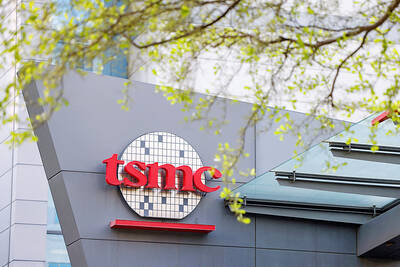
Taiwan Semiconductor Manufacturing Co (TSMC, 台積電) yesterday reported record revenue of NT$416.975 billion (US$13.17 billion) for last month, putting the world’s largest contract chipmaker on track to set a record for quarterly revenue. Last month’s figure surpassed March’s record NT$415.19 billion and represented increases of 1.5 percent from April and 30.1 percent from a year earlier. For the first five months of the year, TSMC generated NT$1.96 trillion in revenue, up 30 percent year-on-year, it said in a statement. TSMC has forecast second-quarter revenue of between US$39 billion and US$40.2 billion, representing sequential growth of about 10 percent and year-on-year growth of about
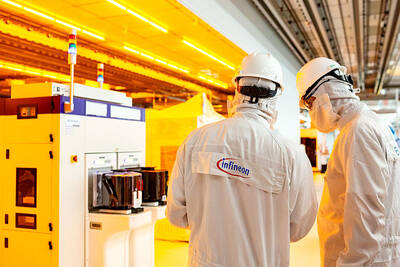
Infineon Technologies AG is preparing to open its largest single investment, a 5 billion euro (US$5.8 billion) semiconductor factory built with the help of EU subsidies, as the bloc seeks to boost chip production. The power chip fab, which is an extension of the German company’s Dresden campus, is scheduled to open on July 2, Infineon chief operating officer Alexander Gorski said this week at the site. The project is a major recipient of EU Chips Act funds, receiving about 1 billion euros in subsidies. The new plant represents a rare success for the bloc’s flagship semiconductor law, which was drawn up during
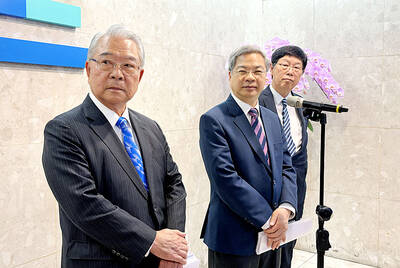
PATENT PROBE: US lawmakers called for a ban on imports of chips made by TSMC if they are found to infringe on US patents, with a preliminary ruling expected soon Minister of Economic Affairs Kung Ming-hsin (龔明鑫) yesterday expressed confidence in Taiwan Semiconductor Manufacturing Co’s (TSMC, 台積電) compliance with patent regulations after reports linked the company to a patent infringement lawsuit in the US. US Representative Ryan Zinke, and US senators Tim Sheehy, Roger Marshall and Bernie Moreno urged the US International Trade Commission in a May 22 letter to ban imports of chips made by TSMC if they are found to infringe on US patents, Axios reported on Wednesday. An administrative law judge is expected to issue a preliminary ruling this month, with the commission potentially making a final decision in
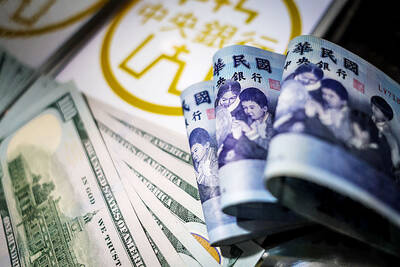
Taiwan remained the sixth-largest net creditor nation in the world last year, despite a fall of more than 10 percent in its net international investment position (NIIP) over the year, the central bank said yesterday. The NIIP is the difference between a country’s external financial assets and its external financial liabilities. Taiwan’s external financial assets hit US$3.27 trillion at the end of last year, up US$275.75 billion or 9.2 percent from a year earlier, the central bank said in its annual NIIP report. The growth largely reflected an increase in holdings of overseas marketable securities by residents in Taiwan, as well as a


 RSS
RSS