


ASE Technology Holding Co (ASE, 日月光投資控股) yesterday said that the US-China trade dispute is to overshadow the world economy and decelerate the development of new technologies, but would not affect its goal of growing revenue in the next few quarters.
The dispute has proven that ASE’s longstanding strategy to globalize is imperative, given that the results of trade talks are unpredictable, chief operating officer Tien Wu (吳田玉) told reporters in Kaohsiung.
Asked whether customers of the world’s largest chip packager and tester have asked ASE to reduce the proportion of its production in China, Wu said that most customers are still assessing the matter.
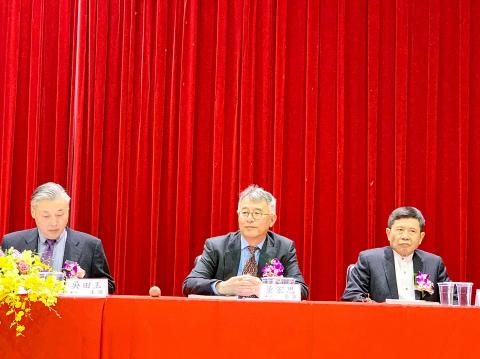
Photo: Hung You-fang, Taipei Times
However, the dispute might cause some changes to ASE’s customer portfolio, as orders from different regions might vary, he said without elaborating.
The company is worried that the dispute might drag on, which could hinder the progression of cutting-edge technologies such as 5G, Wu said.
The Kaohsiung-based firm has been diversifying its manufacturing sites, giving it the agility needed to shift production to other locations, it said.
ASE this year built production lines in Brazil and Mexico, adding to its existing fabs in 16 nations, including Taiwan, China, South Korea and countries in eastern Europe, the company said.
Its global workforce as of the end of last year had increased to about 93,891, it added.
“ASE has been scaling its global manufacturing footprint over the past 20 years,” Wu said. “We are diversifying our customers as well. We serve clients from around the globe.”
Regarding the firm’s business outlook in the second half of this year, Wu said that “visibility is poor because of several factors,” including the trade dispute, dynamics in crude supply and rising US-Iran tensions.
However, “[customer] demand remains healthy,” he added. “Low visibility has led to an influx of short-term and rush orders.”
The appearance of Siliconware Precision Industries Co Ltd (SPIL, 矽品精密) chairman Bough Lin (林文伯) at ASE’s annual shareholders’ meeting received media attention. Lin is director of ASE’s board.
It was the first time that Lin attended an ASE shareholders’ meeting following the merger of SPIL, a company cofounded by Lin’s father, and Advanced Semiconductor Engineering Inc (日月光半導體) in April last year.
The companies are to start integrating after a restriction imposed by the Chinese Ministry of Commerce is removed on Nov. 24.
Shareholders approved the distribution of a cash dividend of NT$2.5 per share, representing a payout ratio of 42 percent based on the company’s earnings per share last year of NT$5.95, or NT$25.26 billion (US$812.2 million).
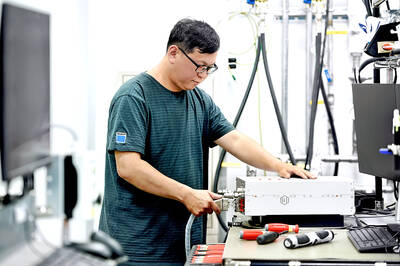
SEMICONDUCTORS: The German laser and plasma generator company will expand its local services as its specialized offerings support Taiwan’s semiconductor industries Trumpf SE + Co KG, a global leader in supplying laser technology and plasma generators used in chip production, is expanding its investments in Taiwan in an effort to deeply integrate into the global semiconductor supply chain in the pursuit of growth. The company, headquartered in Ditzingen, Germany, has invested significantly in a newly inaugurated regional technical center for plasma generators in Taoyuan, its latest expansion in Taiwan after being engaged in various industries for more than 25 years. The center, the first of its kind Trumpf built outside Germany, aims to serve customers from Taiwan, Japan, Southeast Asia and South Korea,

Gasoline and diesel prices at domestic fuel stations are to fall NT$0.2 per liter this week, down for a second consecutive week, CPC Corp, Taiwan (台灣中油) and Formosa Petrochemical Corp (台塑石化) announced yesterday. Effective today, gasoline prices at CPC and Formosa stations are to drop to NT$26.4, NT$27.9 and NT$29.9 per liter for 92, 95 and 98-octane unleaded gasoline respectively, the companies said in separate statements. The price of premium diesel is to fall to NT$24.8 per liter at CPC stations and NT$24.6 at Formosa pumps, they said. The price adjustments came even as international crude oil prices rose last week, as traders
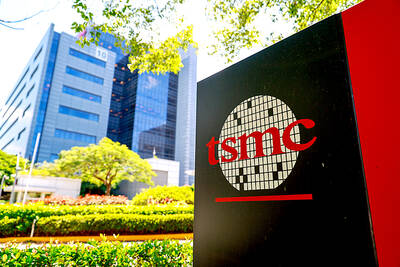
Taiwan Semiconductor Manufacturing Co (TSMC, 台積電), which supplies advanced chips to Nvidia Corp and Apple Inc, yesterday reported NT$1.046 trillion (US$33.1 billion) in revenue for last quarter, driven by constantly strong demand for artificial intelligence (AI) chips, falling in the upper end of its forecast. Based on TSMC’s financial guidance, revenue would expand about 22 percent sequentially to the range from US$32.2 billion to US$33.4 billion during the final quarter of 2024, it told investors in October last year. Last year in total, revenue jumped 31.61 percent to NT$3.81 trillion, compared with NT$2.89 trillion generated in the year before, according to
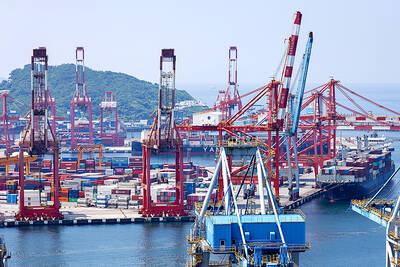
PRECEDENTED TIMES: In news that surely does not shock, AI and tech exports drove a banner for exports last year as Taiwan’s economic growth experienced a flood tide Taiwan’s exports delivered a blockbuster finish to last year with last month’s shipments rising at the second-highest pace on record as demand for artificial intelligence (AI) hardware and advanced computing remained strong, the Ministry of Finance said yesterday. Exports surged 43.4 percent from a year earlier to US$62.48 billion last month, extending growth to 26 consecutive months. Imports climbed 14.9 percent to US$43.04 billion, the second-highest monthly level historically, resulting in a trade surplus of US$19.43 billion — more than double that of the year before. Department of Statistics Director-General Beatrice Tsai (蔡美娜) described the performance as “surprisingly outstanding,” forecasting export growth


 RSS
RSS