

Local shares on Friday closed slightly higher as gains posted by semiconductor stocks offset losses suffered by other tech stocks and non-tech stocks during the session, dealers said.
The main board extended its gains from the previous few sessions to end above 10,800 points on the back of hopes that the US Federal Reserve would cut its key interest rates in the second half of this year, which is expected to boost liquidity levels in the global market, they said.
However, market sentiment was affected to some extent by geopolitical concerns after Iran shot down an uncrewed US surveillance drone on Thursday, they added.
The TAIEX on Friday closed up 18.76 points, or 0.17 percent, at 10,803.77, after moving between 10,773.47 and 10,840.29, on turnover of NT$148.45 billion (US$4.77 billion). That was an increase of 2.7 percent from a close of 10,524.57 on June 14.
The market opened up 0.3 percent and rose to the day’s high in the mid-morning session, as investors took their cue from gains posted in the US, where the Dow Jones Industrial Average continued its momentum, up 0.15 percent, and the tech-heavy NASDAQ ended up 0.42 percent, dealers said.
Selling on the main board followed as investors largely cut their holdings in old economy and financial stocks to pocket gains posted in recent sessions, but buying in the semiconductor sector was sustained, with contract chipmaker Taiwan Semiconductor Manufacturing Co (TSMC, 台積電) leading the upturn, preventing the broader market from falling into negative territory, they said.
“Taking into account a stronger New Taiwan dollar in the wake of fund inflows, I think the local market remained awash in liquidity,” Hua Nan Securities Co (華南永昌證券) analyst Kevin Su (蘇俊宏) said. “The continued fund inflows reflected high hopes that the Fed will kick off an interest rate cut cycle in the second half of the year.”
Expectations of a rate cut have been reinforced by a Fed policymaking meeting that ended on Wednesday, when the US central bank hinted that it is open to a possible rate cut in the future to take on escalating global trade disputes, Su said.
“Today, investors here simply adjusted their portfolios by raising holdings in semiconductor stocks, which had been hammered in recent sessions, but disposing of non-tech stocks for profit,” Su said.
TSMC, the most heavily weighted stock on the local market, rose 1.43 percent to close at the day’s high of NT$248.50, with 60.75 million shares changing hands.
“Look at TSMC’s relatively high trading volume. I think bargain hunters were keen to pick up the stock for the moment,” Su said.
Led by TSMC, which had suffered heavy losses due to worries over Washington’s business restrictions against Chinese telecom equipment maker Huawei Technologies Co Ltd (華為), the bellwether electronics sector rose 0.44 percent and the semiconductor subindex gained 1.19 percent.
Huawei is one of TSMC’s major clients.
“The buying in TSMC also reflected optimism on trade issues between Washington and China, with US President Donald Trump and Chinese President Xi Jinping (習近平) scheduled to meet at the upcoming G20 summit and talks between them could ease trade tensions,” Su said.
Also in the semiconductor sector, IC designer MediaTek Inc (聯發科) added 1.13 percent to end at NT$313.50 and DRAM chipmaker Nanya Technologies Corp (南亞科技) gained 1.12 percent to close at NT$63.
Bucking the upturn in the electronics sector, shares in iPhone assembler Hon Hai Precision Industry Co (鴻海精密) lost 1.16 percent to end at NT$76.80 and Largan Precision Co (大立光), a supplier of smartphone camera lenses to Apple Inc, shed 2.56 percent to close at NT$3,810.
Among the falling old economy stocks, Asia Cement Corp (亞洲水泥) lost 2.1 percent to end at NT$46.65 and Far Eastern New Century Corp (遠東新世紀) fell 0.9 percent to close at NT$33.10.
EVA Airways (長榮航空) lost 3.85 percent to end at NT$15 after its flight attendants went on strike, forcing the carrier to cancel many of its flights, with losses estimated at NT$250 million per day.
In the financial sector, which lost 0.7 percent, Mega Financial Holding Co (兆豐金控) fell 2.22 percent to close at NT$30.80 and CTBC Financial Holding Co (中信金控) dropped 1.4 percent to end at NT$21.10.
“As long as funds continue to enter the local market, the local main board could see further upturns down the road, ahead of stiff technical resistance at about 11,000 points,” Su said.
Foreign institutional investors bought a net NT$6.37 billion of shares on the main board, Taiwan Stock Exchange data showed.
Elsewhere in Asia on Friday, equities turned negative as investors took their foot off the pedal following a recent rally due to an extra boost by the Fed indicating that it would begin to cut interest rates soon and other central banks erring toward softer monetary policies.
Tokyo’s Nikkei 225 on Friday ended down 219.15 points, or 1 percent, at 21,243.71, but still gained 0.6 percent from a close of 21,116.89 on June 14.
Hong Kong’s Hang Seng on Friday dipped 76.72 points, or 0.3 percent, to 28,473.71, surging 5 percent from 27,118.35 a week earlier.
Seoul’s KOSPI on Friday slid 5.67 points, or 0.3 percent, to 2,125.62, a gain of 1.4 percent from a close of 2,095.41 on June 14.
Sydney shed 0.6 percent and Singapore was off 0.1 percent, with Manila, Mumbai and Jakarta also down.
However, the Shanghai Composite on Friday rose 14.86 points, or 0.5 percent, to 3,001.98, surging 4.2 percent from 2,881.97 a week earlier.
The recent rises were “built on the potential for monetary policy support from the Federal Reserve on one side, and the easing of trade tensions on the other,” JPMorgan Asset Management global market strategist Alex Dryden told Bloomberg TV.
However, “that is not the best basis for building an equity market rally in a sustainable manner,” he added.
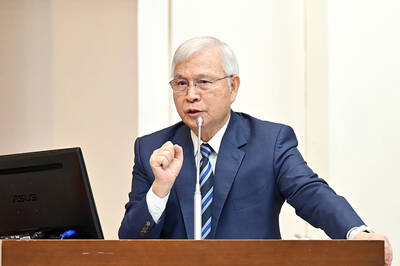
RESERVES ADEQUATE: The central bank governor rejected claims that Taiwan was facing a cash shortage, saying that its financial system had ample savings The New Taiwan dollar’s 3 percent fall this year despite record exports and a widening trade surplus stems from foreign investors cashing in on the local stock market’s technology-driven rally and moving funds overseas, central bank Governor Yang Chin-long (楊金龍) told lawmakers yesterday. The NT dollar has become one of Asia’s weakest-performing major currencies this year. Foreign investors have reaped substantial gains from Taiwan’s surging stock market, prompting them to sell shares and rebalance their portfolios, Yang told a meeting of the legislature’s Finance Committee in Taipei. Their withdrawals have added to downward pressure on the NT dollar, offsetting support
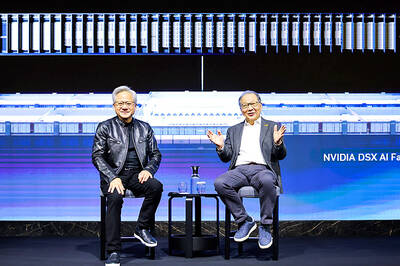
‘ON SCHEDULE’: Chief executive officer Rick Tsai said that TSMC ‘remains our most important partner’ as MediaTek seeks to meet robust customer demand Chip designer MediaTek Inc (聯發科) yesterday said it has secured a second customer for its customized artificial intelligence (AI) accelerator for data centers, while volume production of a second-generation chip for an existing customer is on track for early 2028, potentially easing market concerns about possible delays. This is a new customer and, crucially, not from China, MediaTek said. The remarks were meant to dismiss speculation that ByteDance Ltd (字節跳動), the parent company of TikTok, was the second customer for MediaTek’s new customized AI application-specific integrated circuit (ASIC) business. “It is on track, on schedule. We understand there is some noise about the

The artificial intelligence (AI) supercycle should last for more than two decades, former Intel Corp chief executive officer Pat Gelsinger told an event in Taipei yesterday, dismissing fears of an AI bubble amid mounting skepticism over massive infrastructure investments. “We do see that there will be periods of disruption, correction, etc. So, we do not think of it as an AI bubble,” Gelsinger, who is a general partner at Playground Global LLC, said at the US venture capital firm’s second annual Taiwan Deep Tech Summit. However, “we’ll have some speed bumps as different areas and different technology disruptions occur along it,” Gelsinger
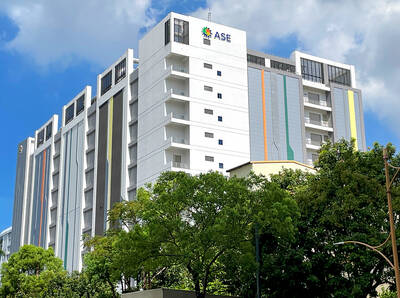
ROOM TO GROW: The company’s biggest bottleneck is still space, chief financial officer Joseph Tung said, adding that it was scouting existing factories to acquire ASE Technology Holding Co (日月光投控) yesterday raised its annual capital expenditure budget for the third time to US$11.5 billion, driven by expectations that customer demand next year would continue to outpace capacity, particularly for its leading-edge advanced packaging (LEAP) technologies used in artificial intelligence (AI) chips. ASE, the world’s biggest chip packaging and testing service provider, plans to add US$1 billion to its US$10.5 billion outlay on capacity expansion. About 60 percent of the US$500 million equipment budget would be allocated for LEAP and 40 percent for mainstream packaging technology capacity, ASE chief financial officer Joseph Tung (董宏思) told an online investors’


 RSS