


Taiwan’s two major fuel suppliers announced price reductions — to take effect today — after eight consecutive weeks of price hikes, citing a fall in international crude oil prices driven by trade friction between the US and China.
CPC Corp, Taiwan’s (CPC, 台灣中油) gasoline and diesel prices are to fall NT$0.2 per liter, the state-run oil refiner said.
With the adjustments, retail prices at CPC gas stations would be NT$28.6 per liter for 92-octane unleaded, NT$30.1 per liter for 95-octane unleaded, NT$32.1 per liter for 98-octane unleaded and NT$26.6 per liter for super diesel.
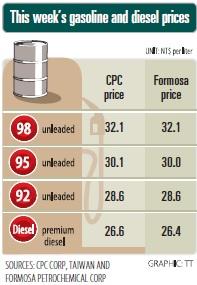
Based on CPC’s floating price mechanism, its crude oil costs had risen for eight consecutive weeks since March 18, but after reaching US$71.21 per barrel the week of April 29, they fell last week to US$70.02 per barrel, leading to the price reduction.
Concerns that the US-China trade dispute would hurt demand for crude oil resulted in the drop in international crude prices, CPC said.
Meanwhile, privately owned Formosa Petrochemical Corp (台塑石化) announced identical price adjustments for its products, effective today.
Prices at Formosa gas stations would be NT$28.6 per liter for 92-octane unleaded, NT$30 per liter for 95-octane unleaded, NT$32.1 per liter for 98-octane unleaded and NT$26.4 per liter for diesel.

Nvidia Corp chief executive officer Jensen Huang (黃仁勳) on Monday introduced the company’s latest supercomputer platform, featuring six new chips made by Taiwan Semiconductor Manufacturing Co (TSMC, 台積電), saying that it is now “in full production.” “If Vera Rubin is going to be in time for this year, it must be in production by now, and so, today I can tell you that Vera Rubin is in full production,” Huang said during his keynote speech at CES in Las Vegas. The rollout of six concurrent chips for Vera Rubin — the company’s next-generation artificial intelligence (AI) computing platform — marks a strategic
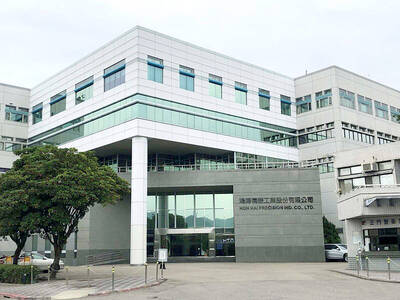
REVENUE PERFORMANCE: Cloud and network products, and electronic components saw strong increases, while smart consumer electronics and computing products fell Hon Hai Precision Industry Co (鴻海精密) yesterday posted 26.51 percent quarterly growth in revenue for last quarter to NT$2.6 trillion (US$82.44 billion), the strongest on record for the period and above expectations, but the company forecast a slight revenue dip this quarter due to seasonal factors. On an annual basis, revenue last quarter grew 22.07 percent, the company said. Analysts on average estimated about NT$2.4 trillion increase. Hon Hai, which assembles servers for Nvidia Corp and iPhones for Apple Inc, is expanding its capacity in the US, adding artificial intelligence (AI) server production in Wisconsin and Texas, where it operates established campuses. This

Garment maker Makalot Industrial Co (聚陽) yesterday reported lower-than-expected fourth-quarter revenue of NT$7.93 billion (US$251.44 million), down 9.48 percent from NT$8.76 billion a year earlier. On a quarterly basis, revenue fell 10.83 percent from NT$8.89 billion, company data showed. The figure was also lower than market expectations of NT$8.05 billion, according to data compiled by Yuanta Securities Investment and Consulting Co (元大投顧), which had projected NT$8.22 billion. Makalot’s revenue this quarter would likely increase by a mid-teens percentage as the industry is entering its high season, Yuanta said. Overall, Makalot’s revenue last year totaled NT$34.43 billion, down 3.08 percent from its record NT$35.52
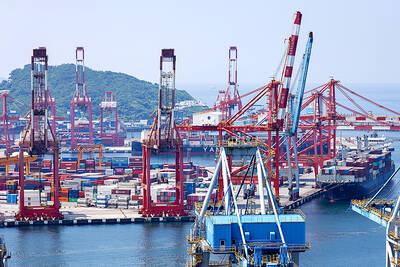
PRECEDENTED TIMES: In news that surely does not shock, AI and tech exports drove a banner for exports last year as Taiwan’s economic growth experienced a flood tide Taiwan’s exports delivered a blockbuster finish to last year with last month’s shipments rising at the second-highest pace on record as demand for artificial intelligence (AI) hardware and advanced computing remained strong, the Ministry of Finance said yesterday. Exports surged 43.4 percent from a year earlier to US$62.48 billion last month, extending growth to 26 consecutive months. Imports climbed 14.9 percent to US$43.04 billion, the second-highest monthly level historically, resulting in a trade surplus of US$19.43 billion — more than double that of the year before. Department of Statistics Director-General Beatrice Tsai (蔡美娜) described the performance as “surprisingly outstanding,” forecasting export growth


 RSS
RSS