


Largan Precision Co (大立光), a leading supplier of camera lens modules, yesterday reported its highest monthly revenue since November last year as more Android-based smartphone brands adopt large-aperture, multi-lens designs to enhance photo features.
Consolidated revenue last month rose 44.24 percent year-on-year to NT$5.01 billion (US$162.1 million) from NT$3.47 billion and was up 27.58 percent from NT$3.93 billion in March, the company said in a statement posted on its Web site.
The results met the guidance the company issued last month, when the Taichung-based firm said that revenue would be higher than the previous month.
Revenue for this month would also be higher than last month, Largan chief executive officer Adam Lin (林恩平) told an investors’ conference on April 11.
Largan counts Apple Inc, Sony Corp, Samsung Electronics Inc and Huawei Technologies Co (華為) among its customers.
Last month, 8-megapixel lenses accounted for 10 to 20 percent of total shipments, 10 to 20-megapixel lenses made up 50 to 60 percent and lenses with a resolution of 20 megapixels or greater contributed 20 to 30 percent, Largan’s shipment breakdown showed.
Largan did not elaborate on its revenue performance.
Good Security Investment Consultant Co (顧德投顧) analyst Huang Han-cheng (黃漢成) said that Largan’s better-than-expected sales increase last month was backed by rising orders from Huawei. The data should be a catalyst to boost the company’s stock price in the near term, Chinese-language news outlet Cynes.com reported.
Largan shares closed 1.41 percent higher at NT$4,675 on Friday. They have surged 45.41 percent so far this year.
In the first four months of the year, Largan’s cumulative revenue totaled NT$14.83 billion, up 20.11 percent from NT$12.35 billion in the same period last year.
SinoPac Securities Investment Service Co (永豐投顧) said that Huawei’s aggressive inventory preparation in the first half and an industry trend toward multi-camera handsets would continue to support Largan’s business growth.
“Looking ahead, we will monitor the penetration rate for triple lenses among key US clients and the magnitude of replacement demand for 5G handsets in 2020 as potential valuation drivers,” SinoPac analyst Liao Kuan-chieh (廖貫捷) said in a research note.
Firms in the Android camp would support Largan’s earnings in the first half, while Apple’s new iPhones would boost support in the second half, with a higher mix of 20-megapixel and above products aiding long-term sales and earnings growth, analysts said.

Nvidia Corp chief executive officer Jensen Huang (黃仁勳) on Monday introduced the company’s latest supercomputer platform, featuring six new chips made by Taiwan Semiconductor Manufacturing Co (TSMC, 台積電), saying that it is now “in full production.” “If Vera Rubin is going to be in time for this year, it must be in production by now, and so, today I can tell you that Vera Rubin is in full production,” Huang said during his keynote speech at CES in Las Vegas. The rollout of six concurrent chips for Vera Rubin — the company’s next-generation artificial intelligence (AI) computing platform — marks a strategic
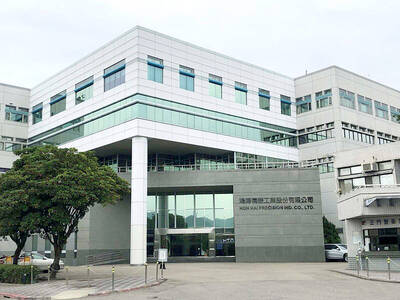
REVENUE PERFORMANCE: Cloud and network products, and electronic components saw strong increases, while smart consumer electronics and computing products fell Hon Hai Precision Industry Co (鴻海精密) yesterday posted 26.51 percent quarterly growth in revenue for last quarter to NT$2.6 trillion (US$82.44 billion), the strongest on record for the period and above expectations, but the company forecast a slight revenue dip this quarter due to seasonal factors. On an annual basis, revenue last quarter grew 22.07 percent, the company said. Analysts on average estimated about NT$2.4 trillion increase. Hon Hai, which assembles servers for Nvidia Corp and iPhones for Apple Inc, is expanding its capacity in the US, adding artificial intelligence (AI) server production in Wisconsin and Texas, where it operates established campuses. This
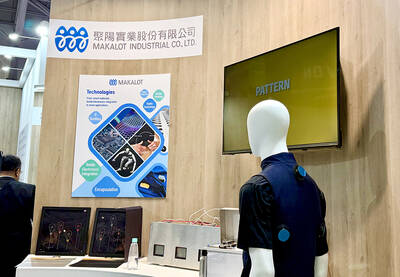
Garment maker Makalot Industrial Co (聚陽) yesterday reported lower-than-expected fourth-quarter revenue of NT$7.93 billion (US$251.44 million), down 9.48 percent from NT$8.76 billion a year earlier. On a quarterly basis, revenue fell 10.83 percent from NT$8.89 billion, company data showed. The figure was also lower than market expectations of NT$8.05 billion, according to data compiled by Yuanta Securities Investment and Consulting Co (元大投顧), which had projected NT$8.22 billion. Makalot’s revenue this quarter would likely increase by a mid-teens percentage as the industry is entering its high season, Yuanta said. Overall, Makalot’s revenue last year totaled NT$34.43 billion, down 3.08 percent from its record NT$35.52

PRECEDENTED TIMES: In news that surely does not shock, AI and tech exports drove a banner for exports last year as Taiwan’s economic growth experienced a flood tide Taiwan’s exports delivered a blockbuster finish to last year with last month’s shipments rising at the second-highest pace on record as demand for artificial intelligence (AI) hardware and advanced computing remained strong, the Ministry of Finance said yesterday. Exports surged 43.4 percent from a year earlier to US$62.48 billion last month, extending growth to 26 consecutive months. Imports climbed 14.9 percent to US$43.04 billion, the second-highest monthly level historically, resulting in a trade surplus of US$19.43 billion — more than double that of the year before. Department of Statistics Director-General Beatrice Tsai (蔡美娜) described the performance as “surprisingly outstanding,” forecasting export growth


 RSS
RSS