


US President Donald Trump on Friday said that he would nominate Stephen Moore, an economic analyst and frequent critic of the Federal Reserve, to fill a vacancy on the Fed’s seven-member board.
Moore, a well-known and often polarizing figure in Washington political circles, served as an adviser to Trump during the 2016 presidential campaign. In that role, he helped draft Trump’s tax cut plan.
Trump has been harshly critical of the Fed’s rate increases even after the central bank announced this week that it foresees no hikes this year. Moore, formerly chief economist for the conservative Heritage Foundation, has also been critical of the policies of Fed Chairman Jerome Powell.
A fervent advocate of tax cuts, Moore is close to Larry Kudlow, head of the White House National Economic Council. The two collaborated in shaping the tax overhaul that Trump signed into law at the end of 2017.
Trump in his first two years in office has been able to reshape the central bank. He nominated four of the five current members. And he tapped Powell, who had been chosen for the Fed board by former president Barack Obama, to succeed Janet Yellen as chairman. If confirmed by the US Senate, Moore would fill one of two vacancies on the board.
Given his sharply partisan reputation, Moore could spark opposition among Democrats in the Senate, but Trump can score points with his core supporters — and with the majority Republicans in the Senate — by rejecting any assertions that Moore is too ideological for a Fed role that would make him a watchdog over the economy.
The selection of Moore marks a deviation from Trump’s previous selections for the board toward a visible public figure. In a March editorial in the Wall Street Journal, Moore estimated that Fed rate policies had reduced inflation-adjusted economic growth by as much as 1.5 percentage points in the past six months.
Moore proposed that the Fed set short-term rates with an eye toward stabilizing commodity prices, rather than solely on overall inflation.
This approach would have prevented the Fed from raising rates as much as it has, Moore has said.
This approach, if adopted, would help accelerate economic growth above 3 percent, compared with the longer-run average of 1.9 percent that Fed officials have forecast, he said.
With Trump as president, Moore became a sharp critic of Fed policies to shrink its balance sheet and return rates to what the central bank sees as a neutral level — neither stimulating nor hindering growth.
He said that Trump might consider trying to fire Powell for the rate hikes under his watch.
“What the law says, I believe, [Trump] can replace the Federal Reserve Chairman for cause,” Moore said during a radio interview in December last year. “And, you know, I would say, well, the cause is that he’s wrecking our economy.”

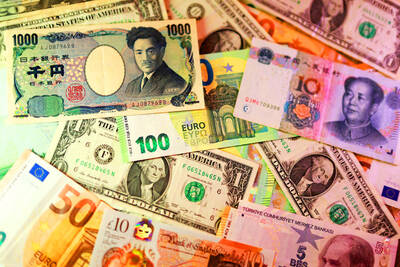
Taiwan’s foreign exchange reserves fell below the US$600 billion mark at the end of last month, with the central bank reporting a total of US$596.89 billion — a decline of US$8.6 billion from February — ending a three-month streak of increases. The central bank attributed the drop to a combination of factors such as outflows by foreign institutional investors, currency fluctuations and its own market interventions. “The large-scale outflows disrupted the balance of supply and demand in the foreign exchange market, prompting the central bank to intervene repeatedly by selling US dollars to stabilize the local currency,” Department of Foreign

Intel Corp is joining Elon Musk’s long-shot effort to develop semiconductors for Tesla Inc, Space Exploration Technologies Corp and xAI, marking a surprising twist in the chipmaker’s comeback bid. Intel would help the Terafab project “refactor” the technology in a chip factory, the company said on Tuesday in a post on X, Musk’s social media platform. That is a stage in the development process that typically helps make chips more powerful or reliable. The chipmaker’s shares jumped 4.2 percent to US$52.91 in New York trading on Tuesday. The Terafab project is a grand plan by Musk to eventually manufacture his own chips for
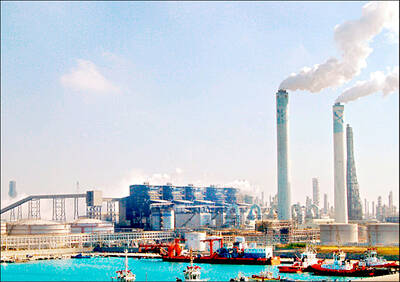
Taiwan Power Co (Taipower, 台電) yesterday said it plans to resume operations at two coal-fired power generators for three months to boost security of electricity supply as liquefied natural gas (LNG) supply risks are running high due to the Middle East conflict. The two coal-fired power generators are at Mailiao Power Plant in Yunlin County’s Mailiao Township (麥寮). The plant, operated by Formosa Plastics Group (台塑集團), supplied electricity to Taipower’s power grid until the end of last year. Taipower’s decision came about one month after Minister of Economic Affairs Kung Ming-hsin (龔明鑫) on March 10 said that the nation had no imminent

Some robotaxi passengers were left stranded in the middle of fast-moving traffic in a major Chinese city after their driverless vehicles stopped running, according to police and media reports on Wednesday. A preliminary investigation indicates more than 100 robotaxis came to a halt because of a “system malfunction,” police in the city of Wuhan said in a statement, without elaborating. No injuries were reported. One passenger told Chinese media that their robotaxi stopped after turning a corner. An instruction on a screen read: “Driving system malfunction. Staff are expected to arrive in 5 minutes.” After no one showed up, the passenger pushed


 RSS
RSS