

Export orders last month dipped at a deeper-than-expected monthly pace of 28 percent, attributable to slumping demand for iPhones and computers, the Ministry of Economic Affairs said yesterday.
A quick and steep recovery in the first half of this year is not expected, the ministry said.
“The recovery will mostly happen in the second half, when global brands launch their new products,” Department of Statistics Director-General Lin Lee-jen (林麗貞) said by telephone.
“As the worldwide economy remains weak, this year will be a tough period for local exporters,” Lin said.
A ministry survey showed that export orders might pick up this month to between US$38.5 billion and US$39.5 billion.
That still implies an annual contraction of 6.8 to 9.2 percent.
The ministry forecast that in the first quarter, export orders might shrink by as much as 23 percent quarter-on-quarter, or an annual reduction of up to 8.5 percent.
Export orders last month fell to US$28.9 billion, compared with US$35.5 billion in the previous month, missing the ministry’s estimate of between US$31 billion and US$32 billion, which would have translated into a monthly decline of 21 to 23.4 percent.
On an annual basis, export orders last month shrank 10.9 percent, marking the fourth straight month of decline.
“Smartphone sales worldwide fell short of our expectations, as the market is reaching saturation and there is a longer replacement cycle,” Lin said. “Weak demand for smartphones has reduced orders at local handset assemblers and component supply chains.”
Hon Hai Precision Industry Co (鴻海精密), the main assembler of iPhones, was on Apple Inc’s top 200 suppliers list.
Camera lens maker Largan Precision Industry Co (大立光) and passive component maker Yageo Corp (國巨) also made the list.
An uptick in global crude oil prices did not provide a solid boost to orders for petrochemical products, Lin said.
Demand for steel products only showed a lukewarm recovery, she said.
Export orders for information and communications technology products last month fell at an annual rate of 11 percent to US$7.9 billion, as declines in smartphones and PCs offset growth in server and networking equipment orders, the ministry said.
Slackening demand for smartphones also cut into orders for electronics, which slipped 8.1 percent annually to US$7.33 billion last month, it said.
Optoelectronics orders last month dropped 8.8 percent to US$1.57 billion, attributable to a price decline in slow season and rising competition from China, the ministry said.
Machinery goods orders last month plunged 24.5 percent to US$1.29 billion, as a US-China trade dispute has depressed demand from China, it said.
Petrochemical orders fell 9.7 percent from a year earlier to US$1.62 billion, while plastic and base metal orders fell 9 percent annually to US$1.5 billion, it added.

Bankers in Hong Kong skipped the summer break as an artificial intelligence (AI)-fueled rush for capital sent share sales to a record, defying a bruising selloff in the city’s stocks. Initial public offerings (IPOs), placements and block trades raised US$47.5 billion in July to last month, the biggest haul ever for the period, data compiled by Bloomberg showed. That pushed fundraising this year above US$92 billion and within reach of the US$112.5 billion record set in 2021. AI has been at the heart of Hong Kong’s deal revival, but this summer brought a new level of intensity. Chinese companies raised ever-larger sums
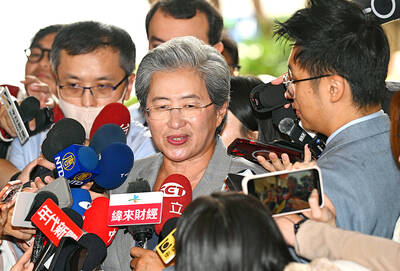
SILICON ISLAND: When asked about geopolitical tensions, Lisa Su said that ‘Taiwan is absolutely critical to the semiconductor supply chain, and very, very critical for AMD’ Advanced Micro Devices Inc (AMD) CEO Lisa Su (蘇姿丰) yesterday said the company plans to “substantially” increase manufacturing capacity next year through its Taiwanese supply chain, particularly with Taiwan Semiconductor Manufacturing Co (TSMC, 台積電), as surging demand for artificial intelligence (AI)-related processors continues to outstrip supply. “It is a very exciting time right now for all kinds of compute, and especially on the CPU [central processing unit] side,” Su said during a visit to Taiwan. “The overall market has increased a lot in 2026, and so we have also increased our own supply and capacity in 2026, but I can
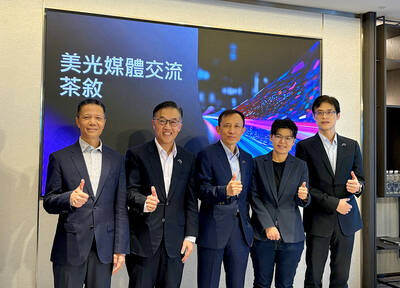
BOOMING BUSINESS: Memory supply constraints would be even more severe in 2027 and 2028, prompting customers to sign long-term supply agreements, Micron said Micron Memory Taiwan Co (台灣美光) yesterday said it is accelerating memorychip capacity expansion amid growing artificial intelligence (AI)-driven demand, with its accumulated investment in Taiwan reaching NT$1.6 trillion (US$50.2 billion) as of June. The company’s investment in Taiwan has surged over the past four years, with recent spending equaling the total invested over the past 25 years, Micron Taiwan chairman Donghui Lu (盧東暉) told a media briefing in Taipei. “The launch of ChatGPT and the outbreak of COVID triggered increasing demand for memory chips. Since then, demand has gathered pace rapidly, with only a brief pause in 2023 when a major downturn”
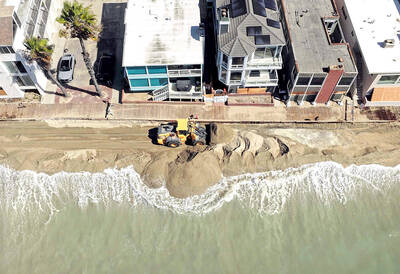
Sea levels in California are set to rise by as much as a foot (30cm) in the coming days as an enormous wave washes up the US West Coast. The huge surge of energy, known as a “coastal trapped wave” or a “Kelvin wave,” is part of El Nino, a months-long phenomenon in the Pacific Ocean that scientists say could generate powerful storms and floods in some parts of the world, while leaving others in drought. The Kelvin wave is not anything like a tsunami; nor does it crash on beaches. Rather it is a sustained bulge of excess water up to


 RSS
RSS