


A subdued growth outlook, muted inflation and weak external demand are likely to prompt the central bank to extend its accommodative monetary policy and keep the rediscount rate unchanged at 1.375 percent next week, Australia and New Zealand Banking Group Ltd (ANZ) said yesterday.
The board of the nation’s top monetary policymaker is due to meet on Thursday to review policy rates. The central bank has stayed put for the past 10 quarters, citing negative output gaps and mild inflation.
The US-China trade conflict and the downside risks it poses to the Taiwanese economy would keep local policymakers concerned, ANZ said in a note.
“We expect the policy rate to hold steady through this year, barring an unexpected hawkish outlook by the US Federal Reserve or a sharp jump in domestic inflation,” ANZ said.
Taiwan’s trade and growth outlook is heavily influenced by the external environment, with exports equal to 70 percent of GDP growth, the banking group said.
Given the continued uncertainty surrounding the trade spat between China and the US, ANZ said it grows cautious regarding Taiwan’s export outlook.
Furthermore, the plateauing of smartphone sales poses another key challenge, it said.
Exports shaved 1.4 percentage points from Taiwan’s GDP growth in the final quarter of last year, primarily weighed by the downturn in demand for electronics parts used in smartphones and for cryptocurrency mining.
Taiwan is home to the world’s largest chipmakers, chip designers, and suppliers of camera lenses, touchpanels and casings. Exports have contracted for the past four months — the slow season for technology products.
On the domestic front, inflation momentum has softened, with the headline consumer price index falling into negative territory in December last year, ANZ said.
Transport inflation softened to a 32-month low with a 2.1 percent decline in January, while food inflation has stayed below 1 percent since November, it said, citing government data.
Against this backdrop, ANZ said a sharp rebound in inflation is not its base scenario for this year.
The central bank would therefore draw comfort from the ongoing inflation trajectory and negate any need for monetary tightening, it said.
The current juncture of benign inflation and weak growth, coupled with a protracted slowdown in global demand for electronic parts lends support to an extended pause in the benchmark rate going forward with an accommodative bias, the banking group said.
However, faster-than-expected rate hikes by the Fed or drastic increases in global commodity prices would present a case to revise the estimate, it said.
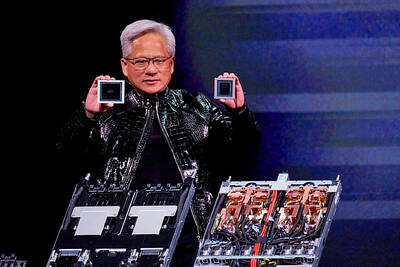
Nvidia Corp chief executive officer Jensen Huang (黃仁勳) on Monday introduced the company’s latest supercomputer platform, featuring six new chips made by Taiwan Semiconductor Manufacturing Co (TSMC, 台積電), saying that it is now “in full production.” “If Vera Rubin is going to be in time for this year, it must be in production by now, and so, today I can tell you that Vera Rubin is in full production,” Huang said during his keynote speech at CES in Las Vegas. The rollout of six concurrent chips for Vera Rubin — the company’s next-generation artificial intelligence (AI) computing platform — marks a strategic
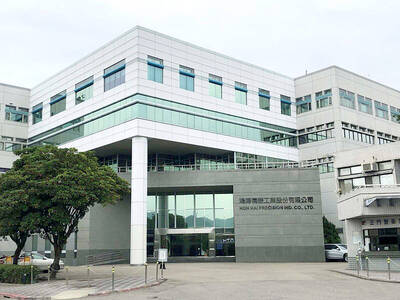
REVENUE PERFORMANCE: Cloud and network products, and electronic components saw strong increases, while smart consumer electronics and computing products fell Hon Hai Precision Industry Co (鴻海精密) yesterday posted 26.51 percent quarterly growth in revenue for last quarter to NT$2.6 trillion (US$82.44 billion), the strongest on record for the period and above expectations, but the company forecast a slight revenue dip this quarter due to seasonal factors. On an annual basis, revenue last quarter grew 22.07 percent, the company said. Analysts on average estimated about NT$2.4 trillion increase. Hon Hai, which assembles servers for Nvidia Corp and iPhones for Apple Inc, is expanding its capacity in the US, adding artificial intelligence (AI) server production in Wisconsin and Texas, where it operates established campuses. This
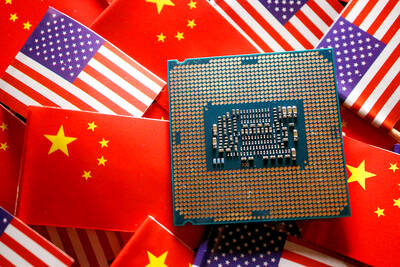
US President Donald Trump on Friday blocked US photonics firm HieFo Corp’s US$3 million acquisition of assets in New Jersey-based aerospace and defense specialist Emcore Corp, citing national security and China-related concerns. In an order released by the White House, Trump said HieFo was “controlled by a citizen of the People’s Republic of China” and that its 2024 acquisition of Emcore’s businesses led the US president to believe that it might “take action that threatens to impair the national security of the United States.” The order did not name the person or detail Trump’s concerns. “The Transaction is hereby prohibited,”
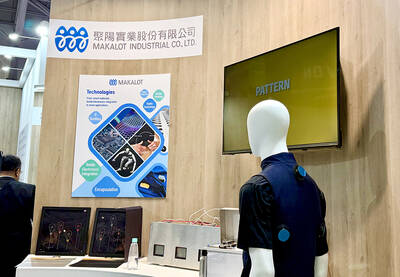
Garment maker Makalot Industrial Co (聚陽) yesterday reported lower-than-expected fourth-quarter revenue of NT$7.93 billion (US$251.44 million), down 9.48 percent from NT$8.76 billion a year earlier. On a quarterly basis, revenue fell 10.83 percent from NT$8.89 billion, company data showed. The figure was also lower than market expectations of NT$8.05 billion, according to data compiled by Yuanta Securities Investment and Consulting Co (元大投顧), which had projected NT$8.22 billion. Makalot’s revenue this quarter would likely increase by a mid-teens percentage as the industry is entering its high season, Yuanta said. Overall, Makalot’s revenue last year totaled NT$34.43 billion, down 3.08 percent from its record NT$35.52


 RSS
RSS