


DHL Express Taiwan Corp (洋基通運) yesterday announced that it would start a trial of cargo bicycle deliveries in an industrial park, making Taiwan the first nation in the Asia-Pacific region to adopt the eco-friendly delivery method.
The firm, a local subsidiary of Deutsche Post DHL Group, one of the world’s leading mail and logistics services groups, said that starting next month, it would use a “cubicycle” for deliveries at Tai Yuen Hi-Tech Industrial Park (台元科技園區) in Hsinchu County’s Jhubei City (竹北).
As the company has set up a logistics center inside the park, it would be hassle-free for workers to ride the special vehicle to deliver goods or mail to clients, DHL Express Taiwan said.

Photo: Kao Shih-ching, Taipei Times
The company is to use one cubicycle during the trial, which is expected to last from three to six months, to test delivery efficiency and staff reactions, DHL Express Taiwan managing director Yung C. Ooi (黃湧君) told a news conference in Taipei.
“If the trial is successful, we plan to import more cubicycles into Taiwan and adopt them for first and last-mile delivery,” Ooi said.
The firm would first expand the green logistics service to the nation’s other industrial parks, as traffic is usually better and safer there, but would try to adopt the bicycles on regular streets if approved by the government, Ooi said.
Unlike regular bicycles, a cubicycle has four wheels, resembles a recumbent bicycle and is equipped with a customized trailer that can carry one container with a load of up to 125kg, engineering and infrastructure department manager Monson Chou (周鄭義) said.
As cubicycles are equipped with two batteries that deliver up to 250 watts of power to electric motors, delivery personnel will not feel too tired when riding, and it has maximum mileage of about 50km per day, Chou said.
The vehicle was imported from Europe, but many of its components were made by Taiwanese companies, so it would be easy for DHL Express Taiwan to maintain the bike, Chou said.
The group, which has been using cubicycles for deliveries in Europe for many years, chose Taiwan as the first Asian-Pacific nation to launch the service, as it is known as the “kingdom of bicycles” and has a bicycle-friendly environment, he said.
The firm last year announced plans to reduce all logistics-related emissions to net zero by 2050 and purchased 15 Gogoro Inc (睿能創意) electric scooters, as well as hybrid vehicles, saying the green vehicles should reduce carbon emissions by about 50 percent from 2017.
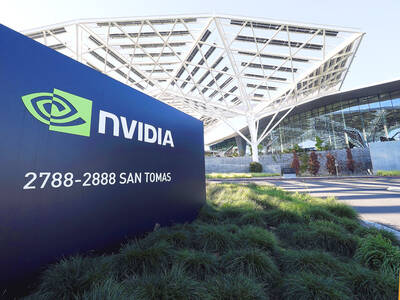
CHIP RACE: Three years of overbroad export controls drove foreign competitors to pursue their own AI chips, and ‘cost US taxpayers billions of dollars,’ Nvidia said China has figured out the US strategy for allowing it to buy Nvidia Corp’s H200s and is rejecting the artificial intelligence (AI) chip in favor of domestically developed semiconductors, White House AI adviser David Sacks said, citing news reports. US President Donald Trump on Monday said that he would allow shipments of Nvidia’s H200 chips to China, part of an administration effort backed by Sacks to challenge Chinese tech champions such as Huawei Technologies Co (華為) by bringing US competition to their home market. On Friday, Sacks signaled that he was uncertain about whether that approach would work. “They’re rejecting our chips,” Sacks
Taiwan’s long-term economic competitiveness will hinge not only on national champions like Taiwan Semiconductor Manufacturing Co. (TSMC, 台積電) but also on the widespread adoption of artificial intelligence (AI) and other emerging technologies, a US-based scholar has said. At a lecture in Taipei on Tuesday, Jeffrey Ding, assistant professor of political science at the George Washington University and author of "Technology and the Rise of Great Powers," argued that historical experience shows that general-purpose technologies (GPTs) — such as electricity, computers and now AI — shape long-term economic advantages through their diffusion across the broader economy. "What really matters is not who pioneers

BUBBLE? Only a handful of companies are seeing rapid revenue growth and higher valuations, and it is not enough to call the AI trend a transformation, an analyst said Artificial intelligence (AI) is entering a more challenging phase next year as companies move beyond experimentation and begin demanding clear financial returns from a technology that has delivered big gains to only a small group of early adopters, PricewaterhouseCoopers (PwC) Taiwan said yesterday. Most organizations have been able to justify AI investments through cost recovery or modest efficiency gains, but few have achieved meaningful revenue growth or long-term competitive advantage, the consultancy said in its 2026 AI Business Predictions report. This growing performance gap is forcing executives to reconsider how AI is deployed across their organizations, it said. “Many companies
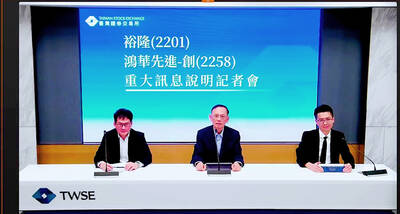
TAIWAN VALUE CHAIN: Foxtron is to fully own Luxgen following the transaction and it plans to launch a new electric model, the Foxtron Bria, in Taiwan next year Yulon Motor Co (裕隆汽車) yesterday said that its board of directors approved the disposal of its electric vehicle (EV) unit, Luxgen Motor Co (納智捷汽車), to Foxtron Vehicle Technologies Co (鴻華先進) for NT$787.6 million (US$24.98 million). Foxtron, a half-half joint venture between Yulon affiliate Hua-Chuang Automobile Information Technical Center Co (華創車電) and Hon Hai Precision Industry Co (鴻海精密), expects to wrap up the deal in the first quarter of next year. Foxtron would fully own Luxgen following the transaction, including five car distributing companies, outlets and all employees. The deal is subject to the approval of the Fair Trade Commission, Foxtron said. “Foxtron will be


 RSS
RSS