


The US Federal Reserve on Wednesday raised the key lending rate for the first time this year to its highest level in a decade, citing a stronger outlook for US economic growth.
Newly installed Fed Chairman Jerome Powell presided over his first meeting, which raised the federal funds rate from 1.5 to 1.75 percent, a move that is to affect all types of loans, from homes to cars to student debt.
The US dollar extended losses in Asia yesterday after the Fed stuck to its target for interest rate hikes this year, but fresh fears of a trade war hit equity markets as US President Donald Trump prepared fresh sanctions on China.
Tokyo ended 1 percent higher after a three-day losing streak and Seoul closed up 0.4 percent.
Hong Kong fell 0.4 percent and Shanghai shed 0.5 percent. Hong Kong’s de facto central bank and the People’s Bank of China earlier yesterday announced measures to tighten their monetary policy.
Singapore fell 0.3 percent and Sydney gave up 0.2 percent, while Wellington and Taipei were also lower.
In his first news conference as Fed chief, Powell pointed to factors that have boosted the economic outlook in the past few months, including a “more stimulative” fiscal policy, in the wake of the massive tax cuts the US Congress passed in December last year.
In addition, he said “ongoing job gains are boosting incomes and confidence, [and] foreign growth is on a firm trajectory.”
That likely caused Fed officials to signal that they expect a slightly more aggressive path for rate increases next year.
Yet, Powell told reporters that even with rising interest rates, the world’s largest economy is “healthier than it has been since before the financial crisis. It’s a healthier economy than it has been in 10 years.”
However, he also acknowledged that central bankers now consider the prospects of a global trade war as a “more prominent risk” to the economic outlook.
Trump on March 8 announced steep tariffs on aluminum and steel, and is expected to take more tough action against Chinese goods this week, but Powell said officials did not specify whether rising trade frictions could impact growth or inflation.
In its quarterly forecasts, Fed officials project that the benchmark interest rate would end this year at 2.1 percent, meaning two more hikes are likely, unchanged from the December forecast, but would rise to 2.9 percent at the close of next year, implying three increases.
That would mean one more rate increase next year than previously expected, even though officials do not anticipate inflation to rise any faster.
The Fed’s preferred inflation measure is forecast to barely move up to 2 percent next year.
Central bankers see growth picking up this year and next, with GDP gaining 2.7 percent this year and 2.4 percent next year. In addition, the already historically low unemployment rate is seen falling even further, ending next year at a stunning 3.6 percent, according to the quarterly Summary of Economic Projections.
The Fed statement said monetary policy continues to provide stimulus to the economy and repeated that even with “further gradual adjustments ... economic activity will expand at a moderate pace.”
Powell avoided attempts to get him to comment on specific aspects of trade or fiscal policy, but he noted the likely growth boost from the recent tax cuts, and said there are aspects of the package that could help raise the potential growth rate.
“It’s important that we do something, do what we can as a country to increase our potential growth rate,” he said.
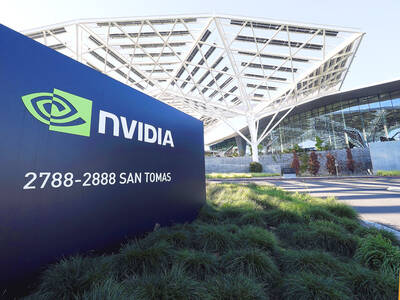
CHIP RACE: Three years of overbroad export controls drove foreign competitors to pursue their own AI chips, and ‘cost US taxpayers billions of dollars,’ Nvidia said China has figured out the US strategy for allowing it to buy Nvidia Corp’s H200s and is rejecting the artificial intelligence (AI) chip in favor of domestically developed semiconductors, White House AI adviser David Sacks said, citing news reports. US President Donald Trump on Monday said that he would allow shipments of Nvidia’s H200 chips to China, part of an administration effort backed by Sacks to challenge Chinese tech champions such as Huawei Technologies Co (華為) by bringing US competition to their home market. On Friday, Sacks signaled that he was uncertain about whether that approach would work. “They’re rejecting our chips,” Sacks
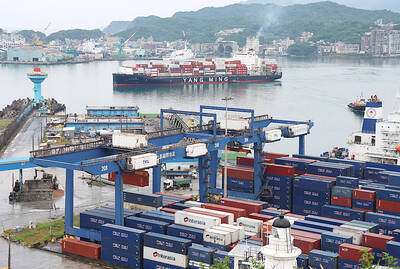
Taiwan’s exports soared 56 percent year-on-year to an all-time high of US$64.05 billion last month, propelled by surging global demand for artificial intelligence (AI), high-performance computing and cloud service infrastructure, the Ministry of Finance said yesterday. Department of Statistics Director-General Beatrice Tsai (蔡美娜) called the figure an unexpected upside surprise, citing a wave of technology orders from overseas customers alongside the usual year-end shopping season for technology products. Growth is likely to remain strong this month, she said, projecting a 40 percent to 45 percent expansion on an annual basis. The outperformance could prompt the Directorate-General of Budget, Accounting and
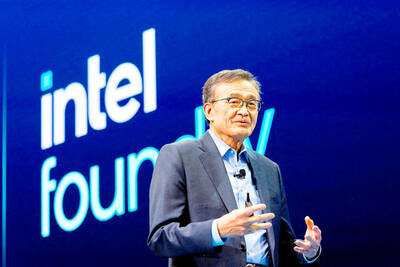
NATIONAL SECURITY: Intel’s testing of ACM tools despite US government control ‘highlights egregious gaps in US technology protection policies,’ a former official said Chipmaker Intel Corp has tested chipmaking tools this year from a toolmaker with deep roots in China and two overseas units that were targeted by US sanctions, according to two sources with direct knowledge of the matter. Intel, which fended off calls for its CEO’s resignation from US President Donald Trump in August over his alleged ties to China, got the tools from ACM Research Inc, a Fremont, California-based producer of chipmaking equipment. Two of ACM’s units, based in Shanghai and South Korea, were among a number of firms barred last year from receiving US technology over claims they have
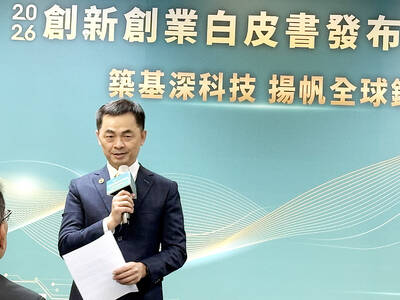
BARRIERS: Gudeng’s chairman said it was unlikely that the US could replicate Taiwan’s science parks in Arizona, given its strict immigration policies and cultural differences Gudeng Precision Industrial Co (家登), which supplies wafer pods to the world’s major semiconductor firms, yesterday said it is in no rush to set up production in the US due to high costs. The company supplies its customers through a warehouse in Arizona jointly operated by TSS Holdings Ltd (德鑫控股), a joint holding of Gudeng and 17 Taiwanese firms in the semiconductor supply chain, including specialty plastic compounds producer Nytex Composites Co (耐特) and automated material handling system supplier Symtek Automation Asia Co (迅得). While the company has long been exploring the feasibility of setting up production in the US to address


 RSS
RSS