


LCD panel maker AU Optronics Corp (AUO, 友達光電) yesterday reported that net profit for last quarter more than halved as a persistent decline in TV panel prices eroded gross margin and drove down its bottom line to the weakest level in one-and-a-half years.
Net profit tumbled 52.6 percent to NT$4.2 billion (US$143.49 million) during the three-month period ending in December last year, compared with NT$8.86 billion in the third quarter of last year. That represented a 53 percent slump from NT$8.97 billion a year earlier, a financial statement showed.
Gross margin slid to 13.9 percent after panel prices fell 5.6 percent, compared with 17.5 percent in the prior quarter and 18.8 percent a year earlier.
Last year as a whole, net profit more than quadrupled to NT$32.36 billion, compared with NT$7.82 billion in 2016.
That marked the firm’s strongest annual net profit since 2008.
“Last year was the fifth consecutive profitable year for AUO, which is rarely seen in the LCD panel industry,” AUO chairman Paul Peng (彭双浪) told investors.
This year “is the best of times and the worst of times. It is a year full of challenges and opportunities for AUO,” Peng said. “Nonstop and dramatic capacity expansion from Chinese players might make oversupply a new norm.”
China is expected to become the largest-capacity supplier, surpassing Taiwan, Japan and South Korea, Peng added.
To brace for the change in the competition landscape, AUO said it aims to boost capacity cautiously and intelligently, while producing higher-priced, niche flat panels.
“We will not rush to join the capacity race, although 10.5G factories and OLED [organic LED] panels have become hot topics,” Peng said.
OLED panels are not a cure-all for flagship smartphones in light of the lukewarm sales of some handset brands, he said.
“We intend to maintain an optimal scale. Big is not necessarily beautiful,” Peng said.
AUO said it plans to ramp up production of 65-inch 8K TV panels in the first half of this year to cope with increasing demand for such ultra-high-resolution screens.
The firm said it would also produce more 18:9 aspect ratio handset panels, as they are becoming a “must-have” for mid to high-end smartphones.
AUO plans to increase capital spending slightly to NT$45 billion this year, from NT$43.9 billion last year.
The company also plans to ramp up production of a new 8.5G production line in the second half of the year.
AUO said it expects worldwide panel supply this year to grow between 6 percent and 8 percent year-on-year, approaching the growth of panel demand as developed countries enter a new TV replacement cycle.
However, the first quarter will still be a slack period, AUO said, adding that downward price adjustments are to extend from last quarter into this quarter, attributable primarily to shrinking TV demand.
Average selling prices for PC and TV panels are to dip by a low-single-digit percentage this quarter, while shipments of those panels are to contract by a mid-to-high-single digit percentage, AUO said.
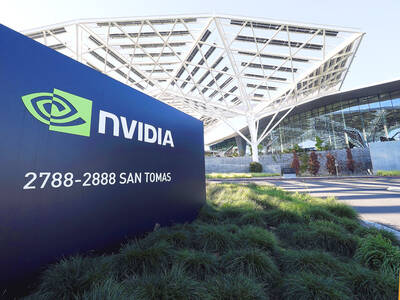
CHIP RACE: Three years of overbroad export controls drove foreign competitors to pursue their own AI chips, and ‘cost US taxpayers billions of dollars,’ Nvidia said China has figured out the US strategy for allowing it to buy Nvidia Corp’s H200s and is rejecting the artificial intelligence (AI) chip in favor of domestically developed semiconductors, White House AI adviser David Sacks said, citing news reports. US President Donald Trump on Monday said that he would allow shipments of Nvidia’s H200 chips to China, part of an administration effort backed by Sacks to challenge Chinese tech champions such as Huawei Technologies Co (華為) by bringing US competition to their home market. On Friday, Sacks signaled that he was uncertain about whether that approach would work. “They’re rejecting our chips,” Sacks
Taiwan’s long-term economic competitiveness will hinge not only on national champions like Taiwan Semiconductor Manufacturing Co. (TSMC, 台積電) but also on the widespread adoption of artificial intelligence (AI) and other emerging technologies, a US-based scholar has said. At a lecture in Taipei on Tuesday, Jeffrey Ding, assistant professor of political science at the George Washington University and author of "Technology and the Rise of Great Powers," argued that historical experience shows that general-purpose technologies (GPTs) — such as electricity, computers and now AI — shape long-term economic advantages through their diffusion across the broader economy. "What really matters is not who pioneers
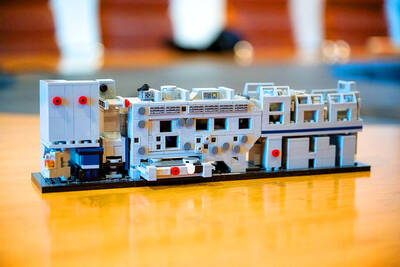
In a high-security Shenzhen laboratory, Chinese scientists have built what Washington has spent years trying to prevent: a prototype of a machine capable of producing the cutting-edge semiconductor chips that power artificial intelligence (AI), smartphones and weapons central to Western military dominance, Reuters has learned. Completed early this year and undergoing testing, the prototype fills nearly an entire factory floor. It was built by a team of former engineers from Dutch semiconductor giant ASML who reverse-engineered the company’s extreme ultraviolet lithography (EUV) machines, according to two people with knowledge of the project. EUV machines sit at the heart of a technological Cold
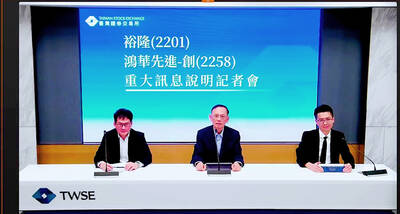
TAIWAN VALUE CHAIN: Foxtron is to fully own Luxgen following the transaction and it plans to launch a new electric model, the Foxtron Bria, in Taiwan next year Yulon Motor Co (裕隆汽車) yesterday said that its board of directors approved the disposal of its electric vehicle (EV) unit, Luxgen Motor Co (納智捷汽車), to Foxtron Vehicle Technologies Co (鴻華先進) for NT$787.6 million (US$24.98 million). Foxtron, a half-half joint venture between Yulon affiliate Hua-Chuang Automobile Information Technical Center Co (華創車電) and Hon Hai Precision Industry Co (鴻海精密), expects to wrap up the deal in the first quarter of next year. Foxtron would fully own Luxgen following the transaction, including five car distributing companies, outlets and all employees. The deal is subject to the approval of the Fair Trade Commission, Foxtron said. “Foxtron will be


 RSS
RSS