


The Ministry of Economic Affairs (MOEA) is optimistic about Taiwan’s export performance for a second half of this year after the year-on-year increase in outbound sales last month for the 11th consecutive month.
The Bureau of Foreign Trade on Friday said that Taiwan is riding waves of solid global demand and enjoying a strong performance in exports at a time when the world’s economy is on the path of recovery.
Exports increased 12.7 percent year-on-year to US$27.77 billion last month, the highest in almost three years, according to Ministry of Finance trade data.
In the first eight months of this year, exports totaled US$202.59 billion, up 12.5 percent from a year earlier, the data showed.
The bureau said that it has helped by organizing 66 overseas trade promotion events for more than 23,000 local firms so far this year, which helped exporters strike more than 1,600 deals worth more than US$5.2 billion.
The bureau said it will continue with its promotional efforts and take advantage of an increase in global demand.
Despite the MOEA’s optimism, Liu Meng-chun (劉孟俊), an economist at Chung-Hua Institution for Economic Research (中華經濟研究院), said that it is worth staying alert over external factors such as trade disputes between China and the US, the Brexit talks, and geopolitical unease related to North Korea and the Middle East, as such factors could affect the global economy.
In related news, the MOEA held a Taiwan Day event in Malaysia on Friday for Taiwanese e-commerce operators that want to explore opportunities in that nation.
Department of Commerce deputy head Chen Mi-shun (陳秘順) said 21 Taiwanese vendors displayed their products and held meetings with potential clients.
ASEAN, and Malaysia in particular, is one of the fastest-growing e-commerce markets in the world, Chen said.
The government wants to help local e-commerce businesses explore opportunities by promoting the profile of their brands and helping them find partners, Chen said.
Malaysia has a population of over 30 million and its economic growth is driven mainly by domestic demand.
Personal consumption accounts for 55.2 percent of the nation’s GDP, according to commerce department data.
Malaysia’s e-commerce market value is forecast to reach US$7.22 billion by 2025.
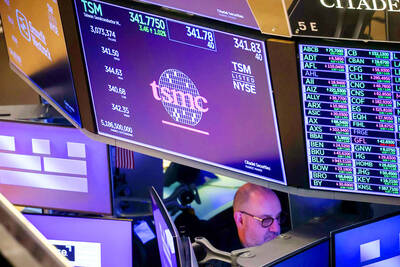
STRONG INTEREST: Analysts have pointed to optimism in TSMC’s growth prospects in the artificial intelligence era as the cause of the rising number of shareholders The number of people holding shares of chipmaker Taiwan Semiconductor Manufacturing Co (TSMC, 台積電) hit a new high last week despite a decline in its stock price, the Taiwan Depository and Clearing Corp (TDCC, 台灣集保) said. The number of TSMC shareholders rose to 2.46 million as of Friday, up 75,536 from a week earlier, TDCC data showed. The stock price fell 1.34 percent during the same week to close at NT$1,840 (US$57.55). The decline in TSMC’s share price resulted from volatility in global tech stocks, driven by rising international crude oil prices as the war against Iran continues. Dealers said
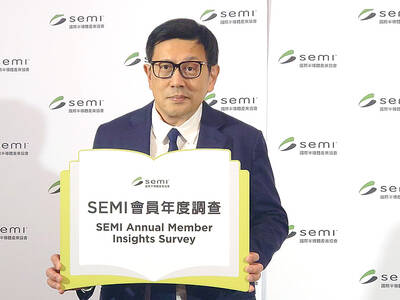
PRICE HIKES: The war in the Middle East would not significantly disrupt supply in the short term, but semiconductor companies are facing price surges for materials Taiwan’s semiconductor companies are not facing imminent supply disruptions of essential chemicals or raw materials due to the war in the Middle East, but surges in material costs loom large, industry association SEMI Taiwan said yesterday. The association’s comments came amid growing concerns that supplies of helium and other key raw materials used in semiconductor production could become a choke point after Qatar shut down its liquefied natural gas (LNG) production and helium output earlier this month due to the conflict. Qatar is the second-largest LNG supplier in the world and accounts for about 33 percent of global helium output. Helium is
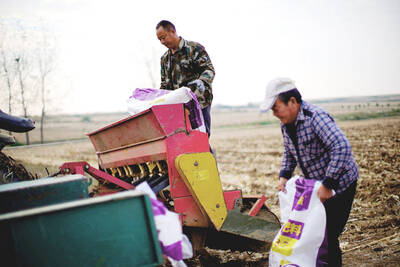
China is clamping down on fertilizer exports to protect its domestic market, industry sources said, putting an additional strain on global markets that were already grappling with shortages caused by the US-Israeli war on Iran. China is among the largest fertilizer exporters — shipping more than US$13 billion of it last year — and it has a history of controlling exports to keep prices low for farmers. Shipments through the war-blocked Strait of Hormuz account for about one-third of the sea-borne supply. This month, Beijing banned exports of nitrogen-potassium fertilizer blends and certain phosphate varieties, sources said. The ban, which has not

AMAZING ABUNDANCE: Elon Musk has announced plans for a new facility in Texas which would manufacture chips for Tesla and SpaceX to use in robotics and AI Elon Musk said his Terafab project — a grand plan to eventually manufacture his own chips for robotics, artificial intelligence (AI) and space data centers — would be built in Austin and jointly run by Tesla Inc and Space Exploration Technologies Corp (SpaceX). Musk, the chief executive officer of the two companies, said he would start off with an “advanced technology fab” in Austin that would have all of the equipment necessary to make chips of any kind. The project would call for one day supporting 1 terawatt (TW) of computing power per year, the amount Musk expects the companies to


 RSS
RSS