


Industry leaders yesterday urged the government to reconsider plans to phase out nuclear power by 2025, saying a power outage on Tuesday deepened their concerns over the practicality and desirability of the proposed gas-focused energy mix.
“Authorities should review their energy policy and entertain the possibility of activating the Fourth Nuclear Power Plant to avoid unexpected massive blackouts and subsequent power rationing,” Chinese National Association of Industry and Commerce (工商協進會) chairman Lin Por-fong (林伯豐) said.
If the nation had maintained greater power reserves, the outage would not have wreaked havoc and power rationing might have been avoided, Lin said on the sidelines of a public function.
According to state-run utility Taiwan Power Co (Taipower, 台電), power rationing is necessary when electrical reserves drop to less than 500,000 kilowatts (kW), lower than a “red” alert, which indicates a reserve margin of less than 900,000kW, or 2.4 percent of total capacity.
A stable and sufficient power supply is critical to economic activity, especially for manufacturing and commercial facilities that run 24 hours a day, Lin said, adding that the Fourth Nuclear Power Plant — the mothballed project in New Taipei City’s Gongliao District (貢寮) — could boost the reserve margin, but the government has left it idle in pursuit of a nuclear-power-free policy.
Business sectors have voiced misgivings about the government’s energy policy reform plan, under which natural gas would provide 50 percent of power generation, coal would contribute 30 percent and renewable energy sources would fill the remainder.
Without nuclear power plants, the nation’s electricity reserve could drop to less than 3 percent in 2025, and power shortages could deal a serious blow to industrial output and economic activity, the Chinese National Federation of Industries (全國工業總會) said in a position paper last month.
Lai Cheng-yi (賴正鎰), head of the General Chamber of Commerce and chairman of Shining Construction Group (鄉林集團), said power rationing on Tuesday affected 6.68 million households, companies and factories, causing inconvenience to 50 percent of Taiwanese energy users.
“The power outage warrants a review of the government’s energy policy… It might be wiser to activate nuclear power plants,” Lai said.
Taiwan Institute of Economic Research (台灣經濟研究院) chairman Chiang Pin-kung (江丙坤) said the Fourth Nuclear Power Plant is 10 times safer than the nation’s existing nuclear facilities and has lower radiation levels.
Nuclear power plants, which generate about 16 percent of the nation’s electricity, play an important role in guaranteeing a stable energy supply, he said.
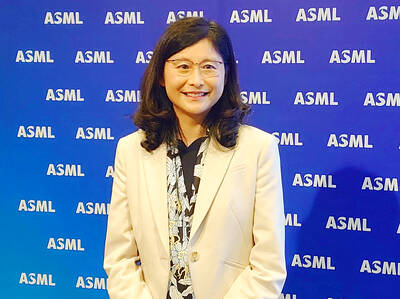
Netherlands-based semiconductor equipment supplier ASML Holding NV yesterday said that it is planning to hire an additional 1,000 people in Taiwan this year in response to growing demand from clients. ASML had previously planned to recruit 600 people this year, but that the plan has been adjusted upward, ASML vice president and ASML Taiwan general manager Grace Wang (汪佳慧) told reporters. ASML has a workforce of more than 4,500 in Taiwan, accounting for about 10 percent of its global total, Wang said. This year’s recruitment campaign would focus on adding people in the customer support, manufacturing and supply chain domains to assist ASML
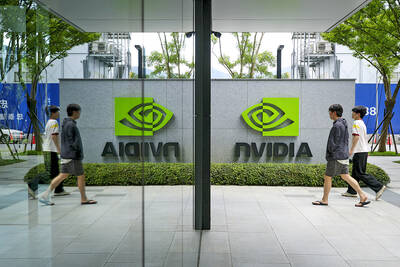
UNDER MICROSCOPE: Taiwan detained three people who allegedly conspired to buy servers in Taiwan and export them using fraudulent documentation, prosecutors said Nvidia Corp chief executive officer Jensen Huang (黃仁勳) on Saturday urged Super Micro Computer Inc to tighten up on compliance after Taiwan detained three people this week for allegedly making fraudulent declarations about artificial intelligence (AI) servers made by its US partner. The development marked the nation’s first crackdown on semiconductor smuggling, which grew after the US slapped restrictions on exports of high-end chips such as Nvidia AI accelerators to China. Nvidia is “rigorous” in explaining regulations to all of its partners, Huang told reporters after arriving in Taipei. “Ultimately Super Micro has to run their own company,” he said in response to

Nvidia Corp yesterday announced that CEO Jensen Huang (黃仁勳) would attend an employee meeting in Taipei tomorrow to celebrate the launch of the company’s Taiwan headquarters project. Huang would attend a gathering at the site of Nvidia’s planned headquarters in Beitou Shilin Technology Park (北投士林科技園區), the company said in a statement. After arriving in Taiwan on Saturday last week, Huang told reporters that he plans to meet with Quanta Computer Inc (廣達) chairman Barry Lam (林百里) and Taiwan Semiconductor Manufacturing Co (TSMC, 台積電) chairman C.C. Wei (魏哲家), and would attend the groundbreaking ceremony for Nvidia’s Taiwan headquarters tomorrow. Nvidia has not yet applied

Huawei Technologies Co (華為) said it has come up with a new pathway to shorten its gap with industry leader Taiwan Semiconductor Manufacturing Co (TSMC, 台積電), potentially achieving a breakthrough in making advanced semiconductors without cutting-edge equipment. Right now there is about a five-year gap between what TSMC is capable of and what Huawei, together with its manufacturing partner Semiconductor Manufacturing International Corp (中芯), can produce. Huawei is to start making 1.4-nanometer chips by 2031 with its own “LogicFolding” technology, Huawei semiconductor chief He Tingbo (何庭波) said in a rare public appearance during a chip conference yesterday, while TSMC has


 RSS
RSS