


Taiwan High Speed Rail Corp (THSRC, 台灣高鐵) has been added to the Taiwan 50 Index after a quarterly index review, the Taiwan Stock Exchange (TWSE) said.
The Taiwan 50 Index, which is jointly compiled and managed by the TWSE and global index provider FTSE International Ltd, is comprised of the top 50 stocks in the local equity market in terms of market capitalization.
The TWSE said that THSRC has ranked among the top 40 stocks in market cap in the local bourse, so FTSE decided to include the stock in the index.
The index adjustments are to take effect on June 19.
THSRC shares, which launched a listing on the main board on Oct. 27 last year, closed at NT$26.3 on Saturday, down 0.57 percent from the previous session.
The stock has gained 42.93 percent since the beginning of this year, its uptrend appearing more visible after MSCI Inc announced last month that it would add the stock to its Global Standard Indexes.
Due to the significant gains, THSRC’s market cap has increased to NT$148.02 billion (US$4.91 billion) from NT$84.45 billion seen on its listing day in October last year.
THSRC reported earnings per share of NT$0.29 for the first quarter, compared with NT$0.2 over the same period last year, according to the company’s TWSE filings.
Cumulative revenue during the first four months of the year rose 7.9 percent year-on-year to NT$14.44 billion, thanks to the company’s intensive promotion campaigns.
FTSE has also decided to remove Eclat Textile Co (儒鴻) from the Taiwan 50 Index and has put the firm on the waiting list, the TWSE said.
FTSE has also placed financial leasing firm Chailease Holding Co (中租), window curtain supplier Nien Made Enterprise Co (億豐), contract notebook computer maker Inventec Corp (英業達) and Yulon Nissan Motor Co (裕隆日產) on the waiting list.
Instead, FTSE has decided to add Eclat, Yulon Nissan, memory chipmaker Macronix International Co (旺宏), speaker maker Merry Electronics Co (美律) and smartphone camera lens producer Genius Electronic Optical Co (玉晶光) to the FTSE TWSE Taiwan Mid-Cap 100 Index because of their higher market capitalization, the TWSE said.
The Taiwan Mid-Cap 100 Index is comprised of the next-biggest 100 companies outside the Taiwan 50 Index in terms of market cap.
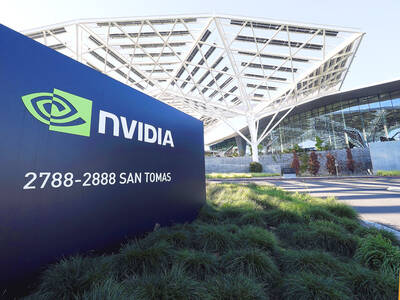
CHIP RACE: Three years of overbroad export controls drove foreign competitors to pursue their own AI chips, and ‘cost US taxpayers billions of dollars,’ Nvidia said China has figured out the US strategy for allowing it to buy Nvidia Corp’s H200s and is rejecting the artificial intelligence (AI) chip in favor of domestically developed semiconductors, White House AI adviser David Sacks said, citing news reports. US President Donald Trump on Monday said that he would allow shipments of Nvidia’s H200 chips to China, part of an administration effort backed by Sacks to challenge Chinese tech champions such as Huawei Technologies Co (華為) by bringing US competition to their home market. On Friday, Sacks signaled that he was uncertain about whether that approach would work. “They’re rejecting our chips,” Sacks
Taiwan’s long-term economic competitiveness will hinge not only on national champions like Taiwan Semiconductor Manufacturing Co. (TSMC, 台積電) but also on the widespread adoption of artificial intelligence (AI) and other emerging technologies, a US-based scholar has said. At a lecture in Taipei on Tuesday, Jeffrey Ding, assistant professor of political science at the George Washington University and author of "Technology and the Rise of Great Powers," argued that historical experience shows that general-purpose technologies (GPTs) — such as electricity, computers and now AI — shape long-term economic advantages through their diffusion across the broader economy. "What really matters is not who pioneers
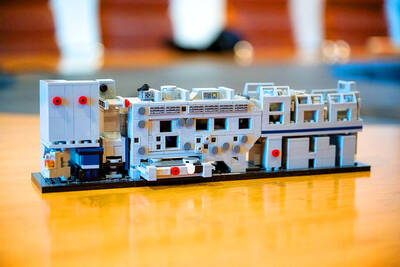
In a high-security Shenzhen laboratory, Chinese scientists have built what Washington has spent years trying to prevent: a prototype of a machine capable of producing the cutting-edge semiconductor chips that power artificial intelligence (AI), smartphones and weapons central to Western military dominance, Reuters has learned. Completed early this year and undergoing testing, the prototype fills nearly an entire factory floor. It was built by a team of former engineers from Dutch semiconductor giant ASML who reverse-engineered the company’s extreme ultraviolet lithography (EUV) machines, according to two people with knowledge of the project. EUV machines sit at the heart of a technological Cold
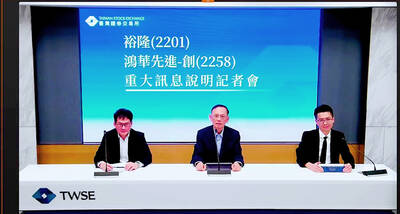
TAIWAN VALUE CHAIN: Foxtron is to fully own Luxgen following the transaction and it plans to launch a new electric model, the Foxtron Bria, in Taiwan next year Yulon Motor Co (裕隆汽車) yesterday said that its board of directors approved the disposal of its electric vehicle (EV) unit, Luxgen Motor Co (納智捷汽車), to Foxtron Vehicle Technologies Co (鴻華先進) for NT$787.6 million (US$24.98 million). Foxtron, a half-half joint venture between Yulon affiliate Hua-Chuang Automobile Information Technical Center Co (華創車電) and Hon Hai Precision Industry Co (鴻海精密), expects to wrap up the deal in the first quarter of next year. Foxtron would fully own Luxgen following the transaction, including five car distributing companies, outlets and all employees. The deal is subject to the approval of the Fair Trade Commission, Foxtron said. “Foxtron will be


 RSS
RSS