


Automakers in Taiwan and Japan have entered into talks aimed at teaming up to tap the Indonesian market, Taiwan External Trade Development Council (TAITRA, 外貿協會) Chairman James Huang (黃志芳) said in Jakarta.
Huang, who is heading a delegation of Taiwanese enterprises at the Taipei Expo in the Indonesian capital, said that China Motor Corp (CMC, 中華汽車), which markets vehicles under the Mitsubishi brand, is in talks with Mitsubishi Motor Corp of Japan to jointly produce auto parts for the Indonesian market.
The CMC and Mitsubishi plan is one of more than 20 projects which have been under negotiations for more than one year that would enable Taiwanese firms to work with their Japanese counterparts to target ASEAN member nations, Huang said.
In addition to the auto industry, Huang said that the proposed cooperation programs covered other industries, but he declined to disclose further details.
Huang said Japan has worked in the ASEAN market for a long time so the nation has built closer business ties in the bloc than Taiwanese businesses have and is able to exercise more influence.
Huang said that during a trip to Tokyo in March, he met with executives from the Japan External Trade Organization (JETRO), and that TAITRA and JETRO reached a consensus to push for cooperation of enterprises in Taiwan and Japan to seek business opportunities in global markets, including the ASEAN region.
TAITRA’s efforts to help Taiwanese exporters ship more of their products to the ASEAN market are a part of President Tsai Ing-wen (蔡英文) administration’s “new southbound policy” that aims to forge closer economic ties with the 10 ASEAN member nations as well as India, Pakistan, Bangladesh, Nepal, Sri Lanka, Bhutan, Australia and New Zealand, to lower economic dependence on China.
The Taiwan Expo in Jakarta, which opened on Friday and closed yesterday, shows how TAITRA is gearing up to polish the image of Taiwanese products in the Indonesian market.
TAITRA is next to take the Taiwan Expo to Vietnam’s Ho Chi Minh City, where it is to run from July 26 to 28,
The show is to be in Manila from Sept. 27 to Oct. 1 and Kuala Lumpur from Nov. 9 to 11.
At the end of March, TAITRA set up an association for Taiwanese investors who want to take advantage of the “new southbound policy” to extend their global reach.
About 500 companies have signed up so far.
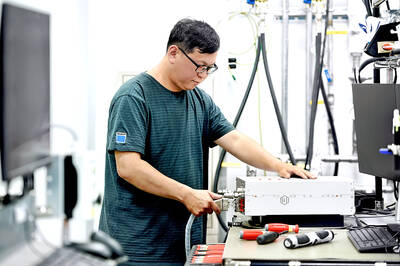
SEMICONDUCTORS: The German laser and plasma generator company will expand its local services as its specialized offerings support Taiwan’s semiconductor industries Trumpf SE + Co KG, a global leader in supplying laser technology and plasma generators used in chip production, is expanding its investments in Taiwan in an effort to deeply integrate into the global semiconductor supply chain in the pursuit of growth. The company, headquartered in Ditzingen, Germany, has invested significantly in a newly inaugurated regional technical center for plasma generators in Taoyuan, its latest expansion in Taiwan after being engaged in various industries for more than 25 years. The center, the first of its kind Trumpf built outside Germany, aims to serve customers from Taiwan, Japan, Southeast Asia and South Korea,

Gasoline and diesel prices at domestic fuel stations are to fall NT$0.2 per liter this week, down for a second consecutive week, CPC Corp, Taiwan (台灣中油) and Formosa Petrochemical Corp (台塑石化) announced yesterday. Effective today, gasoline prices at CPC and Formosa stations are to drop to NT$26.4, NT$27.9 and NT$29.9 per liter for 92, 95 and 98-octane unleaded gasoline respectively, the companies said in separate statements. The price of premium diesel is to fall to NT$24.8 per liter at CPC stations and NT$24.6 at Formosa pumps, they said. The price adjustments came even as international crude oil prices rose last week, as traders
POWERING UP: PSUs for AI servers made up about 50% of Delta’s total server PSU revenue during the first three quarters of last year, the company said Power supply and electronic components maker Delta Electronics Inc (台達電) reported record-high revenue of NT$161.61 billion (US$5.11 billion) for last quarter and said it remains positive about this quarter. Last quarter’s figure was up 7.6 percent from the previous quarter and 41.51 percent higher than a year earlier, and largely in line with Yuanta Securities Investment Consulting Co’s (元大投顧) forecast of NT$160 billion. Delta’s annual revenue last year rose 31.76 percent year-on-year to NT$554.89 billion, also a record high for the company. Its strong performance reflected continued demand for high-performance power solutions and advanced liquid-cooling products used in artificial intelligence (AI) data centers,
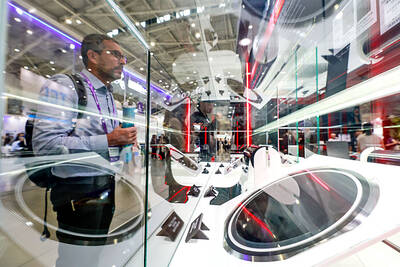
SIZE MATTERS: TSMC started phasing out 8-inch wafer production last year, while Samsung is more aggressively retiring 8-inch capacity, TrendForce said Chipmakers are expected to raise prices of 8-inch wafers by up to 20 percent this year on concern over supply constraints as major contract chipmakers Taiwan Semiconductor Manufacturing Co (TSMC, 台積電) and Samsung Electronics Co gradually retire less advanced wafer capacity, TrendForce Corp (集邦科技) said yesterday. It is the first significant across-the-board price hike since a global semiconductor correction in 2023, the Taipei-based market researcher said in a report. Global 8-inch wafer capacity slid 0.3 percent year-on-year last year, although 8-inch wafer prices still hovered at relatively stable levels throughout the year, TrendForce said. The downward trend is expected to continue this year,


 RSS
RSS