


US House Republicans are calling for arms-sale-style congressional oversight of artificial intelligence (AI) chip exports as US President Donald Trump’s administration moves to approve licenses for Nvidia Corp to ship its H200 processor to China.
US Representative Brian Mast, the Republican chairman of the US House Committee on Foreign Affairs, which oversees export controls, on Friday introduced a bill dubbed the AI Overwatch Act that would require the US Congress to be notified of AI chips sales to adversaries.
Any processors equal to or higher in capabilities than Nvidia’s H20 would be subject to oversight, the draft bill says.
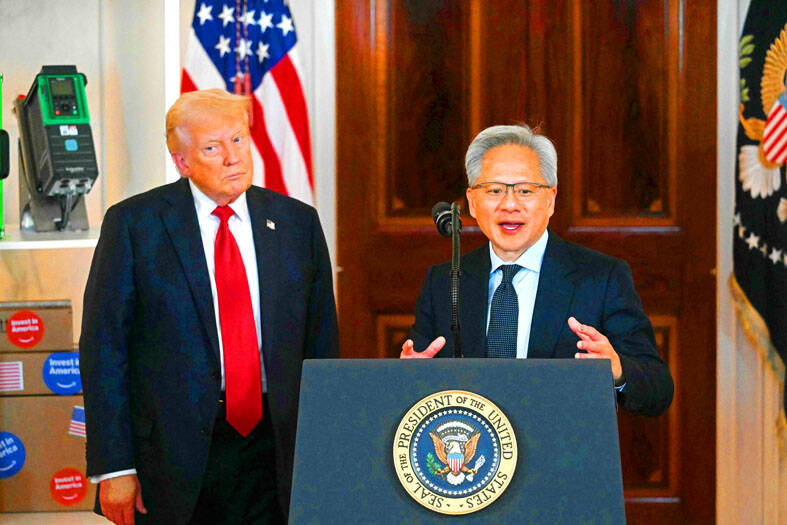
Photo: AFP
Lawmakers would have 30 days to block proposed shipments through a joint resolution and create a way for so-called “trusted” AI companies to receive license exemptions when sending chips to US allies and neutral countries.
The measure has won support from US House Select Committee on the Chinese Communist Party head John Moolenaar, along with other fellow Republican representatives Bill Huizenga and Darin LaHood. Moolenaar last week sent a letter to US Secretary of Commerce Howard Lutnick, requesting a briefing on Trump’s decision to allow exports to China of the H200 and comparable chips, while also challenging the administration’s rationale in granting its blessing.
A group of US House Democrats led by US Representative Gregory Meeks on Thursday introduced their own AI chip bill, which would outright block sales of advanced AI chips to China and other countries of concern while easing license requirements for US companies building data centers abroad.
Efforts by lawmakers to gain more say over sales of advanced chips to China come a little more than a week after the H200 decision, which marked a significant reversal from several years of tightening US export controls.
The H200 is about six times more powerful than the H20, the most powerful US chip that existing rules allow China to purchase, an Institute for Progress report said.
The draft would allow members of foreign affairs committee and US Senate Banking panels to see the number of chips up for export as well as the end-users buying them, as part of the oversight.
The legislation would also require a certification that the chips would not be used for military, intelligence or surveillances purposes. There is also a required certification that sales to adversarial nations do not create a supply shortage for US customers.
Since the US first restricted sales of advanced AI chips in 2022, the idea of intentionally selling advanced chips to China has found scant support in Washington. Trump’s willingness to sell more advanced chips such as the H200 in China has drawn objections among some Republicans in the US Congress, although they remain measured in their criticism of the administration.
US Senator Dave McCormick, treaded carefully at a security forum last week, saying: “I’m concerned... I’m not clear on why that is the right path for us. I want to be convinced because I keep asking the question.”
McCormick questioned the Trump administration’s argument that selling AI chips to China would slow the ability of Chinese chipmakers to gain in product performance and quality.
“It’s not clear to me how that would in any way slow their advances, and it seems more likely that it would accelerate them,” he said. “You can count on China to be doing everything in its power to develop its own independent capacity, and that America’s position should be, in my opinion, doing everything we can to maintain a lead.”
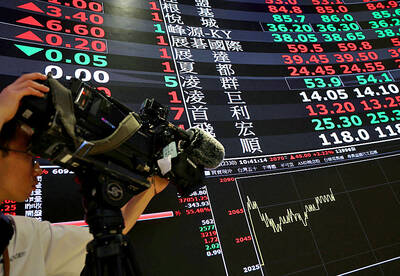
After several years flying high as Asia’s best Nvidia Corp proxy, Taiwan Semiconductor Manufacturing Co (TSMC, 台積電) is increasingly vying with other artificial intelligence (AI) stocks for investor attention. Stock traders are chasing a wider array of beneficiaries as mainstream usage of AI creates demand for hardware beyond the most-advanced chips TSMC makes for Nvidia. Subthemes from the deepening memory crunch to advances in robotics are also luring bids. At the same time, investment caps on single stocks are pushing funds to diversify, while retail investors long familiar with TSMC through its US depositary receipts are being offered a broader set of
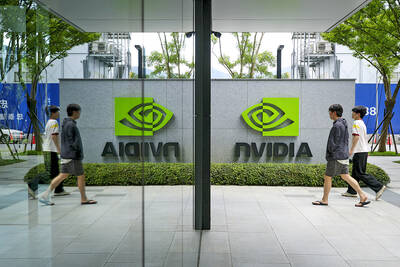
UNDER MICROSCOPE: Taiwan detained three people who allegedly conspired to buy servers in Taiwan and export them using fraudulent documentation, prosecutors said Nvidia Corp chief executive officer Jensen Huang (黃仁勳) on Saturday urged Super Micro Computer Inc to tighten up on compliance after Taiwan detained three people this week for allegedly making fraudulent declarations about artificial intelligence (AI) servers made by its US partner. The development marked the nation’s first crackdown on semiconductor smuggling, which grew after the US slapped restrictions on exports of high-end chips such as Nvidia AI accelerators to China. Nvidia is “rigorous” in explaining regulations to all of its partners, Huang told reporters after arriving in Taipei. “Ultimately Super Micro has to run their own company,” he said in response to
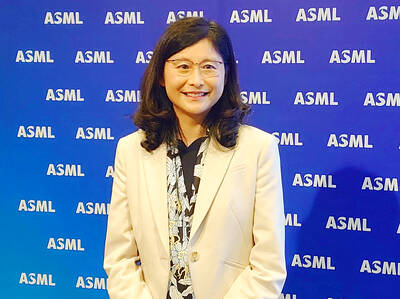
Netherlands-based semiconductor equipment supplier ASML Holding NV yesterday said that it is planning to hire an additional 1,000 people in Taiwan this year in response to growing demand from clients. ASML had previously planned to recruit 600 people this year, but that the plan has been adjusted upward, ASML vice president and ASML Taiwan general manager Grace Wang (汪佳慧) told reporters. ASML has a workforce of more than 4,500 in Taiwan, accounting for about 10 percent of its global total, Wang said. This year’s recruitment campaign would focus on adding people in the customer support, manufacturing and supply chain domains to assist ASML
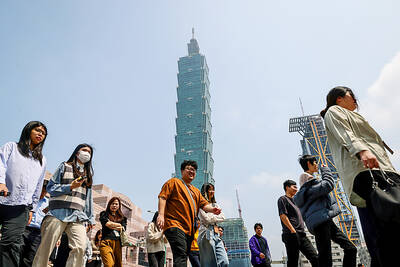
TECH RELIANCE: Growth is increasingly reflecting an unequal K-shaped distribution, where technology sectors outperform and other industries struggle, an expert said Standard Chartered Bank has significantly raised its forecast for Taiwan’s economic growth to 9.5 percent this year, up from 7.6 percent previously, citing surging artificial intelligence (AI) demand driving exports, semiconductor production and investment. The upgrade reflects a sustained AI supercycle that continues to fuel demand for advanced chips and technology infrastructure, which form the backbone of Taiwan’s exports, the bank said in a report this week. “We raise our 2026 growth forecast to reflect a much stronger-than-expected first-quarter GDP figure,” Standard Chartered senior economist for greater China and Asia Tommy Wu (胡東安) said in the report. Driven largely by a 35.3 percent


 RSS
RSS