


The US dollar on Friday hit its lowest level against the euro in roughly six months after a sharp rebound in US jobs growth last month was not enough to offset investors’ bullishness toward the euro ahead of the final round of France’s presidential election.
US non-farm payrolls surged by 211,000 jobs last month, the US Department of Labor said, beating expectations of economists polled by Reuters for a gain of 185,000.
However, payrolls growth in March was revised downward to 79,000 from 98,000 and the labor force participation rate dipped slightly to 62.9 percent from 63 percent.
The US dollar index, which measures the greenback against a basket of six major rivals, but the majority of whose weighting is against the euro, was down 0.1 percent at 98.655 after touching a roughly six-month low of 98.593 after the jobs data.
For the week, the index is down 0.4 percent, for a fourth straight weekly decline.
The euro gained 0.8 percent against the US dollar for the week, in a fourth straight weekly rise.
Against the yen, the US dollar gained 1 percent for a third straight weekly rise.
In Taipei, the New Taiwan dollar fell NT$0.042 against the greenback to close at NT$30.182. The NT dollar edged up 0.1 percent from last week’s NT$30.218 against the US dollar.
Analysts said traders are anticipating that the euro will get a boost if, as expected, centrist candidate Emmanuel Macron defeats anti-EU candidate Marine Le Pen in today’s French election.
They also said the weaker March jobs figure and labor force participation rate in the US gave traders an excuse to continue holding the euro.
The euro hit US$1.0999, its highest level since early November last year, in the wake of the US jobs data, and a comeback from a 14-year low of US$1.0339 touched in early January.
“People were looking for a Macron victory, the end of event risk from the French election, for that to push us through US$1.10,” BMO Capital Markets global head of foreign-exchange strategy Greg Anderson said. “There’s nothing in the payrolls data that is going to blow them out of the water from that.”
The US dollar on Friday rose slightly against the yen and was up 0.1 percent for the day at ¥112.60, but remained below Thursday’s roughly seven-week high of ¥113.04.
Analysts said the US dollar remained at elevated levels against the yen because the US jobs data did little to challenge the view that the US Federal Reserve will raise interest rates in June.
Additional reporting by CNA
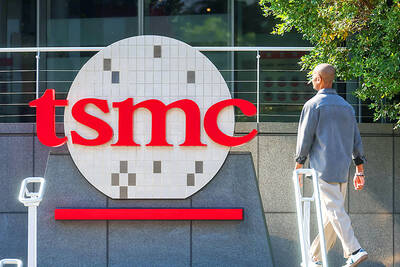
Shares of contract chipmaker Taiwan Semiconductor Manufacturing Co (TSMC, 台積電) came under pressure yesterday after a report that Apple Inc is looking to shift some orders from the Taiwanese company to Intel Corp. TSMC shares fell NT$55, or 2.4 percent, to close at NT$2,235 on the local main board, Taiwan Stock Exchange data showed. Despite the losses, TSMC is expected to continue to benefit from sound fundamentals, as it maintains a lead over its peers in high-end process development, analysts said. “The selling was a knee-jerk reaction to an Intel-Apple report over the weekend,” Mega International Investment Services Corp (兆豐國際投顧) analyst Alex Huang
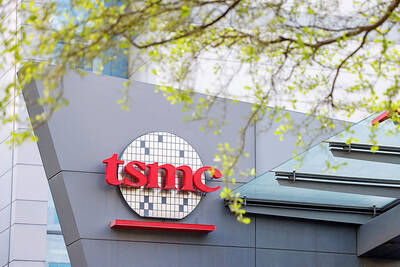
Taiwan Semiconductor Manufacturing Co (TSMC, 台積電) is expected to remain Apple Inc’s primary chip manufacturing partner despite reports that Apple could shift some orders to Intel Corp, industry experts said yesterday. The comments came after The Wall Street Journal reported on Friday that Apple and Intel had reached a preliminary agreement following more than a year of negotiations for Intel to manufacture some chips for Apple devices. Taiwan Institute of Economic Research (台灣經濟研究院) economist Arisa Liu (劉佩真) said TSMC’s advanced packaging technologies, including integrated fan-out and chip-on-wafer-on-substrate, remain critical to the performance of Apple’s A-series and M-series chips. She said Intel and Samsung
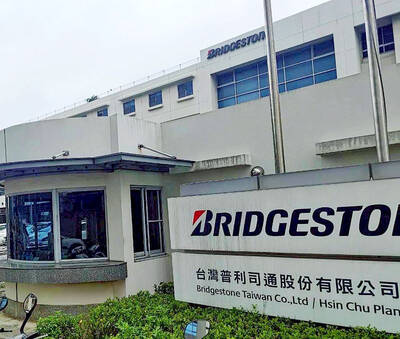
TRANSITION: With the closure, the company would reorganize its Taiwanese unit to a sales and service-focused model, Bridgestone said Bridgestone Corp yesterday announced it would cease manufacturing operations at its tire plant in Hsinchu County’s Hukou Township (湖口), affecting more than 500 workers. Bridgestone Taiwan Co (台灣普利司通) said in a statement that the decision was based on the Tokyo-based tire maker’s adjustments to its global operational strategy and long-term market development considerations. The Taiwanese unit would be reorganized as part of the closure, effective yesterday, and all related production activities would be concluded, the statement said. Under the plan, Bridgestone would continue to deepen its presence in the Taiwanese market, while transitioning to a sales and service-focused business model, it added. The Hsinchu

Taiwan Semiconductor Manufacturing Co (TSMC, 台積電) has approved a capital budget of US$31.28 billion for production expansion to meet long-term development needs during the artificial intelligence (AI) boom. The company’s board meeting yesterday approved the capital appropriation plan for purposes such as the installation of advanced technology capacity and fab construction, the world’s largest contract chipmaker said in a statement. At an earnings conference last month, TSMC forecast that its capital expenditure for this year would be at the higher end of the US$52 billion to US$56 billion range it forecast in January in response to robust demand for 5G, AI and


 RSS
RSS